
June 19, 2026
“Golden Dawn”: The Code Name That Should Be on Every Investor’s Rada
Featured: Intel Is Up ~7x. One Post Just Complicated It.
Editor’s Note: Our friend Louis Navellier has been a guest at Mar-a-Lago more than 10 times and manages a $1.1 billion portfolio – including $358 million in AI stocks. He called Nvidia before it went up 44,000%, Apple before it went up 36,000%, and Microsoft before its 60,800% rise. Now he says Trump’s new AI project – which just received its official code name – represents the biggest investment event of his 40-year career.
Dear Reader,
When a little known government project gets a name…
It means we’re closer to a major breakthrough than most people think.
And for investors who get ahead of it, that timing could mean everything.
That’s what President Trump’s team is calling America’s new Manhattan Project – but for AI.
Right now, behind the razor wire of a secretive government lab in the mountains of Tennessee…
40,000 scientists and engineers are putting the finishing touches on an AI computer 283 trillion times more powerful than today’s leading data centers…
Spanning a territory larger than the state of Texas…
Built to accelerate AI breakthroughs by 36,000%.
One government insider working on the project called it “a scientific instrument for the ages.”
And when Golden Dawn goes live, it will instantly leapfrog every AI model on earth – ChatGPT, Gemini, and Elon’s Grok – in a single stroke.
The financial implications are staggering.
Certain AI stocks will be rendered obsolete overnight…
While sending shares of one specific company – the one I’ve been quietly tracking for months – soaring.
I’ve laid out the full case in a new presentation – including why you need to act now.
I even name the company down to the ticker.
Click here to watch it now, free of charge.
Regards,
Louis Navellier
Senior Quantitative Investment Analyst, InvestorPlace
P.S. “Golden Dawn” will span more than 700 miles – making it by far the largest AI infrastructure project ever built. When Trump flips the on switch, I believe it will trigger a $100 trillion reset of the AI markets. I’m revealing the one stock at the center of it all. Go here for the details.
FEATURED
Intel Is Up ~7x. One Post Just Complicated It.
Analyst Targets (as of June 17-19, 2026)
- Bank of America: Buy, $135 target (double-upgrade from Underperform, June 11)
- Bernstein: Market Perform, raised target to $100 from $65 (June 17)
- Mizuho: Neutral, $128 target (June 17)
- Consensus (48 analysts, S&P Global): Hold, avg. target ~$93.97
One Truth Social post. That’s all it took.
On June 18, President Trump wrote that Apple had agreed to work with Intel to design and build chips in the United States. Intel closed the day up 10.64%, finishing at $133.99 after touching a fresh 52-week high of $135.48 intraday. Apple and Intel did not immediately confirm the claim.
Here’s what’s interesting: Intel said only that it would not comment “about a potential Apple-Intel agreement.” Apple didn’t respond at all.
What Actually Happened
Trump’s post didn’t come out of nowhere. The Wall Street Journal had previously reported that the two companies reached a preliminary agreement for Intel to manufacture certain chips for Apple using the 18A process. Bloomberg noted that Apple has held exploratory discussions about using Intel and Samsung to produce the main processors for its devices in the U.S. What the June 18 Truth Social post added was presidential weight and a reminder that the U.S. government owns roughly 10% of Intel, a stake acquired in August 2025.
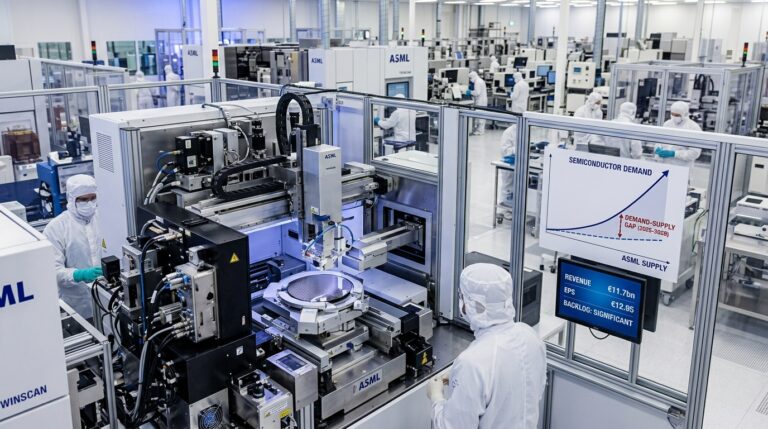
The deal, to the extent it exists, represents Apple’s effort to reduce concentration risk tied to TSMC in Taiwan. For Intel, it’s potentially transformational — the kind of anchor customer that validates CEO Lip-Bu Tan’s expensive bet on the foundry business. Intel Foundry generated $5.4 billion in Q1 2026 revenue, up 16% year over year, and reported an operating loss of $2.4 billion in the quarter. External foundry revenue was just $174 million, still very small. An Apple relationship would change that math entirely.
What matters is the timing. Intel’s 18A-P process node entered risk production on June 16. Then the Trump post landed two days later. Two major catalysts in one week, stacking on top of a stock that has risen roughly 506% over the past twelve months from a 52-week low of $18.97, good for about 7x off the bottom.
Multi-Million-Ounce Canadian Gold Story Still Below US$0.25 Per Share
This undiscovered ultra low-priced gold explorer is preparing to launch a major drill campaign on a multi-million-ounce gold inventory in one of Canada’s premier mining jurisdictions.
With a newly strengthened treasury, multiple high-priority expansion targets, and catalysts stacked for 2H 2026, this exceptionally well-run miner — currently trading just below Wall Street’s radar under US$0.25 per share — is unlocking its most important growth phase right as gold races toward US$5K per ounce.
The Foundry Bet, Explained Simply
Intel is trying to do something no company has successfully done in decades: compete directly with TSMC and Samsung as a contract chip manufacturer for outside customers, while simultaneously running its own product business. It’s capital-intensive, slow to ramp, and riddled with execution risk. The foundry unit is still unprofitable — operating loss of $2.4 billion in Q1 — and Intel reported a GAAP net loss of $3.7 billion in Q1 2026, largely driven by a Mobileye goodwill impairment charge.
At the same time, the opportunity is real. Hyperscalers and big tech companies are actively looking for non-TSMC manufacturing alternatives. Geopolitical pressure to onshore semiconductor production isn’t going away. And Intel, with CHIPS Act backing and a government stakeholder, has political cover that no private foundry can replicate.
Slight tangent, but it matters: the government’s roughly 10% stake creates a structural conflict of interest that analysts and policy experts have debated openly. The Cato Institute called the arrangement “unprecedented government ownership of private enterprise” when it was announced. When the White House is both cheerleader and shareholder, every announcement — confirmed or not — carries a different weight. That’s not necessarily bearish. But it’s a dynamic investors can’t ignore.
The Numbers Worth Knowing
Intel’s Q1 2026 results were genuinely strong. Revenue came in at $13.6 billion, up 7% year over year and well above the Wall Street consensus of $12.4 billion. Non-GAAP EPS landed at $0.29, versus guidance of roughly breakeven. Data Center and AI revenue grew 22% to $5.1 billion — the fastest-growing segment by a wide margin.
- Q1 revenue: $13.6B, up 7% YoY (beat consensus of $12.4B)
- Non-GAAP EPS: $0.29 (vs. guidance of ~$0.01 consensus)
- GAAP net loss: $3.7B, or $(0.73)/share (driven by $4.1B in restructuring/Mobileye impairment)
- Data Center and AI revenue: $5.1B, up 22% YoY
- Client Computing Group revenue: $7.7B, up 1% YoY
- Intel Foundry revenue: $5.4B, up 16% YoY
- Intel Foundry operating loss: $2.4B (improved $72M quarter over quarter)
- External foundry revenue: $174M
- Q2 2026 guidance: Revenue $13.8B-$14.8B, non-GAAP EPS $0.20
Bull / Base / Bear
Bull: Apple formalizes the foundry relationship within 12 months, Intel 18A becomes a key node in Apple’s U.S. chip supply chain, external foundry revenue hits meaningful scale, and valuation catches up to the growth story. Street-high target: $150.
Base: The deal is real but delayed. Revenue from any Apple partnership is 12 to 18 months out, foundry losses narrow gradually, and the stock consolidates somewhere between analyst consensus (~$93.97) and the BofA target ($135) as the market waits for proof. Q2 earnings on July 23 become the next key test.
Bear: Neither company confirms the deal. Apple sticks with TSMC for its most critical chips. Intel’s foundry unit continues to bleed cash, rising input costs pressure margins in the second half of 2026, and a stock trading well above most analyst targets starts to correct meaningfully toward the consensus range.
Technical Overlay
Intel closed at $133.99 on June 18, touching a fresh 52-week high of $135.48 intraday before pulling back slightly. The stock’s 52-week range is $18.97 to $135.48 — a range that tells you almost everything you need to know about the volatility profile here. The move off the lows has been almost entirely news-driven and sentiment-driven, not technically supported in any traditional sense. Volume on June 18 came in at roughly 234 million shares, well above the daily average of around 150 million. Key support on any pullback: the $115-$120 zone, where the stock consolidated in mid-June before the latest leg higher.
What Investors Should Watch
- Official confirmation from Apple or Intel — or the continued absence of one
- Q2 2026 earnings (expected July 23) for Intel Foundry external revenue trajectory and margin trends
- Analyst revisions post-announcement: 48-analyst consensus sits at Hold with a ~$93.97 average target, more than 30% below the current price
- Government conflict-of-interest scrutiny — the roughly 10% U.S. stake is unusual and the debate isn’t going away
- Input cost pressures in H2 2026, particularly memory costs, which management flagged as a potential gross margin headwind
- Any update on the 14A process node, where external customer design commitments are expected to begin in H2 2026
Bottom Line
Intel’s comeback is real. Q1 results were genuinely strong. The foundry business is gaining momentum. The Apple relationship, if it materializes, would be a defining moment for the company’s second act. But a stock that’s up roughly 7x from its 52-week low, trading more than 30% above the consensus analyst target, built on a deal that neither company has confirmed — that’s a lot of future already baked in. The question isn’t whether the story is good. It’s how much of the good story you’re being asked to pay for right now.
For informational purposes only.