August 9, 2026
Nvidia’s $3B Bet on the Texas Grid
Lancium hosts Stargate’s first live campus. What Nvidia actually bought is harder to build than a data center.
First a note from Paradigm Press
Dear Reader,
White House, Pentagon, and CIA insider Jim Rickards is widely considered to be among the top gold experts in the world…
He even wrote the definitive book on gold, titled The New Case for Gold – which was praised by The Wall Street Journal, Forbes, and more.
And now, he’s just released this critical message for anyone invested in gold.
Fair warning…
What you’re about to hear is highly controversial…
But regardless of your political affiliation, or who you voted for in the last election…
You should drop what you’re doing and view Jim’s urgent message right away.
Because if he’s right, this little-known gold story is about to make a lot of investors very rich.
WARNING: Don’t buy a single ounce of gold until you hear about this coming gold shock.
Click here now for the details.
Regards,
Matt Insley
Publisher, Paradigm Press
Nvidia’s $3B Bet on the Texas Grid
The Information reported on August 7, 2026 that Nvidia plans to invest up to $3 billion in Lancium, the Blackstone-backed Texas power infrastructure developer whose 1,000-acre Abilene campus is the first operational site for Stargate, the OpenAI-SoftBank-Oracle AI joint venture. Neither Nvidia nor Lancium has confirmed the deal publicly, per Reuters, which corroborated the original reporting. What is known: $2 billion upfront for roughly 20% of Lancium, with a further $1 billion contingent on grid interconnection milestones. Implied enterprise value: approximately $10 billion.
Most coverage read this as Nvidia buying deeper into the AI buildout. That framing is correct in the broadest sense and misses the specifics entirely. The asset Nvidia is paying for is not a campus, a megawatt count, or a Blackstone-branded growth story. It is a class of ERCOT grid access that, as of July 11, 2026, no new applicant can obtain by following the same process. The entry window closed. Lancium was already through it.
The Grid Context: What Changed on July 11
Texas’s interconnection rules for large electricity users underwent a structural overhaul this summer. Under the prior framework, a project drawing 75 MW or more from the ERCOT grid submitted a Large Load Interconnection Study request and was evaluated individually. That process, however well-established, was built for a different era of load growth. By mid-2026, ERCOT was managing more than 474 gigawatts of large-load connection requests, roughly 90% of which originated from data centers, according to multiple reports citing ERCOT figures. The grid’s historical peak demand is a fraction of that number.
The ERCOT Board voted unanimously on June 2, 2026 to recommend approval of the Batch Zero framework, a one-time system-wide study replacing individual project reviews. The Public Utility Commission of Texas approved the revised protocols on June 18, with an effective date of July 11, 2026. The legacy individual study process was in effect through end of day on July 10, 2026, and not one day longer. Any project that had already completed the individual study regime before that cutoff holds interconnection rights that cannot be replicated through the Batch Zero process.
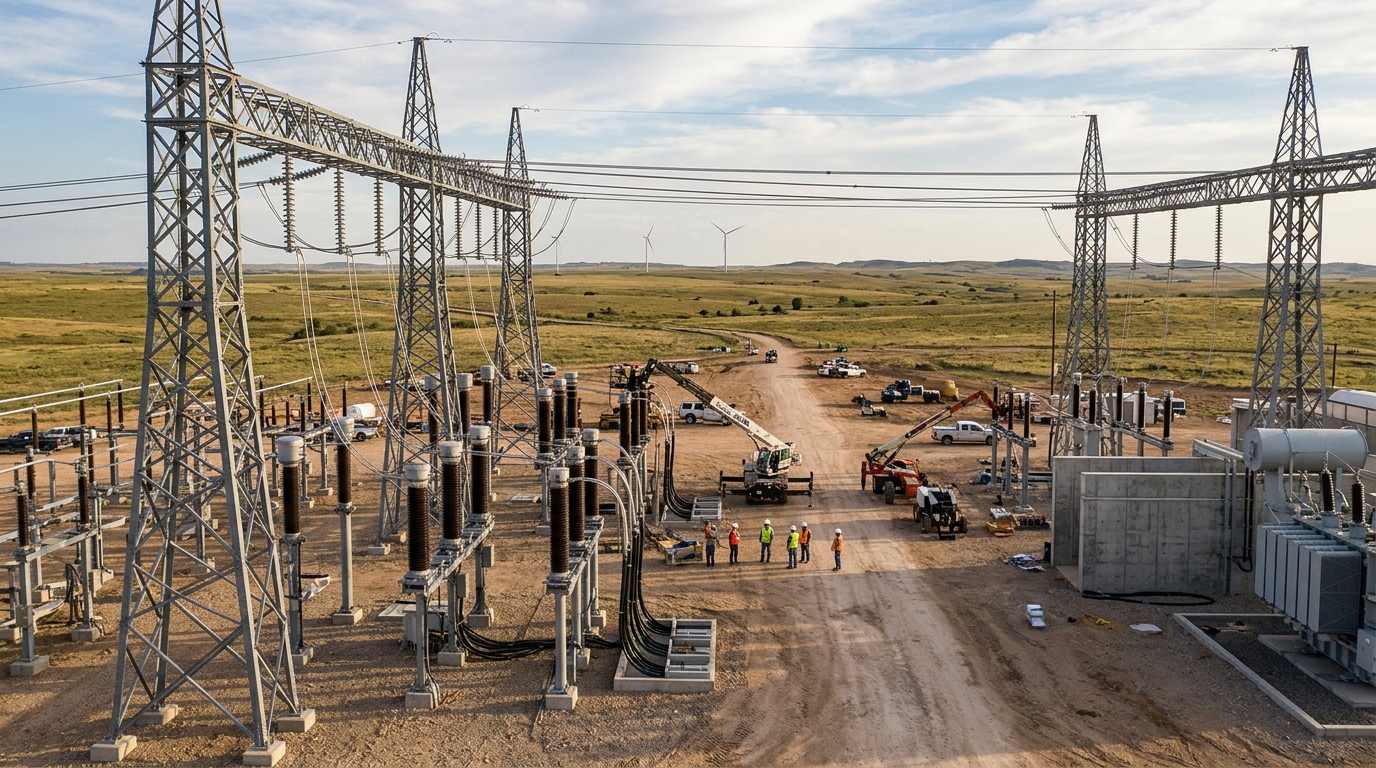
Lancium’s Abilene campus carries a 1.2 GW interconnect that completed the prior process in full. The Childress interconnect did too. These approvals were granted under the old project-by-project regime. That regime no longer exists. For a well-capitalized new entrant submitting today, Batch Zero study results are not expected until January 2027, with final transmission planning due by June 2027 and interconnection agreements to be executed by March 2027. Lancium skipped all of that. The time value embedded in those approvals is a large part of what a $10 billion enterprise valuation is pricing.
What Lancium Actually Is
Lancium does not operate data centers. It develops and owns large sites with power infrastructure in place, secures grid interconnection, and then licenses those campuses to operators who design, build, and run the computing facilities. Partners handle the equipment and the operations. Lancium holds the land and the grid position, which is exactly the scarce half of the equation.
The company has 4 gigawatts of power resources secured on the Texas grid. Its Abilene campus, which hosts the first operational Stargate site, carries a 1.2 GW interconnect fully approved by ERCOT after a rigorous multi-stage review including steady-state, short-circuit, and stability analysis. A 15-gigawatt pipeline of interconnection projects is in progress, though those are subject to the new Batch Zero framework and carry the uncertainty that entails.
The pace of campus activation this past month illustrates how Lancium is converting secured capacity into operating assets. On July 13, QTS Data Centers announced an 11-building campus at Lancium’s Hall County site near Turkey, Texas, representing more than $10 billion in capital investment. Two days later, Crusoe and Lancium announced a 1.0 GW AI data center campus in Childress, spanning 270 acres, with construction set to begin in the third quarter of 2026. Two gigawatt-scale announcements in seven days, both anchored in interconnection rights established before July 10.
Why Nvidia Is Writing This Check
Nvidia’s fiscal 2026 revenue came in at $215.9 billion. Its GPU market share for AI training and inference is approximately 80%. It does not have a supply problem, and it does not have a power problem inside its own operations. Its customers do, and that is the entire point of this investment.
Every Blackwell or Rubin system Nvidia ships has to be energized somewhere. That somewhere requires a grid connection, which in Texas is the single most constrained input in the AI infrastructure buildout. A 20% stake in the company that controls some of the most advanced interconnection positions on ERCOT is a direct financial stake in the availability of that input. More Lancium capacity energized means more sites capable of absorbing Nvidia hardware at scale. The incentive loop is obvious and intentional.
This deal is also one move in a much larger capital deployment campaign. In the quarter ending April 2026, Nvidia poured approximately $18.6 billion into private companies and infrastructure funds, a figure that already exceeded its total investments for the entire prior fiscal year. Earlier this year the company wrote $2 billion checks to CoreWeave and Nebius respectively, and completed investments in Lumentum, Coherent, and Marvell. The Lancium investment is the first to reach directly into the power infrastructure layer, targeting the constraint that sits behind every one of those other bets.
Wall Street quietly buying these stocks before November 3?
We caught Wall Street in the act.
Take a look:
Right here in June…
BlackRock made a strange move.
It put nearly $1 billion into a forgotten-about corner of the AI market.
In fact, we flagged a number of strange transactions from gigantic firms like Goldman Sachs and JPMorgan…
Into two specific stocks in this critical but rarely talked about corner of AI.
I believe these companies are loading up ahead of November 3.
The Risks
The circular capital concern is real and should be named plainly. Nvidia is simultaneously an equity investor in and the dominant hardware supplier to the same AI infrastructure ecosystem. A portion of the demand for its chips is, at minimum, being facilitated by its own capital. That does not invalidate the strategy, but it complicates any straightforward reading of independent customer demand.
The regulatory environment shifted again in August. Governor Greg Abbott on August 3 ordered the Public Utility Commission of Texas and ERCOT to suspend new application approvals and conduct a comprehensive audit of data center projects seeking grid connection. Separately, ERCOT halted its Batch Zero interconnection planning review without announcing a completion timeline. Lancium’s 15 GW in-progress pipeline sits squarely inside that uncertainty, though sources indicate that Lancium’s partnership with American Electric Power, which has already completed the line studies needed to deliver power to its campuses, gives it a material first-mover advantage over most competing projects.
The milestone structure on the Nvidia deal is the third risk to understand directly. One-third of Nvidia’s total potential commitment, the extra $1 billion, is contingent on Lancium completing additional grid hookups. In a Texas regulatory environment that just introduced an audit and paused the batch review process, that is a genuine contingency, not a formality. Execution risk is baked into the deal’s architecture.
What Investors Should Watch
Three signals will confirm or test the thesis over the next 12 months.
The gigawatt conversion rate. Lancium has 4 GW secured and 15 GW in progress. The spread between those two figures is the risk. Each gigawatt that crosses from pipeline to operational capacity validates the $10 billion enterprise value. Each gigawatt that stalls in the audit or Batch Zero backlog erodes it. Watch the quarterly campus activation announcements as the clearest proxy for execution.
The milestone payment pace. Every additional grid hookup Lancium completes converts contingent Nvidia capital into confirmed equity. The speed of that conversion is a live signal on whether the regulatory environment is cooperating with the investment thesis or working against it.
The IPO timeline. Sources indicate Lancium is evaluating a potential public offering as early as 2027. If it lists, Nvidia’s 20% stake becomes liquid, and ERCOT grid access gets its first standalone public market valuation. That IPO would either confirm the $10 billion enterprise value assigned to this deal or force a reset. Either outcome gives the market a direct read on what advanced Texas grid position is actually worth as an asset class. That is information the entire infrastructure investment community will be pricing off of for years.
Bottom Line
Nvidia is not building a utility. It is buying a structural position at the chokepoint every one of its chip customers must pass through: the connection between a computing facility and the grid that powers it. Lancium’s competitive advantage is not its acreage or its brand. It is years of regulatory process completed before the rules changed, at sites that are already live or actively under construction. The $3 billion price is a payment for time and regulatory progress that no amount of fresh capital can now replicate on the same schedule. That is a rational position with real execution risk attached, and a 2027 IPO as the moment of genuine reckoning.
For informational purposes only.