August 10, 2026
Abel Deploys. The Question Is What Comes Next.
Featured: Abel Deploys. The Question Is What Comes Next.
Editor’s Note: When Luke Lango worked in venture capital, he crossed paths with some of the biggest names in the startup space. One of them – a legend who invested in more than 10 unicorns – went on to back Luke’s first startup. Today, Luke takes the secrets of Silicon Valley and shares them with over one million everyday investors around the world. His latest discovery involves China, Elon Musk, and a 100-million-square-foot Texas facility that could bring the world’s most vital commodity back to America. Read below for more details…
Dear Reader,
The U.S. weapons shortage is getting serious.
According to Reuters, “the US has used ‘virtually all’ of its long-range precision missiles during the Iran War.”
The Center for Strategic and International Studies maintains that we have enough missiles to continue fighting in Iran…
But they say the true danger is “a future conflict in the Western Pacific against China.”
Since the start of the decade, China has been ramping up its efforts to take back Taiwan.
In fact, these days it’s not unusual to find five or six Chinese warships circling Taiwan.
If China decides to invade Taiwan tomorrow, America may not have the munitions to adequately defend it.
US Treasury Secretary Scott Bessent recently outlined the ramifications of a military invasion, and the implications are grim…
“The single biggest threat to the world economy, the single biggest point of single failure, is that 97 percent of the high-end chips are made in Taiwan. If that island were blockaded, that capacity were destroyed, it would be an economic apocalypse.”
Advanced chip manufacturing must be reshored in America, and I believe Elon Musk will be the one who makes it happen. (I break down his ingenious plan to reach this seemingly improbable goal here.)
His plan revolves around a mysterious new facility that recently broke ground in Texas.
The Terafab – as Elon is calling it – will be 3X the size of Central Park…
It will cost $122 billion to build.
And, according to Yahoo! Finance, it “targets 1 terawatt of annual chip output.”
That means this one plant could singlehandedly double American chip production…
Dramatically reducing our dependence on China and Taiwan…
And creating an explosive money-making opportunity for investors who get in now.
I’ve run the numbers myself.
The total addressable market of Elon is a whopping $126 trillion, 2X bigger than AI, robotics, clean energy, and driverless cars combined.
I recently stepped in front of camera and revealed the name and ticker of my #1 way play this radical shift…
Alongside my three-step plan to profit from this shift.
Regards,
Luke Lango
Senior Technology Analyst, InvestorPlace
P.S. Recent drone flyovers of the first part of Elon’s Terafab plan revealed that progress has “hit another gear.” That’s no surprise to folks who follow Elon. They know he moves fast. But the way he achieves this goal will shock even his biggest fans. Get the full story on Elon’s $126 trillion bombshell here.
Abel Deploys. The Question Is What Comes Next.
Analyst Targets
- CFRA Research (Cathy Seifert): Constructive on capital deployment pace; flagged GEICO underwriting as near-term drag
- Forbes / Glenview Trust: Projects full-year operating earnings growth in the low-to-mid single digits due to insurance headwinds
- Morningstar: Notes that Berkshire’s biggest ongoing challenge remains finding deals large enough to move the needle at its current scale
The Opening Position
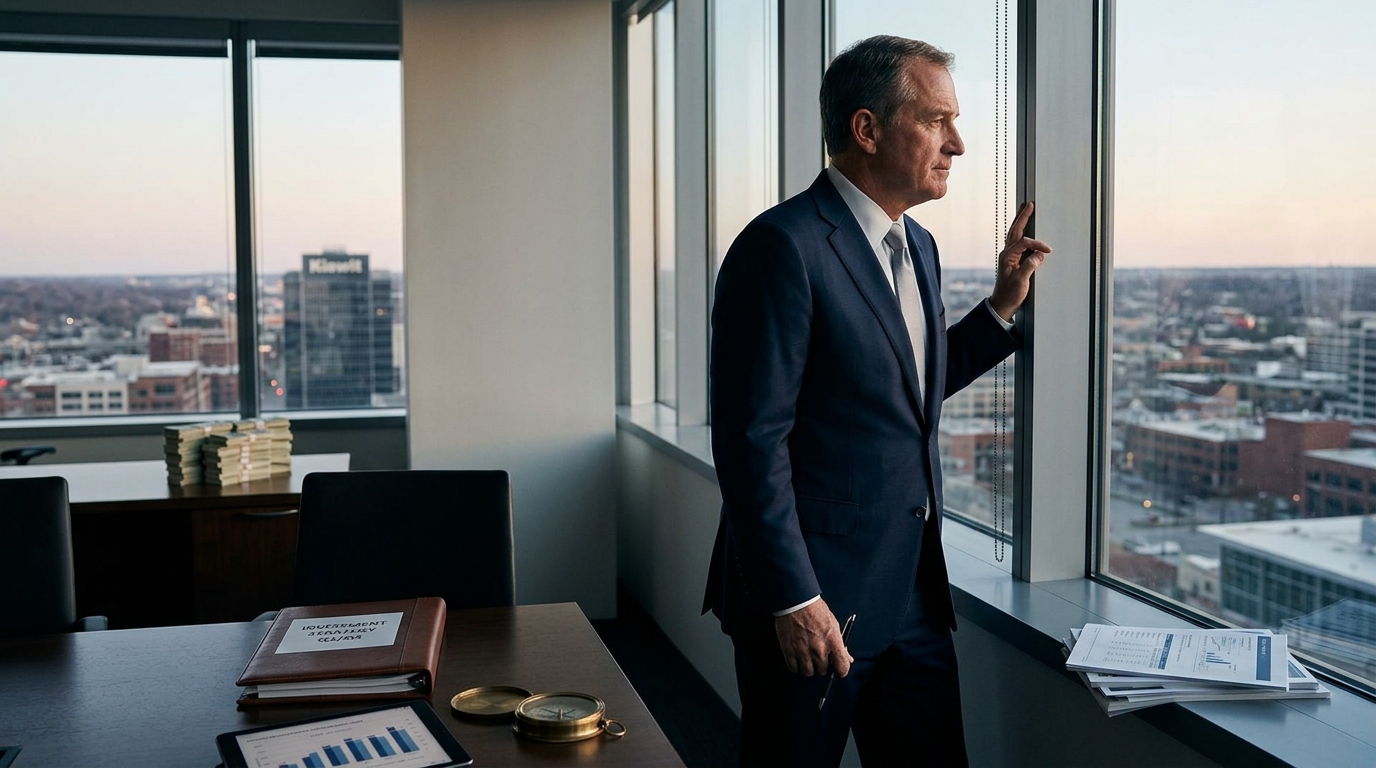
Greg Abel inherited a fortress. He is now deciding what to do with the walls.
Berkshire Hathaway’s Q2 2026 earnings report, released August 8, confirmed what many institutional investors had been waiting months to see: Abel is not Buffett, and he is not pretending to be. The cash pile shrank from nearly $400 billion at the end of Q1 to $365.5 billion at quarter’s end. The direction is clear. The pace is what matters.
In a single quarter, Abel wrote checks on two fronts simultaneously: a $10 billion addition to Berkshire’s Alphabet stake and $4.5 billion in share repurchases. The company also completed the $6.8 billion Taylor Morrison acquisition on July 24, after the quarter ended. That is roughly $14.5 billion of capital deployed inside the quarter, plus the homebuilder deal closing shortly after.
Company Profile
Berkshire Hathaway remains the most diversified large-cap in American equity markets. Its operating businesses span personal auto insurance (GEICO), freight rail (BNSF), regulated utilities and energy (Berkshire Hathaway Energy), and a manufacturing, services and retailing segment that encompasses everything from Precision Castparts to See’s Candies. The equity portfolio, worth roughly $263 billion as of Q1, sits on top of all of it. Warren Buffett remains chairman and available for counsel; day-to-day capital allocation now belongs entirely to Abel.
Abel’s background is not in stock picking. He built his career inside Berkshire’s energy division, leading utility acquisitions and large infrastructure deals. That background is now visible in how he is spending the cash.
The Numbers
- Q2 Net Income: $25.667 billion, more than doubling the $12.4 billion posted in Q2 2025
- Operating Earnings: $12.98 billion, up 16% year-over-year from $11.16 billion
- Investment Gains: $10.9 billion (mark-to-market; not indicative of underlying business performance)
- Manufacturing, Service and Retailing: Up 24% to $4.47 billion
- Berkshire Hathaway Energy: Profit surged 27% to $891 million
- BNSF Railroad: Up 6% to $1.56 billion
- GEICO Underwriting Income: Down 45.4% year-over-year to $994 million; combined ratio worsened 7.7 points to 91.2%
- Insurance Float: Grew modestly to approximately $177.5 billion
- Cash and T-Bills at Quarter-End: $365.5 billion (down from nearly $400 billion at end of Q1)
- Share Repurchases: $4.5 billion in Q2, plus an estimated $3.4 billion through July 29
- Net Equity Buyer: First quarter as a net buyer after 14 consecutive quarters as a net seller
Why the Stock Is Moving
BRK.B recently hit a 52-week high of $525.44 and now trades just below that level, near $521. The stock is near the top of its annual range despite underperforming the S&P 500 by roughly 11 percentage points in Q2 alone. That gap matters because it frames what the market is actually pricing.
Investors are not rewarding the earnings beat. They are rewarding the signal. Abel ending 14 straight quarters as a net seller of stocks, while simultaneously restarting buybacks at a scale not seen in years, reframes the investment case. This is no longer a company accumulating cash indefinitely. It is a company that found prices it was willing to pay.
The Alphabet position is the sharpest departure from the Buffett era. Berkshire’s $10 billion Q2 addition was structured as a private placement directly with Alphabet, as part of Alphabet’s broader equity financing tied to AI infrastructure spending. That structure signals a different kind of access than open-market buying, and a willingness to underwrite size when the terms are right.
The Taylor Morrison deal carries a different kind of message. Abel did not just buy a homebuilder. He signaled he would integrate it. Taylor Morrison’s CEO, Sheryl Palmer, said the plan is to integrate Taylor Morrison’s portfolio of brands with Berkshire’s site-built homebuilding operations inside Clayton Properties Group. That is an operational bet, not just a capital allocation one.
The Overlooked SpaceX Play
The opportunity right now is NOT to buy SpaceX – it’s to own the small, overlooked stocks that could rip triple digits as Elon expands his empire. That’s according to Tim Bohen, self-made millionaire who called Tesla at $37.
Macro Context
The Taylor Morrison acquisition lands at an unusual moment for housing. Mortgage rates remain elevated, supply is constrained, and affordability is stretched across most major U.S. markets. Berkshire paid a 24% premium to Taylor Morrison’s pre-announcement price, reflecting confidence that the structural housing deficit, not the current rate environment, is the relevant investment horizon.
The Alphabet bet arrives as AI capital expenditures are reshaping the competitive map in cloud infrastructure and digital advertising, the two revenue streams that underpin Alphabet’s earnings power. Abel’s willingness to commit $10 billion via private placement to a single technology company suggests he sees the AI infrastructure build-out as a decade-long tailwind rather than a near-term risk.
GEICO’s difficulties are sector-wide. Bodily injury claim frequencies rose 5% to 7% in the first half of 2026 versus 2025, while severity for the same coverage increased 10% to 12%. Allstate reported similar pressure in the same quarter, confirming the problem is actuarial and industry-driven, not a GEICO-specific management failure. The comparison is also distorted by the prior-year period, which included losses tied to Southern California wildfires. That base effect fades from here.
BNSF’s freight results reflect higher West Coast imports and tightening trucking capacity. The railroad segment is functioning as a real-time gauge of goods flow, and the current reading is not recessionary.
Forward Scenarios
Bull Case
Abel accelerates deployment. The $365.5 billion cash balance funds one or two elephant-sized acquisitions in the next 18 months, in sectors where Berkshire already has operational expertise: energy infrastructure, insurance, industrial manufacturing. The Alphabet position appreciates materially as AI monetization scales. GEICO’s combined ratio stabilizes below 92 by year-end. BRK.B reclaims its premium to book value and closes the gap with the S&P 500.
Base Case
Abel continues deploying at roughly $20 billion to $25 billion per quarter across buybacks, equity additions, and bolt-on acquisitions. The cash balance drifts toward $300 billion over the next 12 months. GEICO headwinds persist through year-end before stabilizing. Operating earnings growth lands in the mid-single digits for full-year 2026. The stock trades within a modest range of its current 52-week high.
Bear Case
GEICO’s claims environment worsens faster than management’s pricing actions can offset. A large acquisition is announced at a price the market views as expensive, calling Abel’s valuation discipline into question. The Alphabet position underperforms as regulatory or AI-competition risk materializes. BRK.B pulls back 10% to 15% from current levels as the Buffett premium erodes during the transition period.
Technical Overlay
BRK.B is trading near the top of its 52-week range of $462.55 to $525.44, and above its 200-day moving average. The stock hit a 52-week high just days before the earnings release, a pattern that sometimes precedes a sell-the-news reaction. That reaction, if it comes, is likely shallow. The buyback program establishes implicit support: Abel has said repurchases are made when he believes, after consulting Buffett, that shares trade below intrinsic value. That framework creates a floor that did not exist during the 2025 buyback hiatus.
The gap between BRK.B’s current price and its 200-day moving average is not extreme. A pullback toward the $490 to $500 range would represent roughly a 4% to 5% correction and would align with prior consolidation zones from early 2026.
What Investors Should Watch
- 13F Filing for Q2 2026 (due mid-November): The full equity portfolio disclosure will confirm the holdings Berkshire’s report flagged but did not name. That filing is the next major signal on Abel’s conviction bets.
- GEICO Combined Ratio: A reading at or below 90% in Q3 would confirm pricing actions are working. A further deterioration toward 93% or higher would extend the insurance drag into 2027.
- BNSF and BHE Capital Expenditures: Both segments have guided for $8.6 billion in combined capex for the remainder of 2026. Execution against that figure will show whether the infrastructure buildout is on schedule.
- Buyback Pace: The estimated $3.4 billion repurchased through July 29 exceeded the monthly run rate set in Q2. If the stock approaches its 52-week high and stays there, Abel’s willingness to slow buybacks will test the stated “intrinsic value” discipline in real time.
- Next Major Acquisition Announcement: The Taylor Morrison deal closed at approximately $6.8 billion equity value and approximately $8.5 billion enterprise value, modest against a $365.5 billion cash base. The market is watching for a deal one or two orders of magnitude larger.
Bottom Line
The debate about Greg Abel was always the wrong debate. Investors spent the first half of 2026 asking whether he could fill Buffett’s shoes. The Q2 results reframe the question: not whether Abel can allocate capital, but how differently he will allocate it from the man who built the cash pile in the first place.
The Alphabet bet is not Buffett. The Taylor Morrison integration plan is not Buffett. The aggressive buyback restart, after a long period of minimal activity, is not the posture of a CEO content to let the cash sit. Abel is moving. The $365.5 billion that remains tells you the biggest moves are still ahead.
GEICO is the near-term friction point. The rest of the operating businesses are performing. The capital allocation engine has restarted. What Abel does with the next $50 billion, and whether it meets his own stated threshold of intrinsic value, is the only number that truly determines where Berkshire goes from here.
For informational purposes only.