September 14, 2026
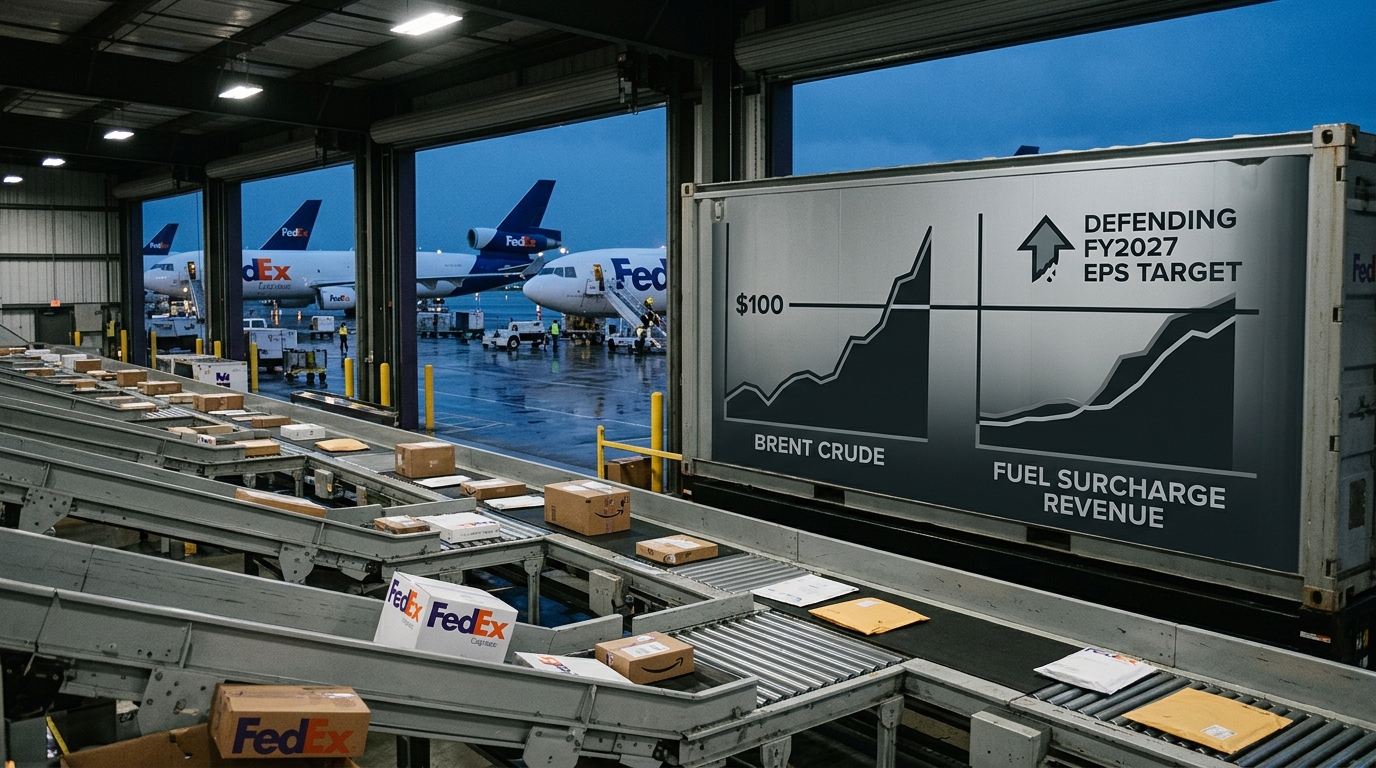
Fuel surcharge lag will show if FedEx can defend FY2027 EPS at $100-plus Brent.
Analyst Targets
- JP Morgan: Overweight
- Wolfe Research: Outperform, $254 target
- Street consensus (33 analysts): Mean target $408.81; 76% buy-rated; median $420
- Range: $479 high (full Network 2.0 credit) to $230 low (sustained fuel erosion)
The Quarter
FedEx reports Thursday, September 17, after the close. Consensus is $4.21 in adjusted EPS on $23.16 billion in revenue, against $3.83 and $22.2 billion a year ago. That implies roughly 10% earnings growth on 4% revenue expansion. The bar is achievable. The energy market the quarter covers is the complication.
If You Had to Start Over Today with Just $500…Where Would You Put It?
Hey, Tim Sykes here.
I recently sat down with one of the most successful traders I know, he’s a $24 million trading legend.
And I asked him point blank – one simple question:
“If you had to start over today with just $500…where would you put it?”
What he said next blew me away.
This has nothing to do with AI or the Magnificent 7.
Click here to watch this free presentation now – before it’s too late
Brent crude averaged about $91 per barrel in August, about $7 higher than July, a move the EIA has tied to tightening global inventories. Diesel hit record levels in early September, with the U.S. average rising to roughly $5.85 per gallon on September 4 and then pushing past $6 in subsequent readings. This is the first quarter where both figures are fully embedded in every cost line FedEx runs, and the first quarter without FedEx Freight, spun off June 1 as FDXF.
The Fuel Surcharge Problem
FedEx’s domestic Ground surcharge adjusts weekly using EIA diesel prices on a one-to-two-week lag. Its international Express surcharge runs on a two-month lag tied to prior-period jet fuel averages. When prices spike rapidly, FedEx collects surcharges set to cheaper fuel from six to eight weeks earlier while paying spot rates today.
That gap is the story. Brent moved about $7 per barrel in August alone. Management described the surcharge mechanism as doing its job on the Q3 FY2026 call, but that comment landed before the latest leg higher. The fuel cost line in the Federal Express segment, measured per package year-over-year, will reveal how wide the gap actually ran.
BlackRock Knows About It. Why Don’t More Investors?
Major institutions understand where long-term wealth opportunities can be found.
Trade Lanes
The tariff environment is more constructive than a year ago. The Supreme Court’s February 20, 2026 ruling invalidated broad tariffs imposed under the International Emergency Economic Powers Act (IEEPA). Section 232 and 301 duties remain. Management reported volume growth in both U.S. domestic and international export lanes in Q4 FY2026, with international priority revenue up 13% and export package yield up 6% in Q3. If that held into August, it partially offsets the fuel headwind.
Forward Scenarios
Bull: Federal Express segment margin holds near 6%, EPS meets or tops $4.21, management reaffirms the $16.90 to $18.10 FY2027 EPS range. Stock tests the August 13 all-time closing high of $339.35.
Base: Modest revenue beat, EPS roughly in-line, guidance intact with cautious H2 language. Stock recovers to $320 to $325.
Nuclear Energy’s Comeback Could Spark Before 2026
Global energy demand is surging and one overlooked power source is quietly returning to the spotlight. New policy support and supply constraints are setting the stage for a surprising shift in the energy markets.
Bear: The fuel lag gap is larger than expected, margin compresses, management cuts or widens the FY2027 range. Stranded Freight costs and pilot contract headwinds exceed estimates. Stock re-rates toward $285.
Technical Overlay
FDX closed at $310.51 on September 9 and goes ex-dividend today at $1.22. The August 13 closing high of $339.35 is resistance; the $280s are the structural support zone below. The stock has pulled back 8% from that peak heading into Thursday.
Bottom Line
FedEx has beaten adjusted EPS estimates in three of its last four quarters, and Network 2.0 savings have already exceeded a $1 billion transformation-related savings target. The $4.21 bar is reachable. The debate after Thursday will not be about the quarter. It will be about whether the full-year guide of $16.90 to $18.10 still holds when Brent averaged about $91 in August and diesel is at record levels. Fuel surcharge lag is a feature of this business. In a quarter where crude moved this fast, that feature has a cost. The guide is the number that matters.