
A 2026 Gold-Silver Production Story Still Under $1.
There is a specific frustration that hits investors after a major move.
You watch the obvious names run. You hear about them everywhere. Then suddenly everyone starts acting like it was obvious the whole time.
Gold and silver feel a little like that right now.
The majors moved first. The headlines followed. And now a lot of investors are looking at the sector wondering if there is still room.
But here’s the part people miss. The first move usually goes to the obvious names. The next move often starts when investors find the stories still sitting just outside the spotlight.
Here’s one of those stories sitting just outside the spotlight for now.
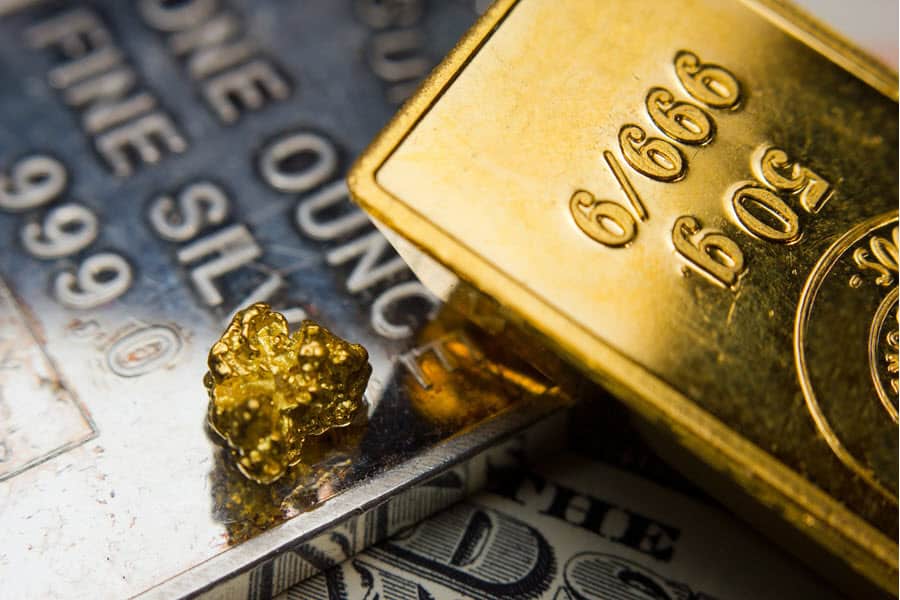
And it is not just another junior explorer asking investors to wait years for a possible discovery. It is targeting 2026 production from above-ground material already sitting at the surface.
That means potential cash flow may be coming into view much sooner than the usual junior mining timeline.
That is a rare setup: a near-production company with cash flow potential before the crowd fully connects it. In a gold and silver market that is already moving.
Find out why this gold-silver setup may not be obvious for long…
uniQure Filed for FDA Approval Before Its Four-Year Data Arrived

QURE closed Tuesday down 37% at $24.54, shedding roughly a billion dollars in market value in a single session. The stock opened down sharply, with intraday losses reported as steep as the mid-60% range before buyers stepped in. Plaintiff law firms opened securities investigations by mid-morning. By day’s end, the stock had surrendered most of a year-long rally that had carried shares above $49 in late June.
The proximate cause was straightforward. The four-year data were worse than the three-year data, and the market was not priced for that.
What the Numbers Actually Showed
uniQure’s AMT-130 is a one-time gene therapy designed to suppress the huntingtin protein that drives Huntington’s disease. At 36 months, the therapy had looked compelling: high-dose patients demonstrated an 80% slowing of disease progression on the composite Unified Huntington’s Disease Rating Scale (cUHDRS) and a 67% slowing on Total Functional Capacity (TFC) versus an updated external control dataset. That 36-month dataset became the regulatory anchor, and the company submitted its BLA to the FDA on September 2, anchored to those figures.
Then came the 48-month update. Among 12 high-dose patients, AMT-130 was associated with a 44% slowing of disease progression on the cUHDRS compared with the external control group, with a p-value of 0.144, missing statistical significance. TFC held up better: at 48 months, the company reported a 61% slowing of functional decline on TFC (nominal p=0.008) and described the treatment benefit as maintained.
The company attributed part of the cUHDRS deterioration to data quality problems in the external control, not drug failure. Missingness in the updated ENROLL-HD matched controls reached 53% at 48 months, and the company’s analysis said patients discontinuing follow-up were progressing materially faster than those remaining, which would tend to understate disease progression in controls and compress the observed treatment effect. That argument is scientifically defensible. It was not enough to reassure a market that had already priced in accelerated approval.
The Sequence Problem
The BLA landed before this data did. The company said the new 48-month topline results were not part of the Biologics License Application it submitted on September 2. That sequencing now defines the regulatory debate: in June 2026, the FDA communicated at a Type B meeting that the 36-month (three-year) analysis from the Phase I/II study would be acceptable as the primary basis of a BLA for accelerated approval, and uniQure has said it filed accordingly.
What has changed is the question of durability. Four years of follow-up is not a separate endpoint from the FDA’s vantage point, but it is exactly the kind of supplemental evidence an advisory committee will examine when weighing whether a therapy’s benefit is real and sustained.
Balance Sheet and Litigation
uniQure is not a company running out of time. As of June 30, 2026, the company reported $810.3 million in cash, cash equivalents and current investment securities, and it said it expects those resources to be sufficient to fund projected operating expenses into 2030. The legal overhang is a different matter. The securities investigations generally focus on whether uniQure made materially false or misleading statements about its AMT-130 program, including clinical results and their durability, before releasing the 48-month data showing a smaller treatment benefit than at three years.
Bull / Base / Bear
- Bull: The FDA holds firm on the 36-month anchor. The TFC signal holds at 48 months, supporting durability. An advisory committee weighs the 53% control-group missingness and accepts the company’s explanation for the cUHDRS decline. AMT-130 earns accelerated approval, and QURE trades back toward pre-crash levels. The cash runway into 2030 funds a confirmatory study without dilution risk.
- Base: The FDA requests a Type A or Type B meeting to discuss the new 48-month data before acting on the BLA. The review clock slows. Accelerated approval is deferred 12 to 18 months, contingent on a strengthened confirmatory study design. QURE trades in the low-to-mid $30s, constrained by binary approval risk and the legal investigations.
- Bear: The FDA uses the 48-month miss to reconsider whether the external-control methodology provides sufficient evidence of effectiveness. In uniQure’s own disclosures about prior FDA feedback, the agency said in March 2026 that it cannot agree that data from the Phase I/II studies, compared to an external control, are sufficient to provide the primary evidence of effectiveness required to support a marketing application for AMT-130. A complete response letter sends QURE back toward single digits.
Technical Overlay
The draft’s specific RSI and Bollinger-band figures could not be reliably verified from primary sources, and may vary meaningfully by data vendor and indicator settings. The directional point still holds: after a 37% single-session collapse to the mid-$20s, QURE is deeply oversold by common technical measures and trading below major moving averages. Near-term support is thin below the $24 to $25 area, while overhead resistance begins in the low-to-mid $30s where the post-gap breakdown started, and becomes denser into the high $30s.
Bottom Line
The debate over uniQure is not whether AMT-130 works. Four years of data suggest it likely does something meaningful for Huntington’s patients. The debate is whether the FDA will accept a 44% cUHDRS slowing on 12 patients measured against an increasingly messy external control as confirmation of what it agreed to in June. The 36-month data in the BLA have not moved. The four-year data muddied the durability argument. Owning QURE here is a bet on regulatory goodwill that the company spent the last year earning, and then one morning’s data release put back in question.