June 19, 2026
Airlines Just Got Their Best News of 2026
The Iran peace deal collapsed the jet fuel cost that was strangling earnings. The second-order trade is more interesting than the first.
For most of 2026, the airline sector has been trading like a wounded animal. Oil above $100. Jet fuel costs up nearly 88% since late February. Earnings guidance slashed. United cut its full-year EPS outlook to $7 to $11 per share from an original $12 to $14. American Airlines warned the year could end in a net loss. The International Air Transport Association projected global airline profits could fall by half in 2026, sliding to $23 billion – a collapse from prior forecasts.
Then, on June 15, something changed.
The United States and Iran signed a memorandum of understanding aimed at ending a 15-week conflict and reopening the Strait of Hormuz. Brent crude fell nearly 5% to around $83 per barrel, a three-month low. WTI dropped to $80.75. Analysts had estimated the Strait of Hormuz blockade – through which roughly one-fifth of global oil shipments pass – had been adding $10 to $15 per barrel in geopolitical risk premium to global oil prices. That premium is now in the process of unwinding.
Your Complimentary Dividend Package
Today, you can claim the Ultimate Dividend Package… For FREE. (No credit card required!)
Inside, Marc Lichtenfeld – bestselling author of Get Rich with Dividends and world-renowned income expert – is giving away his top dividend picks for 2026.
You’ll get details on…
• Marc’s No. 1 dividend stock for 2026
• The safest 9% dividend in the world
• The top three “Extreme Dividend” stocks
• And much, much more!
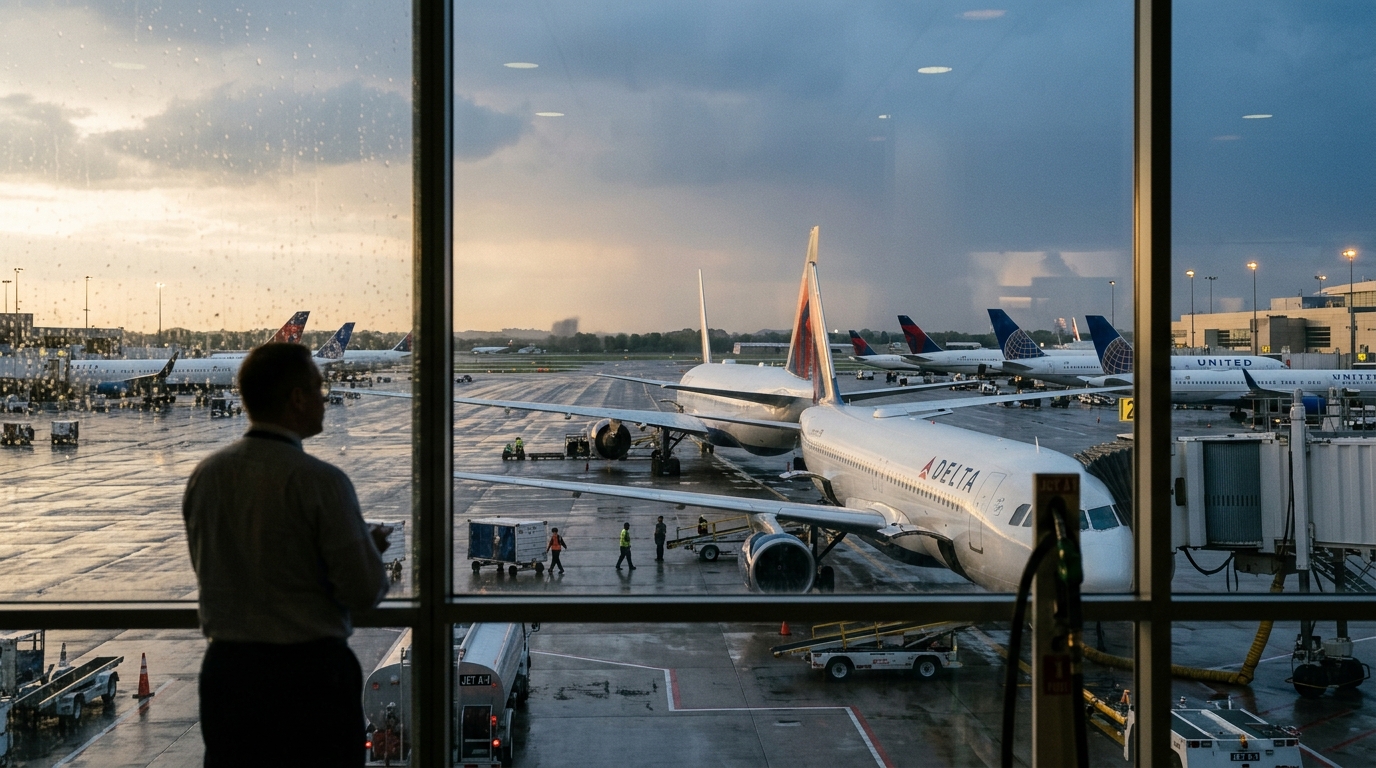
United Airlines rose 3.9% to a record close near $120 the day of the announcement. Delta and Southwest each gained over 1%. Cruise operators Royal Caribbean, Carnival, and Norwegian also moved higher. The market’s reaction was immediate. But the more interesting question isn’t what happened on June 15. It’s what happens next.
The fuel cost math matters here. IATA projected airline fuel expenses could surge to $350 billion in 2026, compared to $252 billion in 2025. That’s an incremental $100 billion burden spread across the global industry. A sustained $15 to $20 per barrel decline in Brent crude doesn’t eliminate that headwind, but it materially changes the calculus. For an industry where fuel represents 20% to 30% of operating costs, a $15 drop in crude translates into hundreds of millions in quarterly savings at the major carrier level.
Delta’s position is particularly worth watching. The carrier owns the Trainer oil refinery outside Philadelphia – an unconventional hedge that generated roughly $300 million in Q2 benefit when crack spreads were painfully wide during the conflict. With oil prices now falling, that refinery tailwind fades. But the offset is a structural one: lower fuel input costs mean Delta’s underlying operating economics improve without the hedging offset. CEO Ed Bastian had declined to update full-year guidance in April given fuel uncertainty. That guidance now has room to move upward.
Here’s where it gets interesting. Morgan Stanley raised its price target on DAL to $105 from $90 on June 1, before the peace deal. DAL is up more than 20% in 2026 overall, including a nearly 38% move in the three months ending June 15, and is already trading above its prior consensus target. That’s a signal the market was beginning to look through the fuel crisis even before resolution.
Why Didn’t Your Bank Tell You This?
For decades, America’s biggest banks quietly used a powerful compounding strategy most families never heard about.
The results? $1,000 potentially growing into more than $556,000 since 2000.
It’s simple, legal, and now available to everyday investors.
The structural travel demand backdrop supports the thesis beyond just the oil move. Global business travel spending is projected to reach $1.62 trillion in 2026, according to the Global Business Travel Association, representing 8.1% year-over-year growth. The 2026 FIFA World Cup in the United States, Canada, and Mexico is projected to drive a 3.7% increase in international visits to North America. United reported its highest quarterly revenue in company history at $15.4 billion in Q4 2025. The planes remain full. Demand is not the problem.
The risks are still real. The peace agreement is a memorandum of understanding, not a finalized treaty. The formal signing was scheduled for June 19 in Switzerland. Markets are forward-looking and have already priced in significant optimism. If the deal unravels – and there is historical precedent for that – oil reverses, and the airlines give back gains quickly.
Total industry revenue for 2026 is still projected to reach $1.17 trillion, suggesting analysts see a floor even under a difficult scenario. But the gap between that floor and what the sector could earn in a sub-$85 oil world is substantial. The biggest beneficiaries remain the carriers with the most fuel-cost leverage: United, which had the most aggressive guidance cuts, and Delta, which carries both the hedging infrastructure and the premium passenger demand that supports fare pricing power.
The fuel crisis was always temporary. Whether the peace holds is the real question. For now, the market is betting it does.