July 12, 2026
CEG Is Down 40% From Its Peak
Featured: CEG Is Down 40% From Its Peak
Below is an important message from one of our highly valued sponsors. Please read it carefully as they have some special information to share with you.
Dear Reader,
When this man warned of the 2008 crisis two years before it ever happened…
The CIA began circulating his warning among its senior staff.
And his full thesis was so in depth that it appeared in the CIA journal “Studies in Intelligence”.

That information remains classified to this day.
Even still, in 2016 when he went on national television to predict the election of Donald Trump…
Most people tried to dismiss him saying that “Hillary is ahead in every poll”…
But events shaped up just the way he said.
Then in 2019, a full 4 months before the coronavirus hit..
He said that a global pandemic could be the cause of the next financial crisis…and that a crisis of this proportion would happen with “near 100% certainty” within the next few years…
Most people thought he finally lost it.
But we all know what happened next…the world was nearly brought to its knees by this “unforeseen” event.
Now this former advisor to the CIA and the Pentagon is issuing a shocking new warning.
One that has to do with the brewing bubble in AI – and an event set to take place just DAYS from now.
If you have money in the markets, or wealth to protect, then you need to heed his warning.
Because once this crisis hits…it will already be too late.
>>> Click Here to See His New Warning <<<
Regards,
Matt Insley
Publisher, Paradigm Press
FEATURED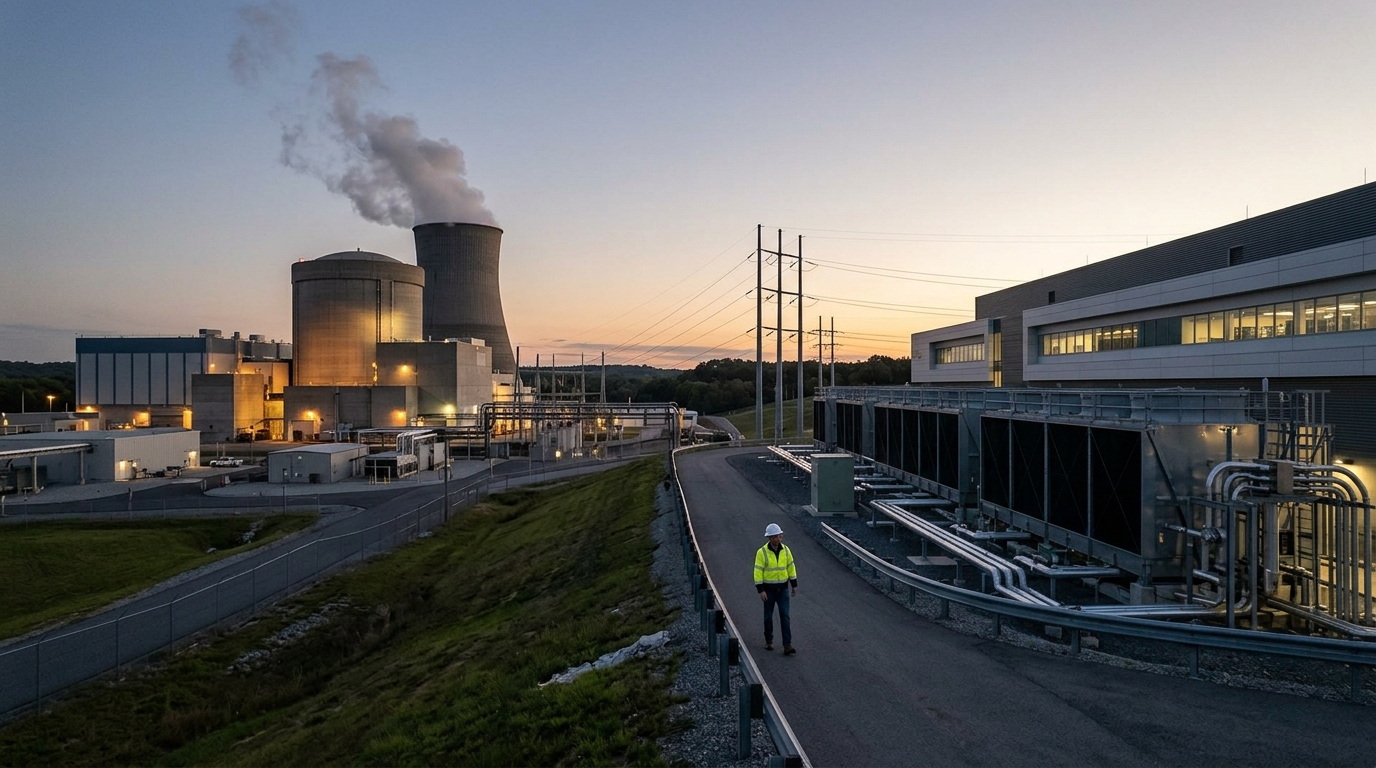
CEG Is Down 40% From Its Peak
There is a version of this story where Constellation Energy is the most important infrastructure company in America right now.
There is another version where it is a utility that just absorbed a massive acquisition and faces years of capital-heavy earnings pressure before the payoff shows up.
Both versions are currently trading at around $251 a share.
The Context
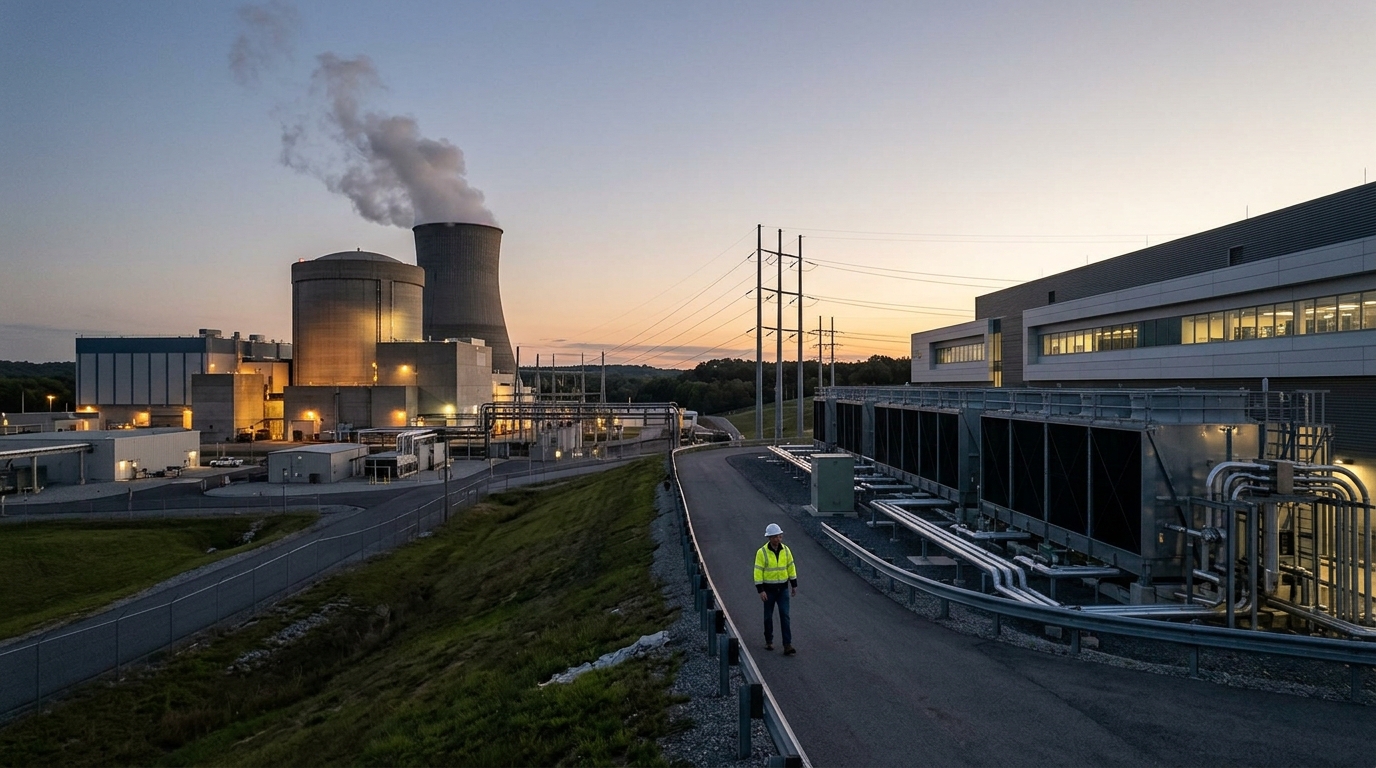
Constellation Energy runs the largest commercial nuclear fleet in the United States, 21 reactors. For a long time, that was a liability. Nuclear is expensive to maintain, slow to build, and politically complicated. Then AI showed up and changed the equation entirely.
Data centers do not sleep. They need power 24 hours a day, 7 days a week, 365 days a year. Solar and wind cannot guarantee that. Natural gas can, but it emits carbon and hyperscalers have public decarbonization commitments. Nuclear is one of the only carbon-free sources that can deliver around-the-clock power at scale today.
So Microsoft signed a 20-year power purchase agreement for the restart of Constellation’s Crane Clean Energy Center in Pennsylvania, the former Three Mile Island Unit 1. Meta followed with a 20-year deal to buy the entire 1.1 gigawatt output of Constellation’s Clinton Clean Energy Center in Illinois, starting in mid-2027. CEG has been one of the clearest beneficiaries of that demand shift.
Then Came Calpine
On January 7, 2026, Constellation completed its $16.4 billion acquisition of Calpine Corporation, including roughly $4.5 billion in cash and 50 million newly issued shares. The deal also brought approximately $12.7 billion of Calpine net debt onto the balance sheet. Combined, the two companies now operate roughly 55 gigawatts of capacity from nuclear, natural gas, geothermal, hydro, wind, and solar, making it the largest private-sector power producer in the world.
The stock had other ideas. The 52-week high was $412.70. It is currently trading near $251. That is roughly a 39% discount to the top.
Some of that is the market digesting acquisition risk. Some of it is the capital spending cycle hitting free cash flow hard in the near term. And some of it is a crowded energy trade getting unwound as rates stayed higher for longer than the bulls expected.
STOCK WARNING: Move Your Money This Monday
20-year trading veteran Tim Bohen just identified a dirt-cheap stock that could soar 100% or MORE this coming Monday…
Click here for the full details on this urgent opportunity now.
What the Numbers Actually Show
In Q1 2026, Constellation posted adjusted operating earnings of $2.74 per share, up from $2.14 in Q1 2025, a 28% year-over-year increase. The nuclear fleet ran at a 92.3% capacity factor, producing 40 terawatt-hours of carbon-free electricity. Management affirmed full-year adjusted operating earnings guidance of $11 to $12 per share.
The forward earnings target implies a base EPS compound annual growth rate of more than 20% through 2029. Free cash flow before growth is projected at $8.4 billion for 2026 to 2027, then climbing to $11.5 to $13 billion for 2028 to 2029 as contracted revenue scales up.
The P/E sits near 22 times on trailing earnings. Q2 results are scheduled for August 6, 2026.
The Demand Math Is Staggering
The four largest hyperscalers, Amazon, Microsoft, Google, and Meta, are collectively guiding to roughly $725 billion in combined 2026 capital expenditures, up about 77% from the already-record $410 billion spent in 2025. The overwhelming majority of that is going to AI data centers, GPUs, and power infrastructure.
That spending does not mean much without the electricity to back it up. And that is exactly where Constellation sits.
What I Am Thinking About
The Calpine deal is either genius or a distraction. Adding a large natural gas portfolio right when the entire investment case is built around nuclear’s clean-energy premium creates a tension worth sitting with. Gas contracts do not command the same pricing power as nuclear clean-energy agreements. If hyperscalers ever walk back their carbon commitments, unlikely but not impossible, that math shifts in a real way.
Slight tangent, but it matters: CEG also just filed for license renewals to extend operations at its Ginna and Nine Mile Point reactors in upstate New York through at least 2049. That is the kind of move that does not show up in next quarter’s numbers but absolutely shows up in long-duration contract value. Investors focused on short-term catalysts tend to miss it.
The capital spending cycle is also real. The near-term free cash flow picture is heavy. That means the stock is more dependent on investor patience than on quarterly beats right now. That is fine if you have a three-year view. It is uncomfortable if you are marking to market every month.
Here is what is interesting: the long-duration contracted revenue story is arguably stronger today than it was when the stock was at $412. The business got bigger. The backlog got longer. The stock got roughly 40% cheaper. That combination is exactly what a value-oriented investor should at least be tracking closely heading into Q2.
The next near-term catalyst is earnings on August 6. After that, it is whether any new hyperscaler power deals get announced in the back half of the year. Those have moved this stock meaningfully in the past. No reason to think that changes.
For informational purposes only.