

August 7, 2026
Berkshire’s Housing Empire Is Now Real
Featured: Berkshire’s Housing Empire Is Now Real
Editor’s note: CNBC nicknamed him “The Prophet.” He called Netflix at 78 cents, Apple at 38 cents, and Amazon at $2.80 – long before anyone knew their names. He’s appeared on 60 Minutes twice. Now former hedge-fund manager Whitney Tilson is naming what he calls “America’s Greatest Retirement Stock” right now – one company at the center of the AI and energy boom. He’s giving away the name and ticker, free. See below…
It beat Apple, Amazon & the S&P – COMBINED
Every talking head on CNBC will tell you to own Apple.
Or Amazon.
Or just “buy the index.”
Here’s what they won’t tell you:
There’s a single, little-known stock that has beaten all three – COMBINED – over the past decade.
Apple returned about 1,200%. Amazon, 660%. The S&P 500, 330%.
This one company? Over 2,200%.
>>>> See which company here <<<
And stretch it further? More than 8,300% in total returns.
Enough to turn $10,000 into $830,000.
This little-known company has virtually no debt… only 114 employees… $798 million in annual revenue… more than 60 cents of every dollar flowing straight to the bottom line.
It sits at the dead center of the biggest spending boom in American history – AI, energy, and a critical third industry almost nobody is talking about yet.
>>>> Learn what the third industry is <<<
And right now, there’s a rare discount window open on this stock. Past discount windows like this one have turned a $10,000 stake into $55,000 – in just over 12 months.
I just recorded a full presentation – name, ticker, complete story – 100% free.
>>>> Watch: The One Stock That Beat Apple, Amazon, and the S&P 500… Combined <<<
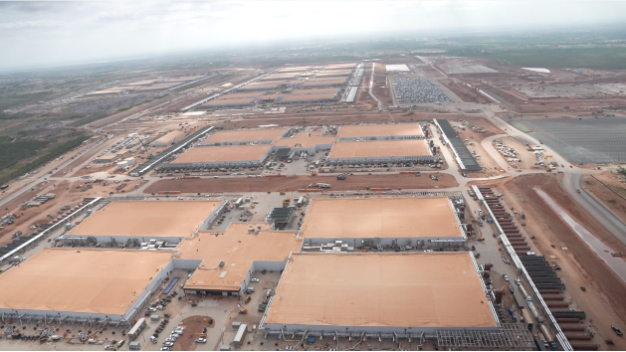
I recently flew to West Texas to see this company’s operations firsthand…
What I saw from a helicopter above the largest construction site in America told me everything the performance numbers couldn’t.
Regards,
Whitney Tilson
Senior Analyst, Stansberry Research
P.S. If it goes the way I think it will – Wall Street gets forced into this stock.
That “third industry almost nobody is talking about yet” in the presentation?
It sits right at the heart of Trump’s “Project Vault” – signed February 2nd to set hard price floors on America’s most critical minerals.
July 13th is when Washington makes that call.
If those price floors get the greenlight, every fund and every trading desk rushes in at once. A stock already beating Apple, Amazon, and the S&P combined doesn’t stay at a discount when that happens.
>>>> Watch the free presentation <<<
Berkshire’s Housing Empire Is Now Real

The deal is done. Taylor Morrison officially delisted from the NYSE on August 3, 2026. The arbitrage window closed. The news cycle moved on. And in doing so, the market buried the more consequential question: what does the homebuilding landscape look like now that Berkshire Hathaway owns the fourth-largest residential construction operation in the United States?
That question matters to every investor holding D.R. Horton, Lennar, PulteGroup, or NVR. Not because of any immediate catalyst, but because the competitive architecture of American homebuilding just shifted in a way that has no historical precedent.
The Deal, By the Numbers
- Acquisition price: $72.50 per share, all cash
- Equity value: approximately $6.8 billion
- Total enterprise value: approximately $8.5 billion, including debt
- Premium paid: 24% to Taylor Morrison’s May 29, 2026 closing price of $58.50
- Close date: July 24, 2026
- Delisting date: August 3, 2026
- Greg Abel’s cash deployed in housing: $6.8 billion equity, among his first major strategic acquisitions as CEO
Despite a 24% takeover premium, Berkshire acquired at earnings multiples lower than those of its peers, which tells you more about how the market was valuing the sector than it does about the generosity of the offer.
The SpaceX IPO Was Only the Beginning…
Silicon Valley insiders, Tesla and SpaceX executives, and even Elon’s own biographer say THIS is what he’ll do next. But few realize how dramatically this controversial initiative could reshape society – or how quickly it could unfold. The full story here.
Company Profile: Taylor Morrison
Taylor Morrison Home Corporation operates as a homebuilder and land developer in the United States, designing, building, and selling single and multifamily detached and attached homes for entry-level, move-up, and resort lifestyle buyers under the Taylor Morrison and Esplanade brand names. The company is also involved in the build-to-rent homebuilding business under the Yardly brand name, and provides financial services, title insurance, and closing settlement services.
In 2025, Taylor Morrison reported home closings revenue of $7.76 billion and delivered 12,997 homes across markets in 12 states. The builder operated 341 active selling communities and employed about 3,000 full-time team members.
Taylor Morrison also offers mortgage, title, escrow, and homeowners insurance services in-house. That integrated model matters because it creates additional revenue streams tied to each home sale, not just the construction itself. For Berkshire, a conglomerate that collects earnings from every angle of a transaction, that is precisely the kind of business architecture that earns a long-term commitment.
What Berkshire Actually Built
This is not a housing bet. It is a housing platform. The distinction matters enormously.
Under Berkshire, Taylor Morrison will continue to be led by CEO Sheryl Palmer, who will oversee the integration of Taylor Morrison’s portfolio of brands, including Esplanade, Yardly, and Taylor Morrison Home Funding, with Berkshire Hathaway’s site-built homebuilding operations comprising Clayton Properties Group, a collection of 15 established regional and local homebuilders.
Combined, Taylor Morrison and Clayton Properties Group delivered nearly 23,000 site-built home closings in 2025, operate in 21 states and 52 housing markets, and serve more than 700 communities nationally, positioning the combined business as the fourth largest homebuilding operation in the United States.
Berkshire’s existing housing-adjacent holdings include Clayton Homes in manufactured housing and Berkshire Hathaway HomeServices, described by the company as the country’s largest residential brokerage business and the owner of the Berkshire Hathaway HomeServices franchise network. Layer in Taylor Morrison’s in-house mortgage and title operations, and Berkshire now touches manufactured housing, site-built construction, active-adult communities, build-to-rent communities, real estate brokerage, mortgage origination, title insurance, and homeowners insurance. That is not a cyclical position in a single asset class. It is a vertically integrated housing conglomerate.
Rick Palacios, managing principal and director of research at John Burns Research and Consulting, put the strategic read plainly after the deal was announced. Berkshire, he said, is “creating a vertically integrated housing sector powerhouse.”
The Abel Stamp
Under Buffett, Berkshire’s operating companies largely functioned independently, with limited coordination across businesses. Combining Taylor Morrison with Clayton under a dedicated housing operation would resemble Berkshire Hathaway Energy, where Abel spent years overseeing a collection of utility businesses.
That is the key tell. Abel ran Berkshire Hathaway Energy for years before becoming CEO. He knows what integrated operational platforms look like, and he knows how to extract margin improvements from cross-company coordination. The language in the deal announcement was not an accident. Abel said he expects to “unify our site-built homebuilding operations into a combined platform,” referring to Taylor Morrison and Berkshire-owned Clayton operations. That word, unify, does not appear in the traditional Berkshire vocabulary.
As one CFRA analyst observed after the deal: “As Greg looks forward, he is definitely going to want to make his own stamp on the company. Because he’s an operations guy, his stamp on the company may be how the existing businesses operate and function.”
The Macro Context
Berkshire is making this bet into a market that is still fundamentally supply-constrained, despite elevated rates and soft sentiment. With a nationwide shortage of roughly 1.2 million housing units, the best way to ease the housing affordability crisis is for policymakers to remove barriers that are hindering builders from building more homes and apartments, according to NAHB chief economist Robert Dietz.
The 30-year fixed-rate mortgage averaged 6.69% as of August 6, 2026, up from 6.66% the prior week. Existing home sales pulled back 2.4% in June to a seasonally adjusted annual rate of 4.09 million units. The resale market is locked. Existing owners with an average outstanding mortgage rate around 4.4% have no incentive to sell into a roughly 6.7% environment.
That lock-in dynamic is the single most powerful tailwind for new construction. When existing supply is frozen, buyers turn to builders. Homeowners are reluctant to sell and risk losing their low mortgage rates, but homebuilders remain eager to close, especially as new home inventory rises, with builders willing to offer concessions such as price reductions or temporary interest-rate buydowns. Berkshire’s patient capital is structurally suited to this cycle. No quarterly earnings pressure. No analyst calls. A cash hoard still near $397 billion backing any downturn.
The Consolidation War Nobody Is Fully Watching
Berkshire is not the only institution betting on U.S. housing through acquisition. The U.S. homebuilding industry is in the midst of a consolidation wave that accelerated dramatically in 2026. Japanese firms have been particularly aggressive, with multiple U.S. homebuilders acquired or partially acquired by Japanese companies in a tight window this spring.
Sumitomo Forestry’s $4.5 billion Tri Pointe buyout was announced at $47.00 per share in an all-cash deal. Sekisui House agreed to buy MDC Holdings for $4.95 billion in 2024, and Tokyo-based Hajime Construction took a 51% stake in Utah-based Wright Homes in March 2026.
Japanese firms often have a financial edge thanks to lower interest rates at home, and that advantage has helped them outbid domestic giants like Lennar and D.R. Horton on multiple deals, according to industry insiders.
Two entirely different capitals, with entirely different cost structures and time horizons, are converging on the same thesis. That is not noise. It is a structural signal about where long-duration value accrues in this cycle.
Are you a long-term investor? You’ll Want to Hear This…
The President of the United States once went to bat for an American energy company that’s merging energy and AI.
It’s wildly cheap, and one man believes it could be the long-term answer to our AI energy needs.
Bull / Base / Bear Scenarios for BRK.B
Bull Case
Mortgage rates fall toward 6% by mid-2027 as the Fed cuts twice more. The lock-in effect eases, transactions rise, and new-home demand accelerates. Taylor Morrison’s higher-margin Esplanade active-adult communities and Yardly build-to-rent platform scale into that demand. Taylor Morrison’s higher-margin Esplanade communities often take longer to develop, which makes sense for Berkshire’s patient capital. The unified Berkshire platform generates cross-sell revenue on mortgage, title, and insurance with every closing. BRK.B re-rates on housing optionality that the market has not fully priced.
Base Case
Rates stay near 6.5% through 2026. New-home closings grow modestly. The Taylor Morrison platform integrates without major disruption. With the two companies, Berkshire can serve a much broader customer base, from entry-level to move-up and luxury buyers, through offerings spanning manufactured, site-built, and master-planned communities. Integration friction is real but contained. BRK.B trades in line with book value, and the housing segment contributes steadily rather than dramatically.
Bear Case
Rates stay elevated, affordability deteriorates further, and single-family housing starts continue to slide amid affordability pressures. The Taylor Morrison platform faces margin compression as buydowns and incentives deepen. Integration between 15 Clayton regional builders and the Taylor Morrison brand proves operationally complex. Berkshire deployed $6.8 billion near the top of a weak cycle rather than at the trough it was pricing in.
Technical Overlay: BRK.B
Berkshire Hathaway Class A shares have been modestly lower year to date as the market weighs Abel’s more concentrated portfolio against the group’s large cash position and long-standing core holdings. BRK.B trades below its prior cycle high from May 2025, leaving a favorable risk/reward toward reclaiming that level if operating earnings hold and capital deployment turns more active.
The Taylor Morrison deal closed after Q1. It will begin showing in Berkshire’s Q2 and Q3 operating results. The first quarter with a meaningful housing contribution lands when Berkshire reports later in 2026. That is when the market gets its first read on integration progress and whether the combined platform’s margins hold.
What Investors Should Watch
- Berkshire Q2/Q3 operating earnings: Taylor Morrison closings will appear in Berkshire’s results for the first time. Watch for any added segment disclosure on homebuilding economics.
- Mortgage rate trajectory: NAHB expects mortgage rates to remain slightly above 6% this year, with the Federal Reserve projected to make two 25 basis point rate cuts to reach a terminal funds rate of 3.25% by year-end. Any acceleration in rate relief pulls the housing cycle forward.
- Remaining public homebuilders: Despite a 24% takeover premium, Berkshire acquired at earnings multiples lower than those of its peers. If the acquisition establishes a new valuation floor for private-market buyers, those public multiples may compress further or attract strategic interest.
- Berkshire’s remaining Lennar stake: Berkshire still holds a meaningful stake in Lennar. That stake, combined with a wholly owned builder, creates a layered exposure to any housing recovery.
- Insurance integration: Berkshire completed the Taylor Morrison acquisition without a stated plan to link it to its insurance operations, despite being one of the largest P&C insurers in the world and Taylor Morrison bringing an in-house homeowners insurance arm into the fold. Whether that linkage gets formalized is a meaningful optionality event.
Bottom Line
The Taylor Morrison acquisition is not a housing bet. It is the completion of a housing architecture that Berkshire has been assembling, mostly quietly, for more than two decades. Manufactured homes through Clayton. Brokerage through HomeServices. Building products scattered across multiple subsidiaries. Now site-built construction at national scale through a unified Taylor Morrison and Clayton Properties platform.
Berkshire and the Japan-based housing companies expanding across the United States appear to be converging on a similar thesis: U.S. housing is not merely a cyclical boom-bust production business. It is a long-term platform business focused on timeless durable-necessity customer value.
The real question for BRK.B investors is not whether housing recovers. It will. The question is whether Abel can convert a collection of separately operating housing businesses into something that earns a premium return on capital relative to public peers. That is an operational question, not a macro one, and it will be answered across the next several quarters of Berkshire filings. The market has not yet assigned meaningful credit for it.
For informational purposes only.