The most revealing thing about DeepSeek’s latest funding round is not the size. It is who is writing the checks.
DeepSeek is close to raising at least $12 billion in a new round, having originally aimed to raise about $7.5 billion at a valuation of roughly $75 billion, with people familiar with the matter saying the total could approach about $15 billion. Tencent and battery maker CATL are among the largest investors. That combination of a social media and gaming conglomerate and the world’s dominant electric vehicle battery manufacturer tells you almost everything about how China has decided to fund its AI champions.
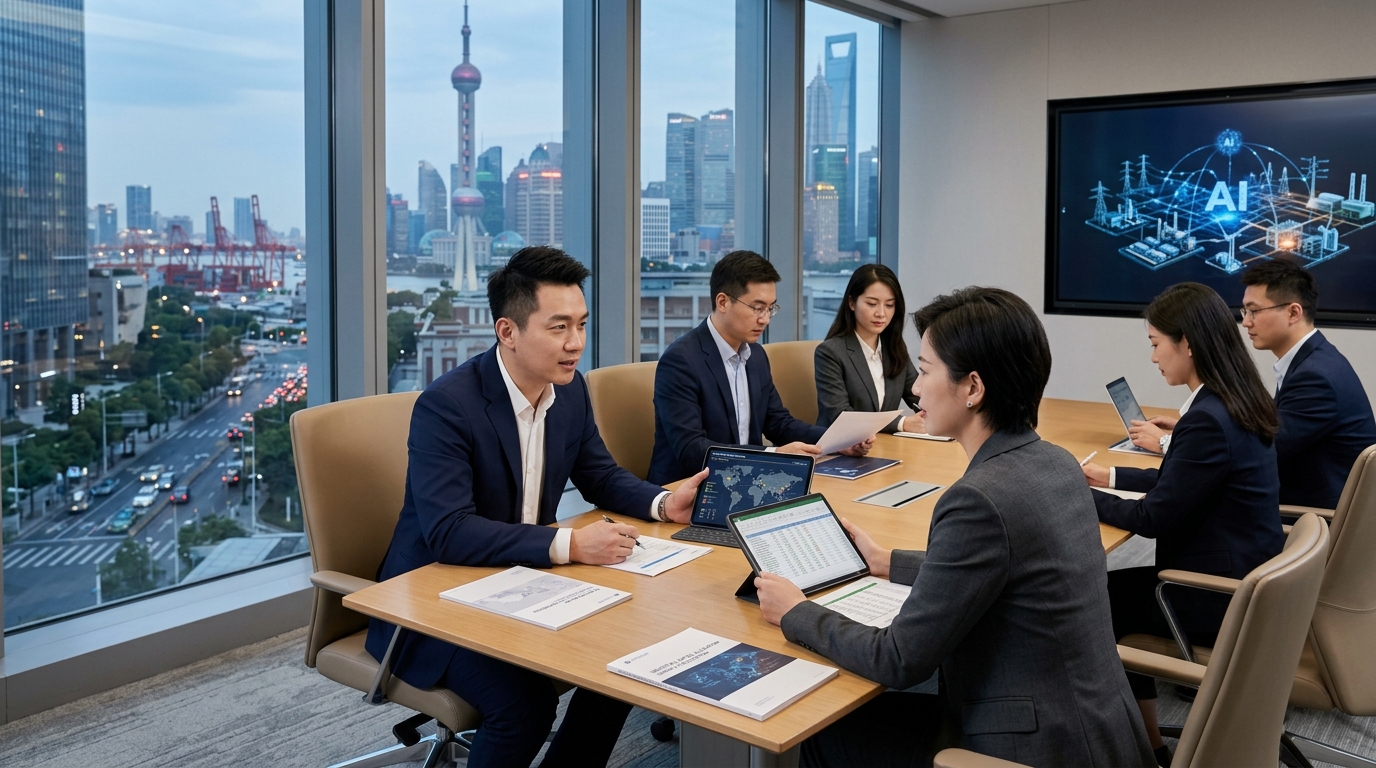
This is not a venture capital story. DeepSeek is considering expanding the round to as much as 100 billion yuan, about double its earlier target, with state-backed funds and corporate investors jostling for stakes. The company has fielded strong interest from state-backed funds, investment arms of listed Chinese companies, and venture capital firms. DeepSeek is vetting prospective investors closely, turning away some private investment funds and keeping the pool largely to government and corporate money.
The motivations of each industrial backer are specific and strategic, not merely financial. CATL’s participation looks like a strategic energy-infrastructure angle as much as an equity bet. Tencent’s participation looks strategic too: if DeepSeek becomes a foundational model supplier across China’s consumer platforms, Tencent has incentives to ensure it is not on the outside.
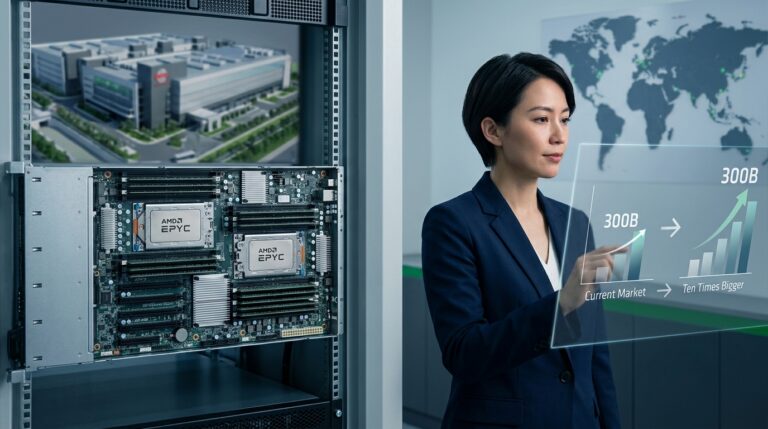
The company is building a data center in Inner Mongolia that is expected to deploy at least 160,000 Huawei Ascend 950DT AI chips. A primary goal of this funding is to reduce the company’s reliance on foreign technology, as Nvidia faces strict US export controls regarding advanced chip sales to China. CATL’s energy storage expertise becomes directly relevant the moment you are trying to power a facility at that scale on domestic soil.
The all-domestic investor syndicate pairs platform giants with an industrial energy player and state AI capital. That binding matters enormously for long-term investors watching KWEB and FXI. The companies leading this round are not passive shareholders. They are anchoring themselves to DeepSeek’s model ecosystem for years, which means the moat around the platform they helped build is partially their own moat too.
DeepSeek’s flagship V4 models, released in preview form earlier this year, were widely praised for strong performance relative to leading US models while emphasizing low cost. At investor meetings this year, founder Liang Wenfeng emphasized keeping DeepSeek’s models open and framed the company’s overarching aim as advancing toward artificial general intelligence, with commercialization treated as secondary. That philosophy, unusual for a company commanding a roughly $75 billion valuation, makes the industrial capital strategy more coherent: if the models stay open, the value concentrates in infrastructure and access, exactly where CATL and Tencent operate.
After the round closes, DeepSeek plans to restructure in preparation for an IPO in early 2027. By then, the architecture of China’s AI ownership will be largely set. The investors who mattered will not be the venture funds who were turned away. They will be the industrial champions who understood that controlling the energy, the platform, and the chips around an open-source AI model can be more durable than owning the model itself.