July 3, 2026
SoftBank’s $40B Problem
Featured: SoftBank’s $40B Problem
One student learned this Friday trading method and tried it on a little-known stock.
He bought in late Friday.
Spent the weekend with his family.
By Tuesday, he had closed the trade for $15,820 in total profit.
Results like this aren’t typical, trading carries risk and results may vary.
But this is the type of setup the method is designed to find.
The full training is now available for $7.
It covers the step-by-step process, how to spot the right opportunities, and when to exit.
FEATURED
SoftBank’s $40 Billion Problem. OpenAI Is Not Going Public.
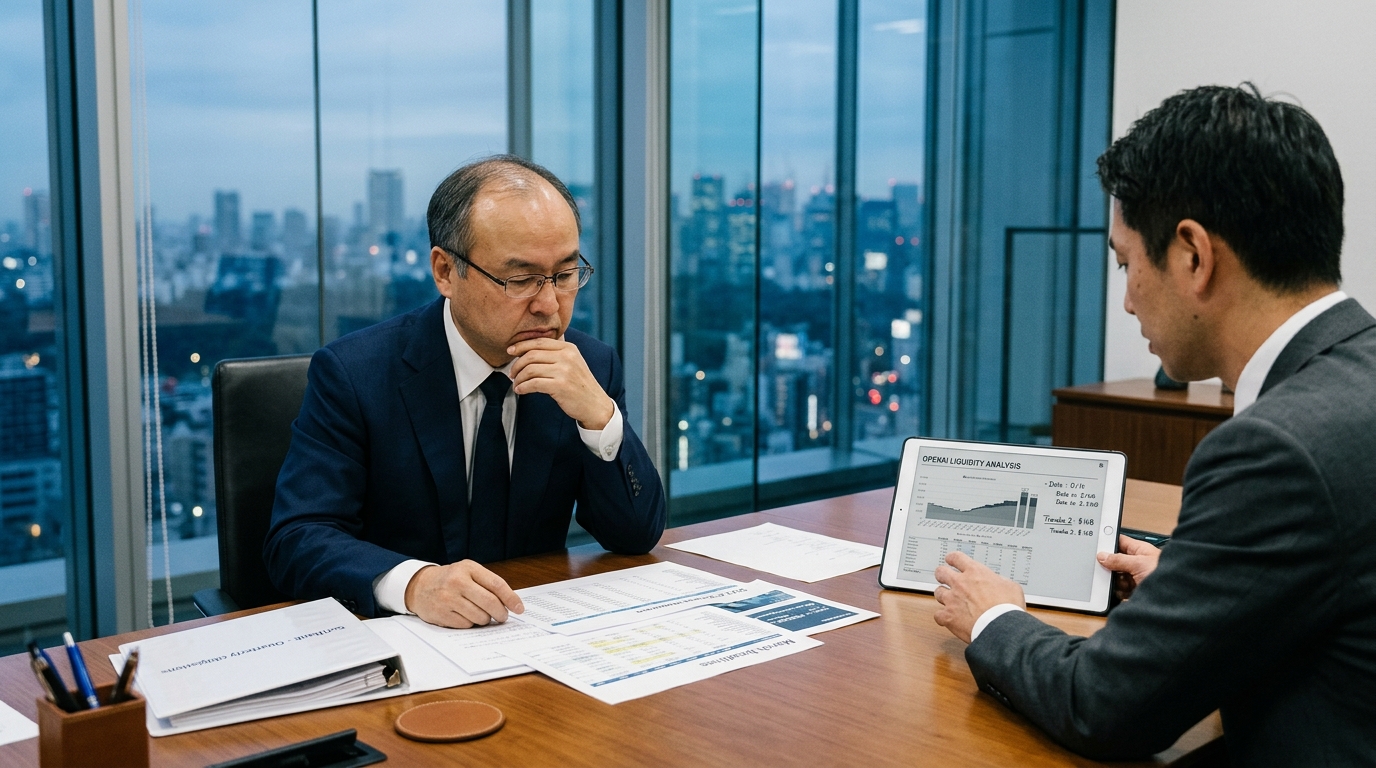
On July 1, SoftBank wired another $10 billion to OpenAI. Tranche two of three. The second installment of a $30 billion follow-on commitment SoftBank made back in February 2026, routed through Vision Fund 2.
Six days earlier, its stock had closed down 12.53% in a single session.
Those two facts are the whole story, really. SoftBank keeps deploying capital into a company that keeps pushing back its IPO. And the bridge loan funding all of it is due in March 2027.
The Numbers Are Getting Hard to Ignore
SoftBank carries a $40 billion bridge loan it took on to fund its OpenAI commitments, with repayment due in March 2027. The third and final $10 billion tranche hits on October 1. Upon completion, SoftBank’s cumulative investment in OpenAI is expected to reach approximately $64.6 billion, representing roughly a 13% ownership stake.
The plan was always to recycle that capital through a public listing. Fast liquidity event, mark to market, refinance the bridge. Clean.
That plan is now in question. The New York Times reported on June 25 that OpenAI is leaning toward postponing its IPO to 2027. CEO Sam Altman has been clear: any valuation below $1 trillion is a non-starter. Meanwhile, OpenAI’s current private valuation sits at roughly $852 billion following its $122 billion funding round in March 2026.
So SoftBank is sitting on a position approaching $65 billion, with a $40 billion bridge loan due in eight months, and the exit it was counting on is now penciled in for sometime next year. Maybe.
The Financials Underneath OpenAI
This is where it gets interesting. Audited financial documents verified by the Financial Times show OpenAI posted a $20.92 billion operating loss in 2025 on $13.07 billion in revenue. The headline net loss figure cited widely is $38.5 billion, but that includes a $41.55 billion non-cash charge tied to OpenAI’s conversion from a non-profit structure. The operational cash reality is sobering enough without the accounting noise.
Q1 2026 was not better. OpenAI generated $5.7 billion in revenue for the quarter while burning $3.7 billion in cash. The non-GAAP operating loss came in at $6.95 billion, implying a -122% operating margin. The total Q1 net loss hit $21.3 billion, with roughly $12.4 billion of that driven by non-cash accounting charges tied to investor rights revaluation.
Altman wants $1 trillion. OpenAI’s own bankers are telling him the market is not ready for that number right now. Advisors reportedly pointed to SpaceX’s post-IPO volatility as a warning sign. SpaceX went public on June 12 at roughly a $1.77 trillion market cap and quickly ran to around $225 per share before pulling back sharply to around $156 by late June. That kind of price action from the most anticipated tech listing in years is not a green light for OpenAI to follow immediately.
What the market watches as a SpaceX valuation story is actually a warning shot for OpenAI’s window. And SoftBank is caught in the middle.
The Collateral Problem
SoftBank tried to buy itself time. An earlier effort to raise at least $6 billion through a margin loan collateralized by its OpenAI stake stalled, with lenders citing difficulty pricing a stake in a private company with no public market valuation.
Think about that for a second. The world’s largest holder of OpenAI equity could not borrow against it. Banks would not lend because they could not value the collateral.
Now SoftBank has revived those talks. As of July 2, the company has reopened negotiations with a banking consortium to borrow $10 billion using its OpenAI shares as collateral. This time, SoftBank is offering a full corporate guarantee on the loan, giving banks direct recourse to the company itself if the OpenAI collateral loses value. The lending group is expected to include Goldman Sachs, JPMorgan Chase, and Mizuho Financial Group.
The New Arms Race Is Being Built Right Now
Global tensions are accelerating a new kind of arms race powered by advanced technology.
AI, drones, and autonomous systems are becoming central to modern defense strategies. This report reveals five companies positioned to benefit from this shift and what it could mean for investors.
The corporate guarantee is the tell. When you have to personally backstop the loan because the collateral alone is not doing that work, it tells you something about how banks actually view that private valuation.
Meanwhile, a delayed IPO raises carry costs and complicates SoftBank’s already leverage-heavy structure in a higher-for-longer rate environment. The delay does not impair the underlying value of the stake. It just makes the path to monetizing it significantly more expensive.
The Bull Case Masayoshi Son Is Still Making
Son is not panicking. In a recent CNBC interview he said the next path to birthing a trillion-dollar company will be physical AI and humanoid robotics. He has dismissed AI bubble talk as a fundamental underestimation of what the technology will do, and SoftBank continues to position itself around OpenAI, Arm, robotics, data centers, and energy infrastructure.
He has also pivoted hard toward Roze, a new AI and robotics company SoftBank is spinning out that will focus on deploying autonomous robots to build data centers. The IPO target is $100 billion, with a listing aimed at the second half of 2026. SoftBank has hired KPMG to prepare financials, brought on an interim CFO from Arm, and scheduled an analyst day in Texas this July. That event is worth watching closely. It is Son’s attempt to create a new liquidity story before the OpenAI one fully stalls.
Worth noting: Roze has not yet announced a product, shared a revenue plan, or set a formal IPO date. The $100 billion target is ambitious for a company still in formation. Some SoftBank executives have flagged internal skepticism about both the valuation and the timeline.
But here is the tension. SoftBank’s Alibaba bet started at $20 million and turned into one of the greatest venture returns in history. The OpenAI position is $64.6 billion at cost. Even for Son, the stakes here are in a different category than anything he has done before.
What to Watch
- The July Roze analyst day in Texas. This is Son’s pitch for a liquidity alternative. How investors respond will signal whether the market is willing to absorb another SoftBank AI vehicle at a pre-revenue valuation.
- OpenAI’s S-1 timeline. OpenAI filed a confidential draft registration statement with the SEC on June 8, 2026, but the company cautioned it had not decided on timing and that it could remain private longer. The public S-1 is the next hard milestone.
- The collateralized loan terms. The lending group, expected to include Goldman Sachs, JPMorgan Chase, and Mizuho Financial Group, has not yet finalized terms. Whether that deal closes and at what rate is a direct read on institutional confidence in OpenAI’s private valuation.
- The October tranche. SoftBank plans to complete the third $10 billion installment on October 1, 2026. If OpenAI’s IPO timeline slips further before then, watch for any renegotiation signals around the bridge facility itself.
- OpenAI’s revenue trajectory. The company says it is on track for $30 billion in 2026 revenue. If Q2 numbers come in below that pace, it weakens the case for a $1 trillion valuation and extends the wait.
The Bottom Line
Investors have increasingly treated SoftBank as one of the largest public proxies for OpenAI’s future value. That is both the opportunity and the risk. If OpenAI goes public in 2027 at or near $1 trillion and SoftBank refinances cleanly, the bet works spectacularly. Son gets his Alibaba moment, only at a scale that dwarfs anything the Vision Fund has done before.
But the corridor between here and there runs through a $40 billion debt maturity, a private market valuation that no bank can independently verify, a CEO who will not move on price, and a new robotics spinout that has yet to ship a product. That is a lot of open variables. The market is only starting to price how narrow that corridor actually is.
For informational purposes only.