Hi,
Take a look at this…
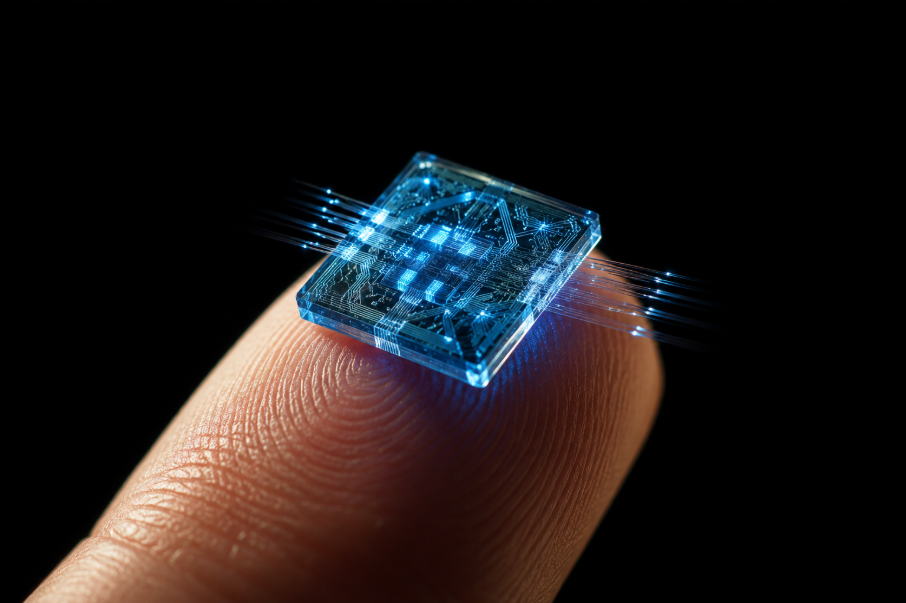
It’s smaller than a fingertip…
It’s made of glass…
And it’s about to unlock the next wave of AI growth.
Jensen Huang, Nvidia’s CEO, says this “light-speed” device is shattering the limitations of AI… and without it, AI can’t scale.
Google Ventures says it’s the future of AI compute…
And Sequoia Capital – the firm that backed Anthropic and OpenAI – calls it a “holy grail.”
Already, Elon Musk, Mark Zuckerberg, Cathie Wood, and Bill Gates are moving money to prepare for what’s coming…
Yet most Americans have never heard of it.
Wall Street insider Jason Bodner – the same man who called Nvidia at $4.50 – says this device is about to launch a whole new wave of AI winners…
And to prove it, he’s giving away his #1 stock involved with it – for free.
Click here to learn more. (No purchase necessary.)
We have so much to look forward to,
Jeff Brown
Founder & CEO, Brownstone Research
P.S. Stocks tied to this “light-speed” device already surged 133%, 217%, and even 320% – in a few short months. But it’s just getting started. Click here before the mainstream catches on.
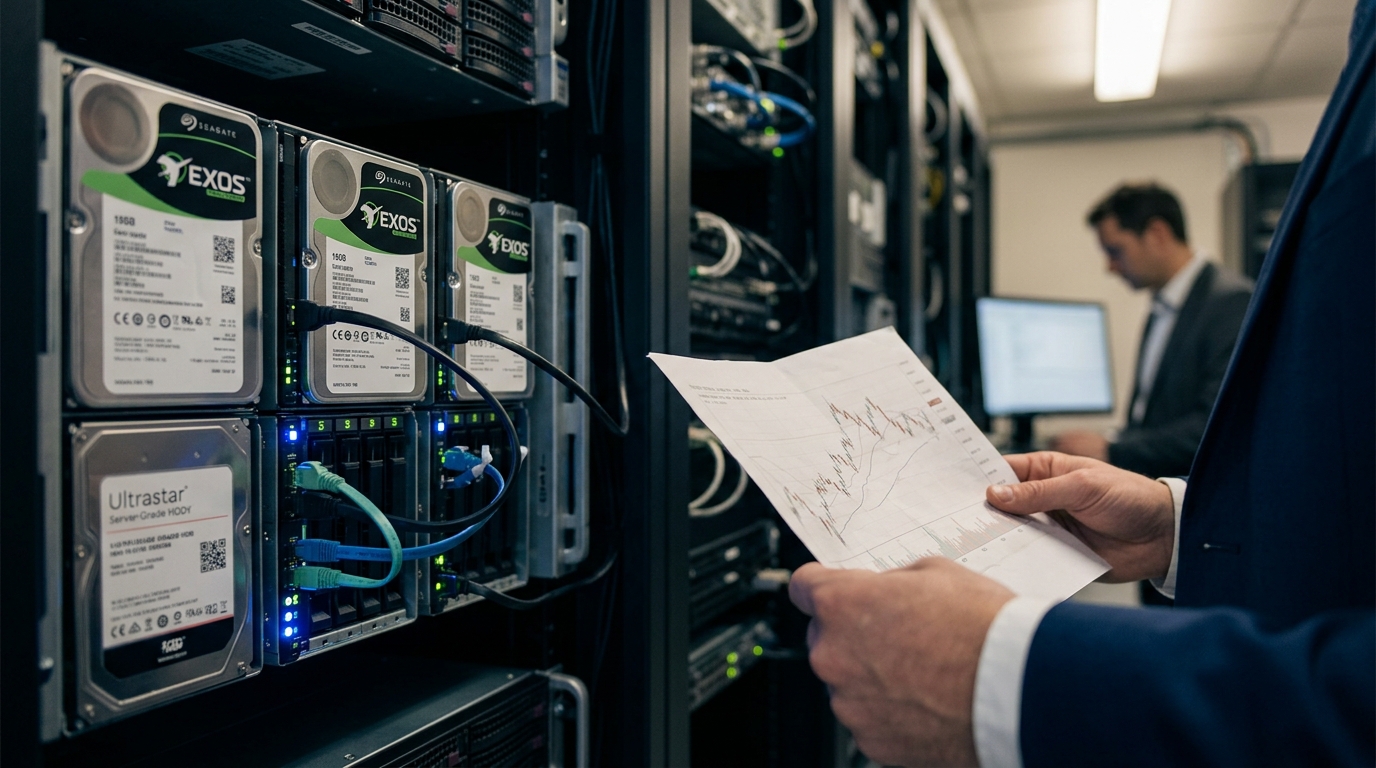
One Toshiba Report Hit Seagate’s Bull Case
Analyst targets heading into Friday, October 2:
- Rosenblatt (Buy): STX $1,400 / WDC $800
- Morgan Stanley (Overweight): STX $1,187 / WDC $676
- Citi (Buy): STX $595 / WDC $405
Every one of those targets was built on the same foundation: three companies, no one adding capacity, and AI data centers buying everything in sight. That foundation cracked Friday morning.
What the Nikkei Report Said
According to Nikkei, Toshiba plans to double production capacity for hard disk drives used in AI data centers within fiscal 2027, investing roughly $380 million to expand its facilities in the Philippines. The expansion marks Toshiba’s first major HDD investment in around five years. Beyond raw volume, the company will also begin handling new products that increase storage capacity per drive by as much as 40%.
Toshiba is one of the world’s three major HDD suppliers alongside Western Digital and Seagate. It currently holds just over 10% of the market by storage capacity but aims to increase that share to 30% over the medium term. Tripling market share is the ambition. The mechanism for getting there is what broke the trade.
The Supply Discipline That Wasn’t
The bull case for STX and WDC was unusually clean for hardware stocks. Long-standing supply discipline among HDD oligopolists and multi-year volume commitments from cloud providers had caused a simultaneous jump in volume, pricing, and order visibility. Seagate CEO Dave Mosley has said the company’s nearline HDD capacity is fully booked through calendar 2026, with orders for the first half of 2027 expected to open in coming months.
As recently as August, Bernstein explicitly stated that Seagate, Western Digital, and Toshiba had all refrained from expanding drive production capacity, maintaining structural discipline. Seagate’s factories were already at full capacity with no new facilities planned. Bernstein subsequently upgraded Seagate to its top pick, citing precisely the fact that the industry’s inability to expand supply had preserved supply discipline.
Friday’s Nikkei report erased that thesis in a single session. Both stocks’ big runs had left them sensitive to any news suggesting the supply-demand balance could loosen. Before the drop, Seagate shares were up about 210% year to date and Western Digital was up about 150%.
How Much New Supply Is Actually Coming, and When
This is the only question that matters for the next six months. Evercore has pointed to Seagate commentary indicating the vast majority of its nearline capacity is allocated through 2028, while Western Digital has discussed long-term agreement conversations extending into 2028, 2029, and even 2030. Pricing for 2027 to 2028 is widely viewed as largely set, and the market is now adjusting expectations for the out-years, precisely the segment that matters most for stocks priced on forward profitability.
The investment remains a reported plan rather than output already online. Equipment installation, customer qualification, and manufacturing yields can affect the schedule. Demand could also change before fiscal 2027. Critically, Citi analyst Asiya Merchant said the market may be overstating the impact, noting that unlike Seagate and Western Digital, Toshiba relies on outside suppliers for key components such as media and heads.
Bull / Base / Bear
Bull: Component supply bottlenecks at Toshiba’s outside vendors cap actual output well below the doubling target. Spot pricing trades at a 30-40% premium to long-term agreements, with forward contracts resetting toward $20-30 per terabyte versus current levels of $14-15. That pricing reset survives a modest capacity addition.
Base: Toshiba adds meaningful but not market-shifting volume by late fiscal 2027. Near-term contracts at Seagate and Western Digital hold. Annual demand growth of 40-50% driven by AI adoption results in HDD supply falling 10-15% short of demand through 2026. The 2027 and 2028 pricing window stays intact, but multiple compression begins.
Bear: The announcement signals the end of the discipline era. For Seagate, this significant capacity expansion by a rival suggests that despite continued rapid growth in demand for high-capacity HDDs from AI data centers, industry supply will increase in tandem, eroding the pricing leverage that drove 70%+ incremental gross margins.
Technical Levels to Watch
Seagate broke below the daily pivot support of $910.76, with hourly RSI readings reaching deeply oversold territory at 26.23. The prior support zone near $820-$850 is now the first area to reclaim. Western Digital, which closed the session at roughly $429, needs to hold the $410 level to avoid a test of its pre-summer base.
Bottom Line
The demand side of the HDD thesis remains intact. The AI storage shortage was backed by real numbers, hyperscalers buying exabytes of capacity, drive lead times stretching out, and genuine scarcity in nearline HDDs. None of that stopped being true on October 2. What changed is that the story stopped being uncontested. Whether Toshiba can actually triple its market share given component dependencies is the variable the market has not yet priced precisely. That gap between announced ambition and delivered exabytes is where the trade rebuilds, or doesn’t.