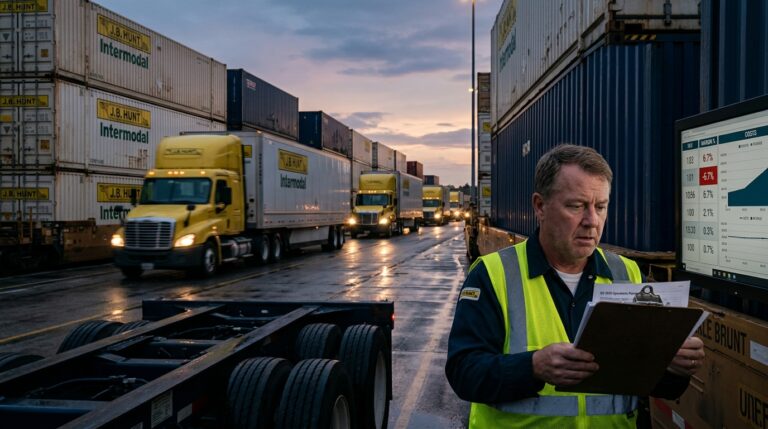
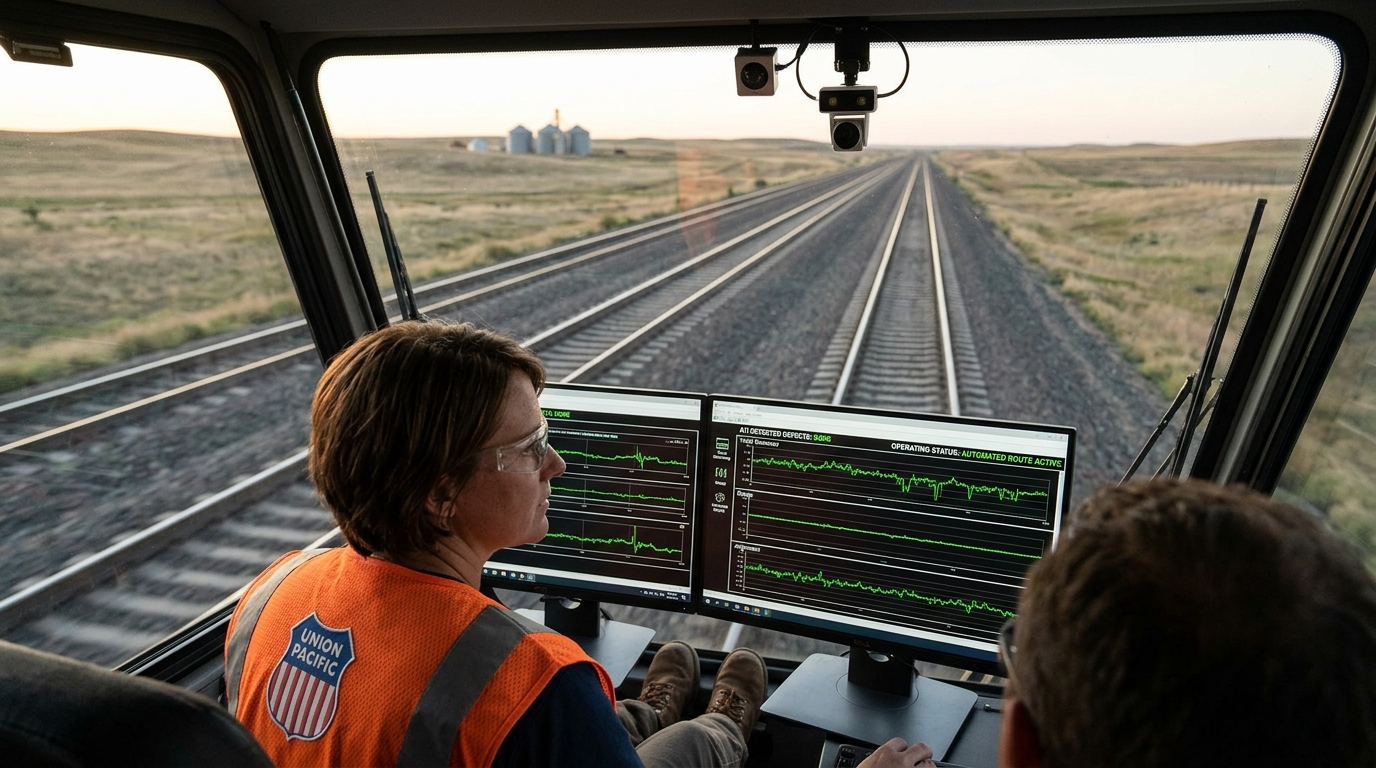
Most investors look at Union Pacific and see a freight railroad. The more interesting lens right now is an infrastructure software company running on steel rails.
Since its Automated Track Inspection technology began operating under a Federal Railroad Administration-approved waiver on designated routes, Union Pacific says it has recorded zero track-caused derailments across those territories. That is not a rounding error. It is a controlled experiment, and the results are striking enough to deserve a second look from anyone holding UNP.
A central element of this strategy is ATI, which has eliminated track-caused derailments across the FRA-waiver routes. Union Pacific says that since March 2026, the automated system detected more than 200 track geometry defects on those routes, five times the volume identified through visual inspections alone.
The mechanism behind those numbers matters. The autonomous geometry machines operate directly on the rail lines, combining high-resolution cameras, sensors, and AI-powered software to scan track infrastructure and analyze track geometry data, measuring the precise condition of rails including alignment, elevation, curvature, and surface status. Alongside that, Union Pacific says a network of more than 7,000 wayside detectors monitors freight cars and locomotives in real time, generating more than 16 million data points daily to proactively identify and mitigate risks.
Over the prior decade, Union Pacific has said track-related derailments fell 28%. The zero-derailment result on ATI waiver routes suggests that number is about to move again, and faster.
Why does this matter for the stock? Because derailments are expensive in ways the income statement obscures. A single avoided incident can eliminate tens of millions in emergency costs, liability exposure, and corridor shutdown losses. Union Pacific has long argued it is among the most efficient railroads in the group. In its second-quarter 2026 report, the company posted an adjusted operating ratio of 59.2%, worsening 110 basis points year over year, and it raised 2026 guidance to high-single-digit reported EPS growth. Better track intelligence feeds directly into that ratio story over time, reducing unplanned maintenance spend and keeping freight velocity high.
Management highlighted record first-quarter performance across key efficiency metrics, including freight car velocity up 9%, terminal dwell down 11% to 19.7 hours, and train length up 3%. Those figures do not exist in isolation. Fewer track disruptions mean trains move faster and sit idle less. The ATI program is embedded in every one of those metrics.
The broader AI rail maintenance industry is accelerating around Union Pacific’s model. Research has reported that integrating deep reinforcement learning with digital twins reduced maintenance activities by 21% and occurring defects by 68%. UNP is not waiting on academic papers. It is running a live program, on its own network, with FRA backing.
Q3 results arrive this week, with Union Pacific scheduled to report on Thursday, October 22, 2026. The headline EPS number will get most of the attention. The more durable signal sits in safety metrics and operating ratio trajectory. If ATI coverage keeps expanding and the zero-derailment result holds, the cost structure of this railroad looks meaningfully different in two years than the current multiple suggests.