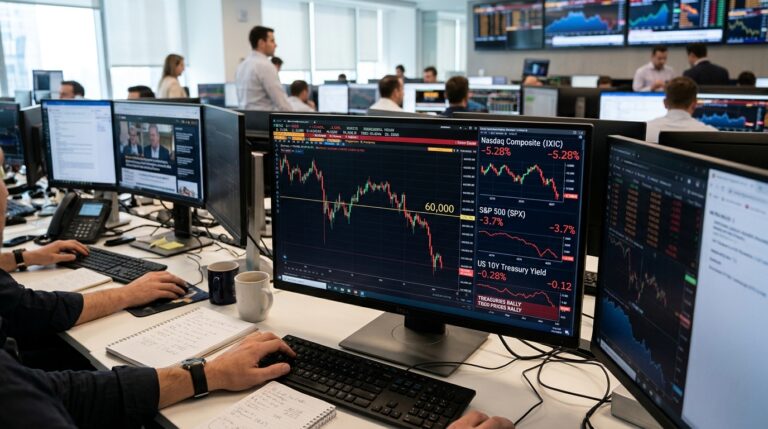
Vertiv Holdings closed at $166.24 on Friday, down about 10% on a day when nothing changed in the company’s order book, its backlog, or its competitive position. The stock has now lost about 56% from its May record. What it has not lost is momentum in the business that the market once paid generously to own.
Why This Stock Now
Three weeks ago, Vertiv reported the most consequential quarter in its public-company history. Revenue reached $4.313 billion in Q3 2026, up 61% year over year, powered by 55% organic sales growth. Adjusted EPS of $2.21 beat the $1.82 Wall Street consensus by 21%. Adjusted operating profit exceeded $1 billion for the first time, with margins reaching 25.2%. Management raised full-year 2026 revenue guidance to a $14.65 billion midpoint and lifted adjusted EPS guidance to $7.15, representing 70% growth versus 2025. The stock barely moved on the news. Then it fell off a cliff when politics changed the weather.
The Business
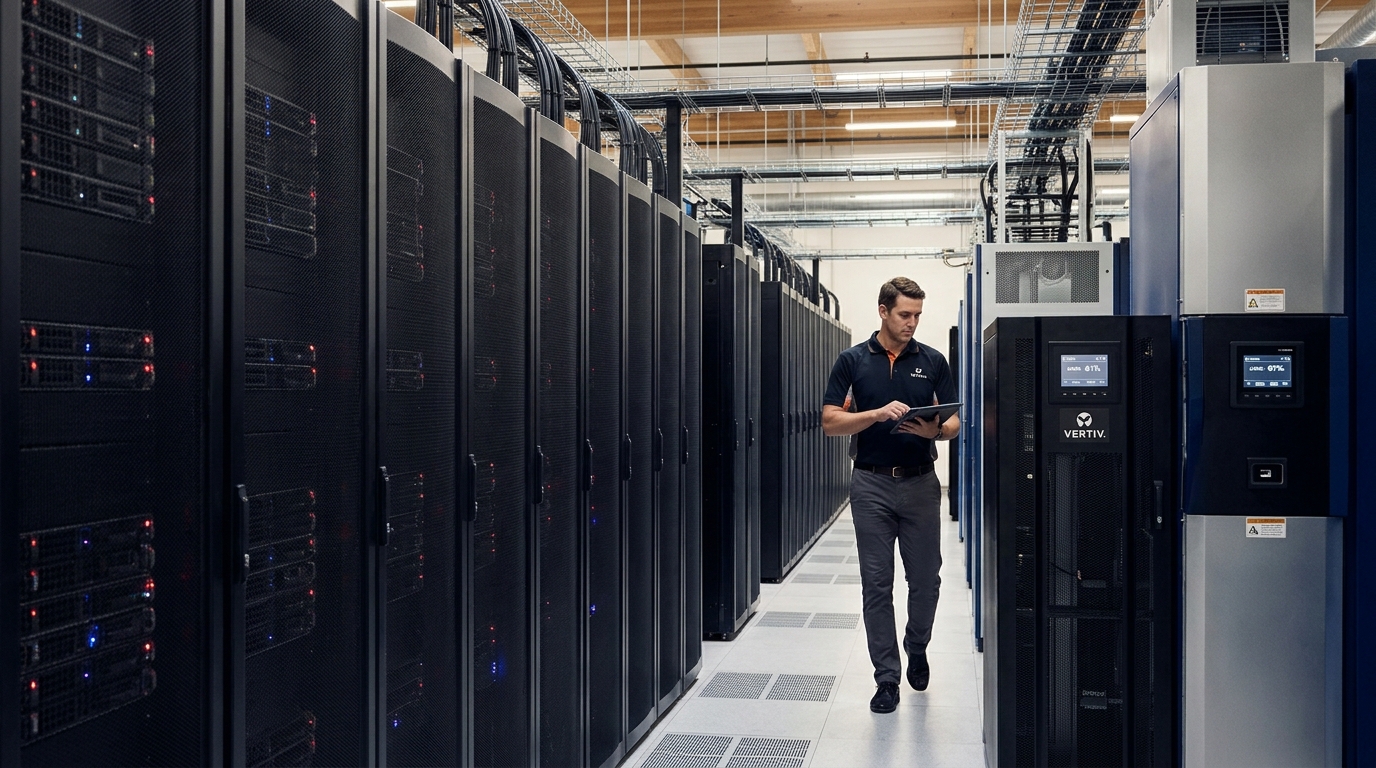
Vertiv makes the power and thermal management systems that keep data centers running. Every AI chip cluster needs its products before it can generate a single inference. The company sells into a market where demand is not discretionary: hyperscalers must power their racks, and power availability is now one of the binding constraints on AI infrastructure deployment.
Organic orders more than doubled in Q3 year over year. Americas revenue alone rose 75%. To extend its reach into the grid-access problem, Vertiv acquired Utility Innovation Group in October for approximately $1.45 billion in upfront cash at closing, with additional contingent consideration possible. The strategic logic is direct: as AI data center operators compete for grid capacity, Vertiv’s new capabilities help them secure power faster than waiting for utility connections.
Why Wall Street Is Paying Attention
Even after the collapse, the analyst consensus sits well above where the stock is trading. Bernstein raised its price target to $376, RBC Capital is at $351, and Wells Fargo holds an Overweight with a $345 target. The mean analyst target from MarketBeat sits at $333.70. That is a gap of about 100% from Friday’s close. CoreWeave’s disclosure of roughly $132.5 billion in revenue backlog briefly revived the group before the second wave of AI selling overwhelmed every positive signal. At the current price, Vertiv trades at roughly 23 times its 2026 adjusted EPS guidance of $7.15, well below the multiples it commanded when the AI trade was in favor.
What’s Driving the Opportunity
The selloff has two sources: Democratic midterm wins raised fears that new legislation could restrict data center permitting, and Nvidia’s leadership transition spooked investors into selling every name in the AI supply chain. Neither development changes Vertiv’s backlog, its customer contracts, or the fact that every major hyperscaler continues to increase capital expenditure commitments. Demand does not evaporate because political sentiment shifts.
Adjusted free cash flow for Q3 came in at $652 million, up 50% year over year. Full-year adjusted free cash flow guidance stands at $2.7 billion. The company is not burning cash waiting for the market to find its footing.
What Could Go Wrong
Insider selling has been substantial, with executives divesting about $128.2 million over the past 12 months without a single reported purchase. That alone should give buyers pause. If Democratic policy results in permitting restrictions that delay data center construction timelines, Vertiv’s order conversion could slip and guidance could need revision. The stock formed a death cross in September, and the technical trend remains bearish. A further drop toward the 52-week low of $147.82 is possible if the AI trade continues unwinding.
Concentration risk is real. Vertiv’s growth is almost entirely tied to hyperscaler capital spending. A meaningful slowdown in AI infrastructure investment, whether from regulatory pressure or budget exhaustion, would hit the company directly.
The Bottom Line
Vertiv is not a distressed business selling at a distressed price. It is a business growing at 61% with expanding margins and a rising backlog, selling at a price that assumes almost none of that growth will persist. The gap between what the fundamentals say and what the stock says is now wide enough to be worth examining closely, even with the political and technical headwinds still blowing.