June 11, 2026
Digital Realty Trust (DLR): The Hard Asset Inside the Cloud
When software multiples compress, the concrete still holds value
Analyst Targets
- Truist – Buy | Price Target: $208
- Scotiabank – Outperform | Price Target: $222
- BMO Capital – Top Pick | Data Center Sector
- Consensus (32 analysts) – Buy | Avg. Price Target: $217.90
- Target Range: $180 low – $250 high
Software companies get punished when rates rise. Their cash flows are distant, their multiples are fragile, and when the cost of capital moves, valuations move faster. That part of the market everyone understands by now.
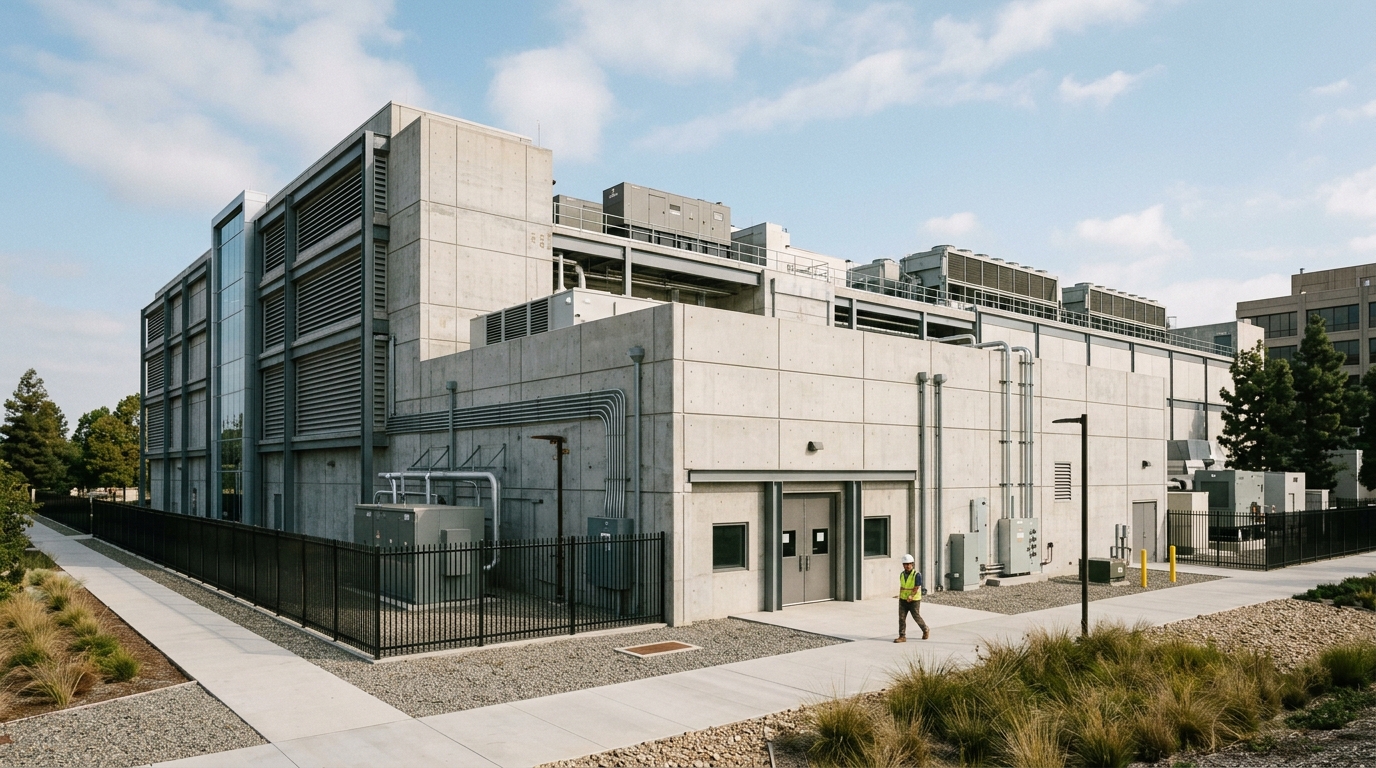
What gets less attention is what sits underneath those software stacks – the physical layer. The land. The utility connections. The reinforced concrete shells housing the servers. That infrastructure does not get discounted the same way a SaaS multiple does.
That is the core argument for Digital Realty Trust.
One Ticker = Pre-IPO Access to America’s New Startup Giant.
You don’t need millions. You don’t need insider access.
Just follow 3 simple steps and you could own a stake in one of the most disruptive companies in history – before the IPO.
Company Profile
Digital Realty Trust (NYSE: DLR) is the world’s largest cloud- and carrier-neutral data center platform. As of March 31, 2026, the company operates 309 data centers across North America, Europe, South America, Asia, Australia, and Africa – with 89 of those held through unconsolidated joint venture structures. Its portfolio carries approximately 3.0 gigawatts of IT capacity, with another 6.3 gigawatts under active development or held for future build-out.
The business model is straightforward. DLR owns mission-critical physical real estate and leases it to cloud providers, financial institutions, and enterprise technology firms under long-term agreements. Revenue is generated primarily through triple-net lease structures, where tenants cover most operating expenses – including power and utility costs – directly. That pass-through mechanism is not incidental. It is the structural reason DLR’s cash flows hold up when energy inflation runs hot.
The Numbers
Full year 2025 results were solid across every line that matters to a REIT investor. Revenue came in at $6.08 billion, up 12% year-over-year. Funds from operations reached $2.40 billion, up 18% from 2024, with FFO margin expanding from 37% to 40%. FFO per share hit $7.10, up from $6.27 the prior year. Q1 2026 continued that trajectory – revenue of $1.64 billion beat consensus by 2.1%, EPS of $0.49 beat estimates by 2.9%, and net income climbed 69% year-over-year.
Total bookings for 2025 reached $1.2 billion – 70% above the average pace of the prior five years. The company entered 2026 with a record $1.8 billion backlog, driven by AI and hyperscale cloud demand that shows no sign of decelerating. 2026 revenue consensus sits at $6.70 billion.
Bull / Base / Bear
- Bull: AI infrastructure demand accelerates further, backlog converts at higher lease rates, FFO per share growth sustains dividend expansion, and DLR trades toward the $240–$250 analyst target range.
- Base: Steady bookings growth, stable occupancy near 84%, continued dividend of $4.88 annually, stock drifts toward the $217–$222 consensus target over 12 months.
- Bear: New data center supply outpaces demand, rate pressure limits capital recycling, GAAP earnings continue declining, and supply overhang weighs on lease pricing.
Guess Who Made $95 Million the Year the Market Crashed 37%?
He ran his own hedge fund. He worked for the biggest oil-producing countries on the planet. And now he’s revealing a simple way for regular folks to profit from oil, with no oil stocks required.
What Investors Should Watch
Backlog conversion pace. Lease commencement timing is the single most important bridge between bookings and FFO growth. Watch also for any signs of new supply catching up to demand in Northern Virginia and other core markets. The dividend – currently $4.88 annually – and any guidance update at Q2 earnings on July 22, 2026 will tell you whether the base case is holding.
One thing worth noting: GAAP earnings are forecast to face continued pressure from depreciation on a rapidly expanding asset base. That is not the right metric for a REIT. FFO and AFFO are what drive dividend capacity, and on those measures, DLR is delivering.
Bottom Line
The debate around DLR is not whether data centers matter – they clearly do. The question is whether the physical real estate layer commands a premium over pure-play software exposure when rates are elevated and multiples are compressed. The argument here is that it does. Triple-net leases transfer cost risk to tenants. Mission-critical facilities do not get vacated on short notice. And 309 global data centers across six continents are not easily replicated by a competitor with a clean balance sheet and good intentions.
The cloud runs on concrete. That is not a small thing.
For informational purposes only.