July 3, 2026
BofA Says 3 Hikes. Markets Say 1.
The gap between Wall Street’s boldest Fed call and actual market pricing is the trade of the second half.
Bank of America just made one of the most aggressive Fed calls of the year. Three rate hikes. September, October, December. Seventy-five basis points of tightening that would push the benchmark rate from 3.50% to 3.75% all the way to 4.25% to 4.50% before New Year’s Eve.
Then the June jobs report dropped. Only 57,000 jobs added. The forecast was 110,000. The September hike probability on CME FedWatch fell below 50% overnight, and the July hike odds collapsed to below 30%. In a single morning, the Fed debate got a lot more complicated.
This is where it gets interesting. BofA isn’t alone in its hawkish lean. Deutsche Bank sees two hikes. BNP Paribas and Macquarie are also in the hike camp. What started as a fringe call a few weeks ago became the fastest-moving consensus shift in fixed income since 2022. Now it’s being tested.
The way you’ve been building your wealth is working against you
In 2022, the last time the Fed made a major shift, the 60/40 portfolio had one of its worst years on record.
Bonds collapsed, stocks fell… there was nowhere to hide.
Larry Benedict saw it coming. He went 11-for-11 while most investors had no idea what hit them.
He says the same pattern is setting up now – on a much bigger scale.
Click here to hear his warning and find out the one move he’s making instead.
How We Got Here
Start with the inflation numbers. The May Consumer Price Index rose 4.2% year over year, the highest annual pace since April 2023. That reading came on top of a CPI that was already running hot before the Iran conflict, before the energy spike, before tariff cost pressures fully showed up in consumer prices. Energy alone accounted for more than 60% of the monthly increase, with gasoline prices up 40.5% year over year.
Then Kevin Warsh walked into his first Federal Open Market Committee meeting as Fed Chair. He held rates at 3.50% to 3.75%, which was expected. What wasn’t expected was the tone. Warsh mentioned price stability roughly a dozen times during his press conference. The Fed’s written statement was cut from more than 300 words to around 114 words, with virtually all forward guidance stripped out. Nine of the 18 FOMC members who submitted projections now expect at least one rate increase in 2026.
That last detail is the one people missed. In prior cycles, the Fed needed to see a tightening labor market to justify hikes. The June dot plot told you that bar no longer applies. Warsh’s FOMC will hike into a resilient economy, not just a hot one. At least, that was the read before last Thursday.
BofA economist Aditya Bhave put it directly: the Fed’s inflation problem has gotten unambiguously worse. Housing-driven disinflation has largely run its course. Core services remain sticky. The Fed lifted its own 2026 PCE forecast to 3.6% from 2.7% in the June dot plot, a nearly one-percentage-point upward revision to its preferred inflation gauge. Core PCE was revised to 3.3% from 2.7%. You don’t do that and then cut rates.
What the Jobs Report Just Changed
The June employment report is not a small data point here. Only 57,000 jobs were added last month, the fewest in four months, well below the 110,000 forecast. The unemployment rate actually fell to 4.2%, but that was driven by workers leaving the labor force, not by a strong labor market. Wage growth edged up to 3.5% year over year.
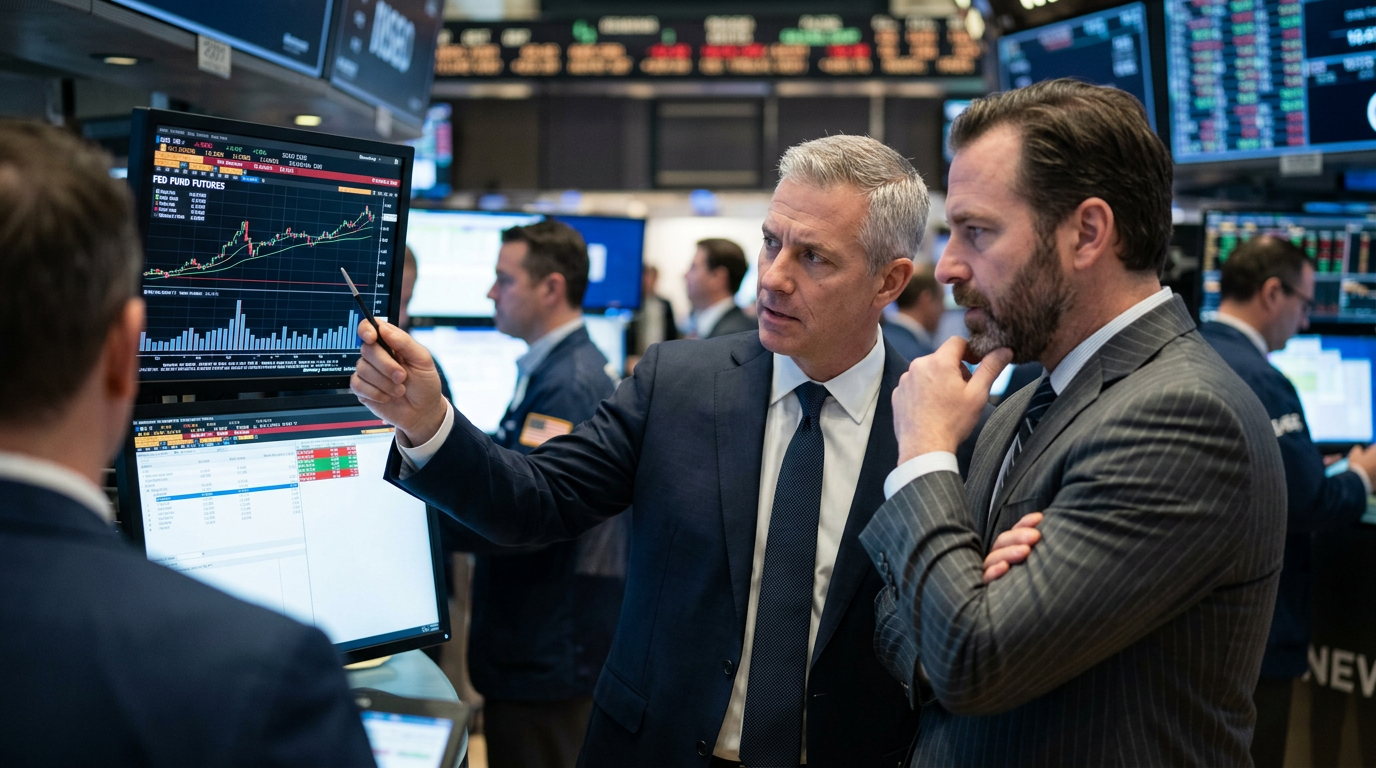
Markets reacted quickly. Fed funds futures now price less than a 50% chance of a September hike, down from 67% before the report. The July hike is essentially off the table at below 30% odds. Gold jumped back above $4,100 on the data. The dollar weakened. Long-duration Treasuries caught a bid.
This is the honest version of the debate right now: BofA may still be right about the direction but the timing just got murkier. A labor market that adds only 57,000 jobs gives Warsh real cover to hold in July and probably September as well, even with inflation running well above target. The question is whether the June softness is a blip or a trend.
The Ultimate Passive Income Play
The #1 income play for 2026 is NOT a stock, bond or private company…
Rather, it’s a little-known alternative investment that could hand you big monthly income from oil and gas.
What the Market Is Still Underpricing
Here’s the part that hasn’t changed. The cut trade is dead. Markets are not pricing rate cuts at any point in 2026. Goldman Sachs pushed expected Fed cuts into 2027. JPMorgan expects the Fed to hold steady through 2026. BofA now says no cuts until at least mid-2027.
The Fed’s own dot plot median for year-end 2026 moved to 3.8%, up from 3.4% in March. That’s not a hold signal. That’s a tightening signal. The market was caught flat-footed in June by how hawkish the dot plot actually was. The June jobs softness bought some time, but it didn’t change the Fed’s inflation math. May CPI at 4.2% and core PCE heading toward 3.3% are not numbers a credibility-focused Fed Chair ignores for long.
The Asset Allocation Consequences
A Fed hiking two or three times into an S&P 500 near all-time highs is not a gentle scenario. The equity risk premium is already thin. Long-duration Treasuries get hurt. Rate-sensitive sectors, real estate, utilities, and high-multiple growth stocks face real multiple compression. High yield credit spreads have room to widen.
The dollar benefits in a hiking scenario. In a hold scenario, the dollar softens, which is what started happening after the jobs report. The yen carry trade dynamic is still in play. The BOJ is at 0.5% and moving higher. A hawkish Fed and a hiking BOJ is one of the more volatile macro combinations you can construct, and it hasn’t fully resolved.
Gold is complicated and getting more so. Goldman lowered its year-end gold target to $4,900 from $5,400, citing delayed Fed cuts and rising hike expectations. Gold has been trading in a wide range, recently around $4,183, with the June jobs miss sparking a sharp rebound from the low $4,000s. Long-duration allocators who wouldn’t chase gold at $5,500 are quietly comfortable at these levels. If the hike path stalls, gold’s structural bid from central banks and geopolitical risk stays intact.
The Scenarios
Bull (for hike skeptics): June CPI on July 14 comes in soft. Energy prices stay subdued. The June jobs weakness carries into July. Warsh holds through September, signals again in December at most. One hike total, or none. BofA’s call looks aggressive in hindsight. Markets breathe, equities rally.
Base: June CPI comes in mixed. One hike in September, the Fed holds in October, signals again in December. Markets absorb this gradually through Q3 earnings season, with rotation into financials and out of long-duration growth accelerating. Two hikes total, not three. Volatility rises but does not break the market.
Bear: June CPI surprises to the upside. Core PCE re-accelerates. The June jobs number proves to be an outlier. Warsh moves in September regardless and signals more to come. Three hikes happen roughly on BofA’s timeline. Rate-sensitive sectors de-rate hard, and the broader market corrects meaningfully from current levels.
Land sale creates 1,000% opportunity?
What I’m about to show you might make you furious. Or it could be the biggest 10X opportunity anywhere in the market today. In short, a branch of the U.S. government – housed in a monolithic building in D.C. – is selling off millions of acres of land that, right now, legally belongs to you as an American. And all for one purpose, to develop a new kind of energy that White House insiders call an “awesome resource.”
Billionaires are lining up for a cut, you should too – click here to get the full story.
What Investors Should Watch
July 14. That’s the June CPI release date, and it is the single most important data point between now and the September FOMC meeting. A hot number validates BofA’s path even with the weak jobs data and accelerates the asset reallocation. A cool number buys time and probably extends the relief rally that started after the jobs report.
Beyond CPI, watch the July 28 to 29 FOMC meeting. BofA flagged that a July hike is in play, though markets have now pushed those odds well below 30%. If Warsh moves in July despite the soft jobs data, the entire rate trajectory shifts forward by one meeting and the market has to adjust fast. If he holds and sounds less hawkish, the September hike odds compress further.
The part people are skipping is the sector rotation already underway. Financials outperformed in June. Utilities underperformed. Equal-weight S&P beat cap-weight. That’s not random. That’s institutional money repositioning for a rate environment that looks more like 2018 than 2020. The rotation happened quietly. It gets louder in Q3 if inflation stays elevated.
At first glance, this looks like a bond market story. It’s actually an equity story. The market has been positioned for rate cuts for two years. What happens when the conversation flips permanently to hikes is not just a Treasury yield move. It’s a full rethink of what growth is worth, what safety is worth, and where institutional money actually needs to go. The June jobs number bought some time. It didn’t change the inflation math.
Wall Street is just starting to run those numbers.
For informational purposes only.