September 8, 2026
Jaguar Land Rover’s £1.7bn Bet on Survival
The ‘Growth Reimagined’ plan cuts 4,000 jobs
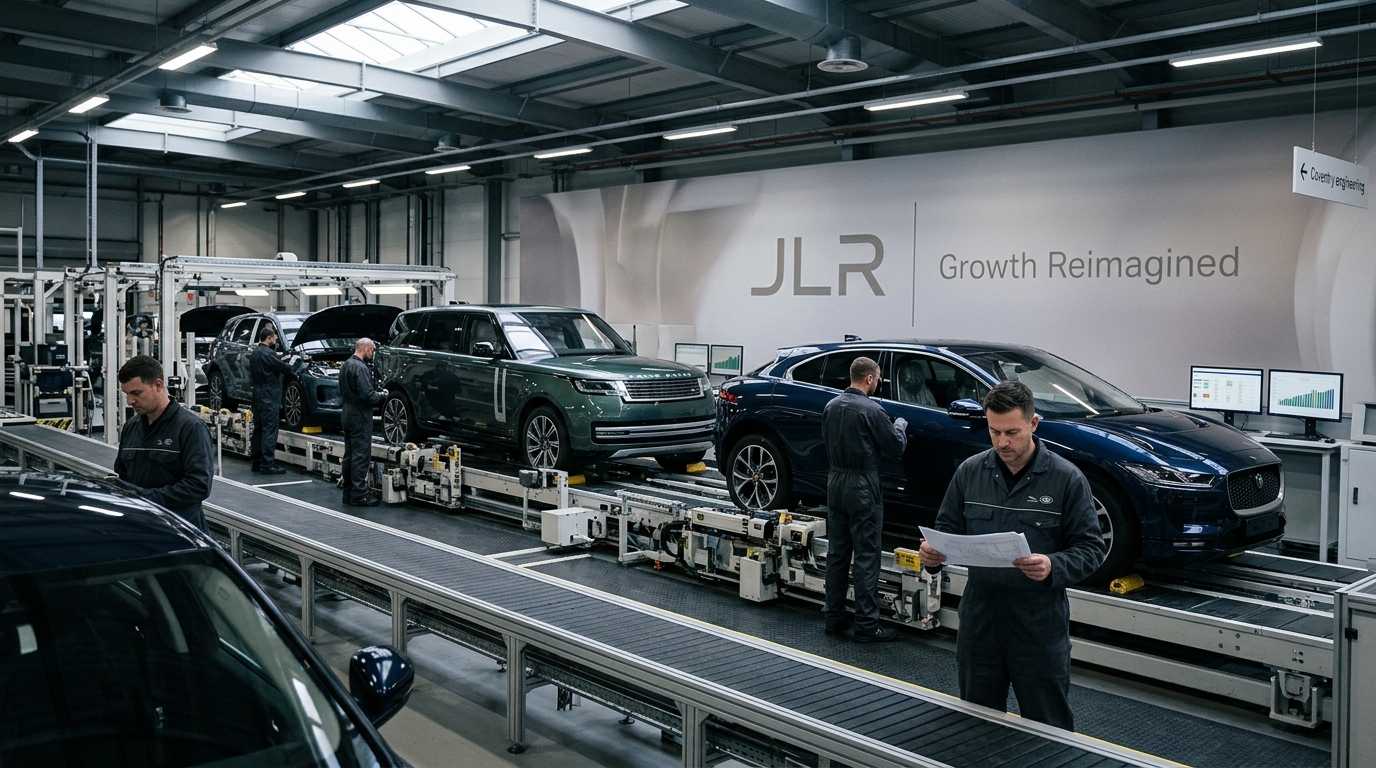
Two European carmakers announced mass layoffs in the space of five days. Volkswagen went first, unveiling its Future Plan 2030 on September 3, with 50,000 additional jobs to be cut. Then came Jaguar Land Rover on Monday, September 7, with a smaller but structurally revealing plan of its own: 4,000 roles eliminated over two years, £1.7bn ($2.3bn) in targeted savings, and a break-even volume threshold that management wants to push down toward 300,000 vehicles over the next two years.
THE STARLINK OF ENERGY
This little-known stock could benefit from a major government catalyst this August
A single “Energy Cube” can be delivered by truck… dropped next to a data center, military base, or industrial site… and provide reliable electricity for decades.
Think of it as the “Starlink of Energy.” A government milestone expected this August could shine a spotlight on one little-known company at the center of the Energy Cube story.
This is not a crisis announcement dressed up in strategy language. JLR first disclosed the savings target at its annual Investor Day on June 19, 2026. What changed Monday was the mechanism: a voluntary redundancy programme hitting primarily salaried roles, with direct manufacturing jobs not expected to be impacted. The first round of consultations began immediately.
The Numbers Behind the Plan
Tata Motors Passenger Vehicles, the listed entity that holds JLR, reported a brutal FY26. Consolidated revenue fell 8.3% year-on-year to Rs 3,35,582 crore, while EBITDA margin fell to 6.8% from about 13.4% in FY25. JLR’s full-year revenue fell 20.9% year-on-year to £22.9bn, with adjusted EBIT margin at 0.7% for the year. In the quarter ended June 30, 2026 (Q1 FY27), JLR reported wholesale volumes of 79,300 units (excluding the China JV), down 9.2% year-on-year.
A “bloodbath” Is Coming
Silicon Valley billionaires are hoarding guns, gold, and even military grade gas masks… or fleeing the country altogether. What do they know that you don’t?
This AI insider is stepping forward with this time-critical message: Move your money before September 30th, ahead of the dangerous next phase of the AI market.
Here’s the one urgent move you need to make with your money immediately.
Three things hit simultaneously: a cyber incident announced on September 2, 2025 that forced JLR to shut down global systems and created prolonged production disruption, US tariffs that left UK car exports facing a 27.5% tariff outside an annual quota of 100,000 vehicles that can enter at 10%, and intensifying pressure from Chinese electric vehicles across many of the markets JLR serves.
The £1.7bn savings plan is designed to underwrite a separate £18bn investment commitment in electrification and related technologies over five years. JLR has also said it is refocusing its strategic intent on North America and giving customers more propulsion flexibility across its Range Rover and Defender families, while positioning Jaguar as an all-electric brand.
Volkswagen vs. JLR: Similar Disease, Different Dosage
The parallel with Volkswagen is real but imprecise. Volkswagen’s overcapacity problem is structural and domestic, with its supervisory board approving a plan that includes ending vehicle production at four German plants. JLR’s problem is partly operational (the cyber incident), partly external (tariff policy and Chinese competition in the luxury segment), and partly cyclical. JLR sells far fewer vehicles than Volkswagen, which means the maths of a lower break-even threshold are more achievable if volumes stabilise.
A Forgotten Energy Source Is Powering Back Up
While investors chase the next tech story, one long-ignored sector is quietly heating up. A mix of global policy, rising demand, and tightening supply could reignite this market before 2026. See what the latest research reveals.
Bull / Base / Bear
- Bull: The £1.7bn in savings lands on schedule. Break-even falls toward 300,000 units within two years, as the company outlined around its June Investor Day. Product cadence and mix improve as electrification ramps, including the company’s planned Range Rover Electric and a rebuilt Jaguar line. The India-UK free trade agreement adds support at the margin in a market where tariffs are being reduced and phased over time. Tata Motors Passenger Vehicles re-rates toward Rs 450.
- Base: Savings materialise in part, but US tariff uncertainty persists and wholesale volumes recover slowly. JLR’s profitability improves off a low base, but stays mid-single digit as the product cycle takes time to show up in reported margins. TMPV trades sideways in the Rs 310–360 range while the market waits for product cycle confirmation.
- Bear: A second operational disruption, a deterioration in luxury demand in the US or China, or further tariff escalation pushes break-even reduction off-track. TMPV tests its 52-week low near Rs 294.
Technical Overlay
Tata Motors Passenger Vehicles (TMPV) traded around Rs 318–325 on September 8, well below its recent peak of Rs 353 in late July 2026. The stock has declined roughly 22% over the past year. First support sits near Rs 312; resistance clusters around Rs 335. The 52-week range of Rs 294 to Rs 448 frames the risk on both sides.
Bottom Line
JLR’s shift to a break-even level toward 300,000 vehicles over the next two years is the plan’s real claim. If it holds, the business becomes structurally more resilient at a volume level below its historical run rate, which matters as Chinese EV competition keeps compressing pricing power and raises the bar for premium internal-combustion and hybrid propositions. The 4,000 job cuts are the instrument, not the outcome. What investors in Tata Motors Passenger Vehicles should actually watch: whether Q2 FY27 wholesale volumes recover from the 79,300 units posted in Q1, whether promised launches arrive on schedule, and whether the UK-US tariff framework remains stable enough to keep exposure largely inside the 100,000-vehicle quota rather than outside it at 27.5%.