
October 7, 2026
Bonus Content: Delivery Vans Are Becoming Power Plants. Here Is the Revenue Math.
Dear Reader,
Four federal proceedings share the same deadline.
And they cover systems connected to bank deposits, financial customer-data security, securities-market activity and institutional trade settlement.
On October 26, 2026, their public-comment windows close.
What exactly is open for comment?
And why should you take a closer look?
Start with a public FDIC meeting from November 9, 2022.
During a discussion about explaining the resolution of major financial institutions, former Goldman Sachs president Gary Cohn said:
“I almost think you’d scare the public if you put this out.”
The exchange is in the transcript. Its context matters.
Our coverage brings together that discussion, bank-branch closing records and the four proceedings approaching their comment deadline.
See what the four proceedings cover before October 26.
Bill Brocius
Author of The Vanishing Dollar and Digital Dollar Exposed
Dedollarize News
Delivery Vans Are Becoming Power Plants. Here Is the Revenue Math.
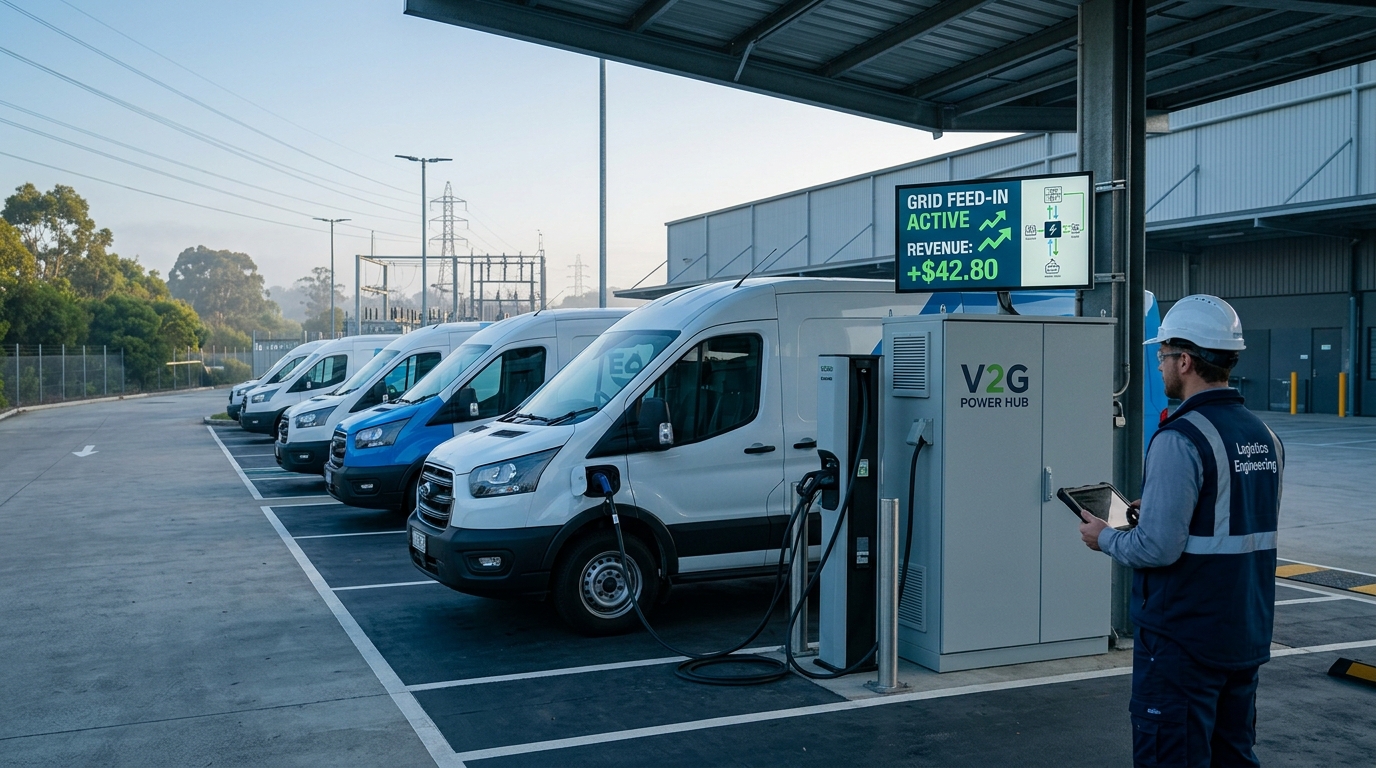
The delivery van parked at a depot from 10 p.m. to 6 a.m. was always dead capital. Now it is a billable asset.
Vehicle-to-grid technology has cleared its conceptual phase. In 2026, the signals are commercial, not experimental. Fleet operators with bidirectional-capable vehicles can now participate in grid-service programs tied to frequency regulation and peak demand reduction, revenue categories stacked on top of the same battery.
The economics deserve a close look. A single electrified logistics depot running 100 bidirectional-ready vans can aggregate several megawatt-hours of dispatchable capacity. That can be enough to satisfy minimum participation thresholds in some aggregation programs without adding a single kilowatt-hour of stationary storage. Published analyses show V2G value can range widely by market design and vehicle availability, but a practical planning range for fleets is often in the low-thousands of dollars per vehicle per year, with upside in high-value frequency-regulation markets. Multiply that across a 500-van last-mile fleet and the revenue line becomes material against thin operating margins.
The structural advantage commercial operators hold over residential participants is control. Depot managers know exactly when vehicles return, how long they sit, and what charge level they need for the next shift. That predictability is what utilities are buying. Delivery vans and school buses, with their idle windows, can align well with grid stress periods. Residential EV owners generally cannot offer that reliability at scale.
Hardware cost, long the blocking variable, is fading. Nissan has said it plans to launch more affordable bidirectional charging on selected electric vehicles in 2026, targeting a charger price comparable to a one-way unit available at the time of the announcement. Market-sizing claims vary by publisher and methodology, but one widely circulated industry forecast pegs the U.S. V2G technology market at $2.45 billion in 2026 with a low-30% annual growth rate through 2035.
The friction that remains is regulatory, not technical. Fleet operators entering markets without established bidirectional export tariffs can face long utility interconnection timelines and uncertain revenue. That gap is closing, but unevenly. California has multiple active vehicle-grid integration and virtual power plant initiatives, including pilots that explicitly include commercial participation, while other markets are still earlier in the rollout curve.
The real investment question is not whether V2G works. It does. The question is which operators lock in utility contracts before capacity markets price in the new supply, and which ones arrive too late to capture the premium that early grid participants currently earn.