October 28, 2026
Bonus Content: SK hynix Erased the Bear Case This Morning
When news broke overnight about China’s Moonshot AI unveiling its new model…

The market gapped down 1% before most traders even poured their morning coffee…
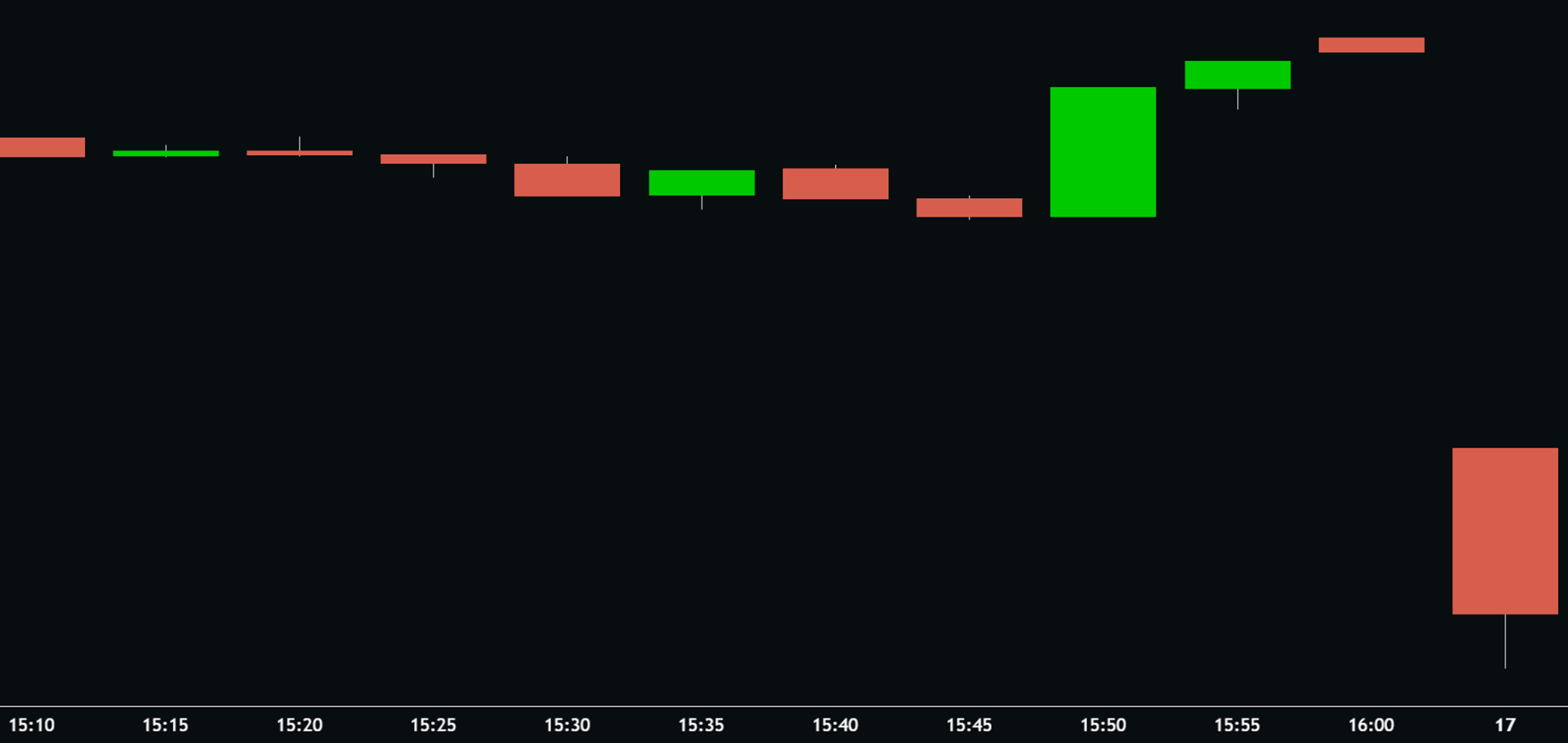
For standard portfolios, it looked like the start of another stressful day…
And over the next two hours, the market barely crawled higher… moving a tiny 0.2%…
To traditional buy-and-hold investors, a 0.2% move is practically useless…
Yet, according to our research, anyone who ignored the overnight headlines and waited until exactly 9:50 AM Eastern could have locked in a $529 payout before lunchtime… on a simple $1,000 starting stake…
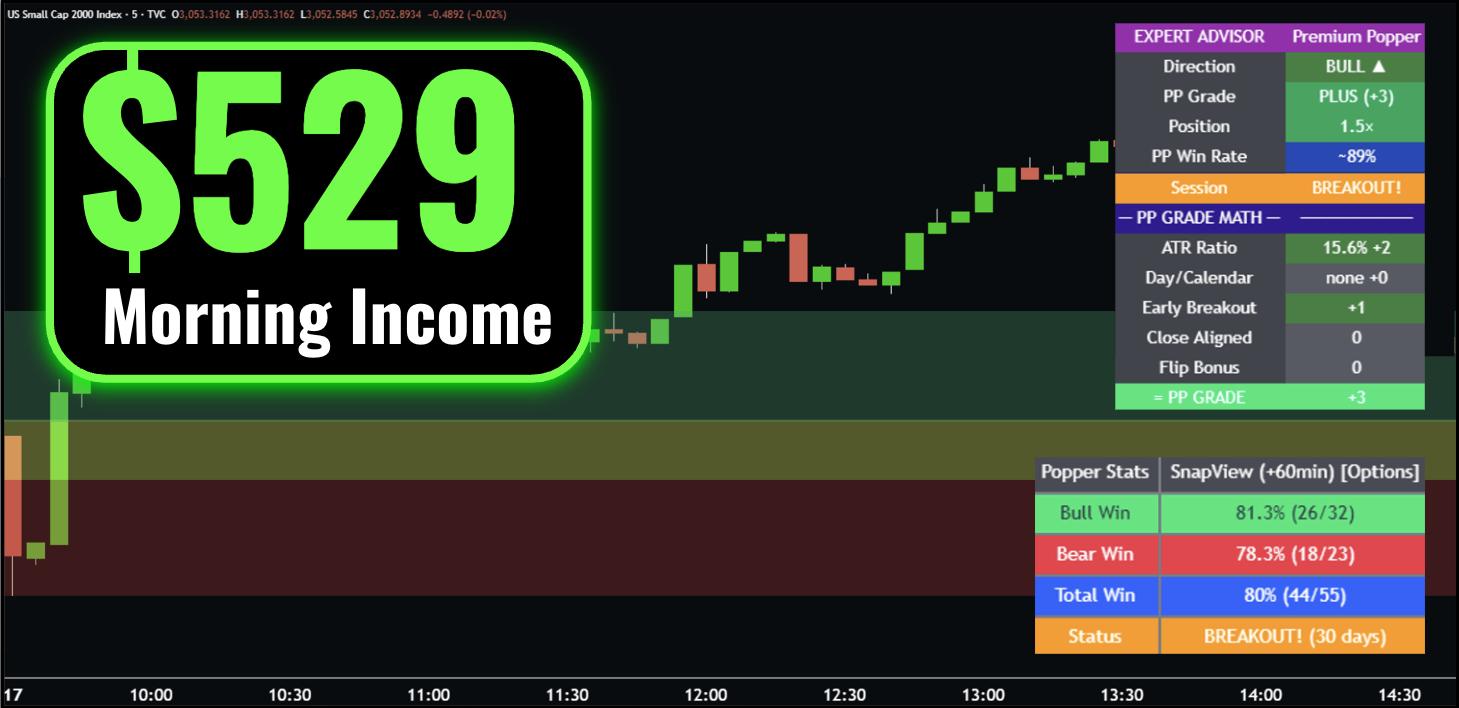
That would not have been an isolated fluke either…
Back on June 25th, when inflation surged past 4%…
And panicked investors expected a massive market beatdown… the market moved just 0.3% after the open… yet that exact same morning setup yielded another $526 payday before lunch…
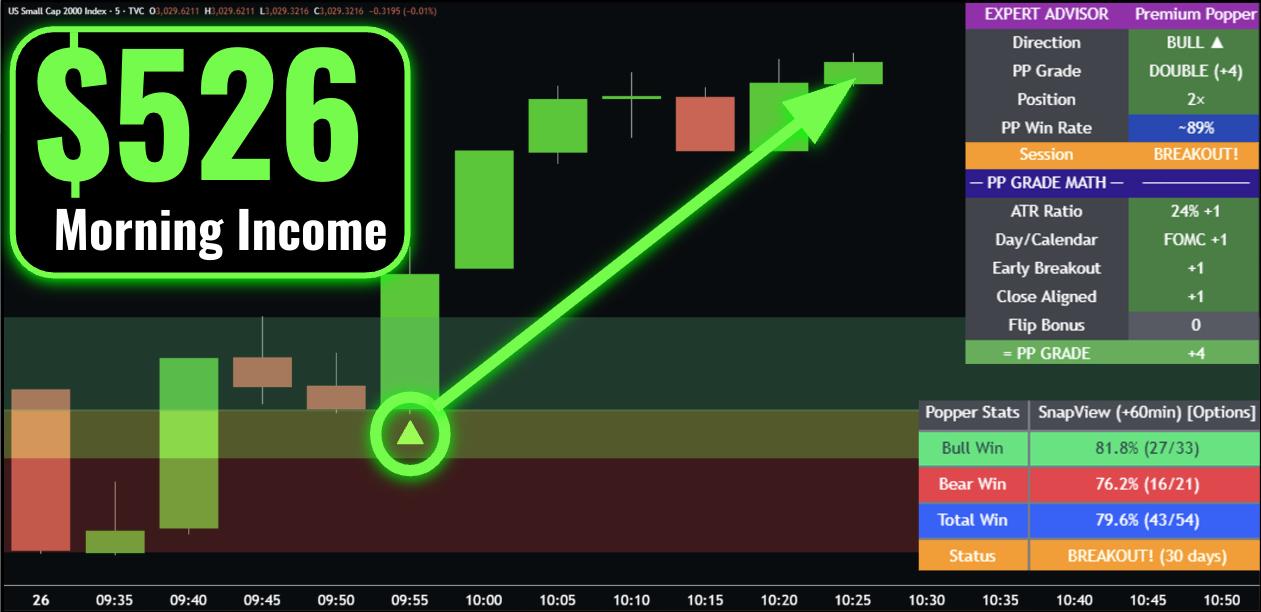
Of course, there would have been smaller gains and some that did not work out, but…
How would it have been possible to pull $500+ out of the market on a tiny fraction-of-a-percent crawl… while traditional traders are getting chopped to pieces?
It all comes down to an institutional phenomenon that happens during the first 20 minutes of every trading day…
Between 9:30 AM and 9:50 AM, Wall Street heavyweights enter a massive brawl to settle block orders… pushing nearly 25% of the entire day’s volume into a brief 20-minute window…
Right around 9:50 AM, the brawl ends… the dust settles… and the market literally hands us its direction for the rest of the morning…
By placing just one simple trade on one ticker right as that direction becomes clear…
You give yourself a shot to walk away with $500 in hand before lunch, leaving you completely free for the rest of your day…
While I cannot make any guarantees in the market…
Recently, I sat down live on camera with a former money manager to lay out the floor data behind this 9:50 AM morning phenomenon…
And how anyone with a normal brokerage account can take advantage of this step-by-step…
Tap here to watch the complete video breakdown before access is taken down.
See you there,
Silas Peters
SK hynix Erased the Bear Case This Morning
Analyst Targets
- Susquehanna International Group: Neutral rating reiterated post-earnings; analyst Mehdi Hosseini cited Micron’s more diversified portfolio and Samsung’s foundry business as a better risk-reward relative to SK hynix at current levels.
The Quarter Bears Cannot Explain Away
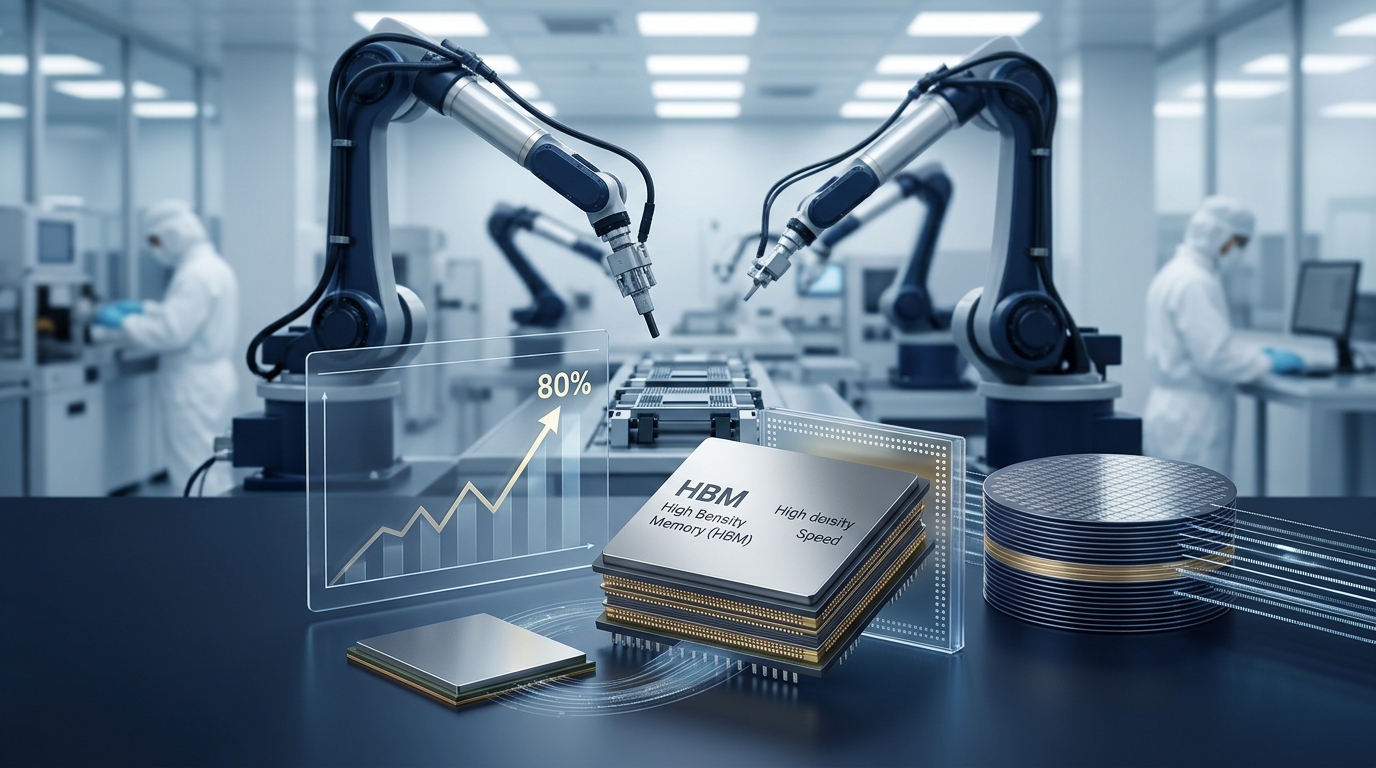
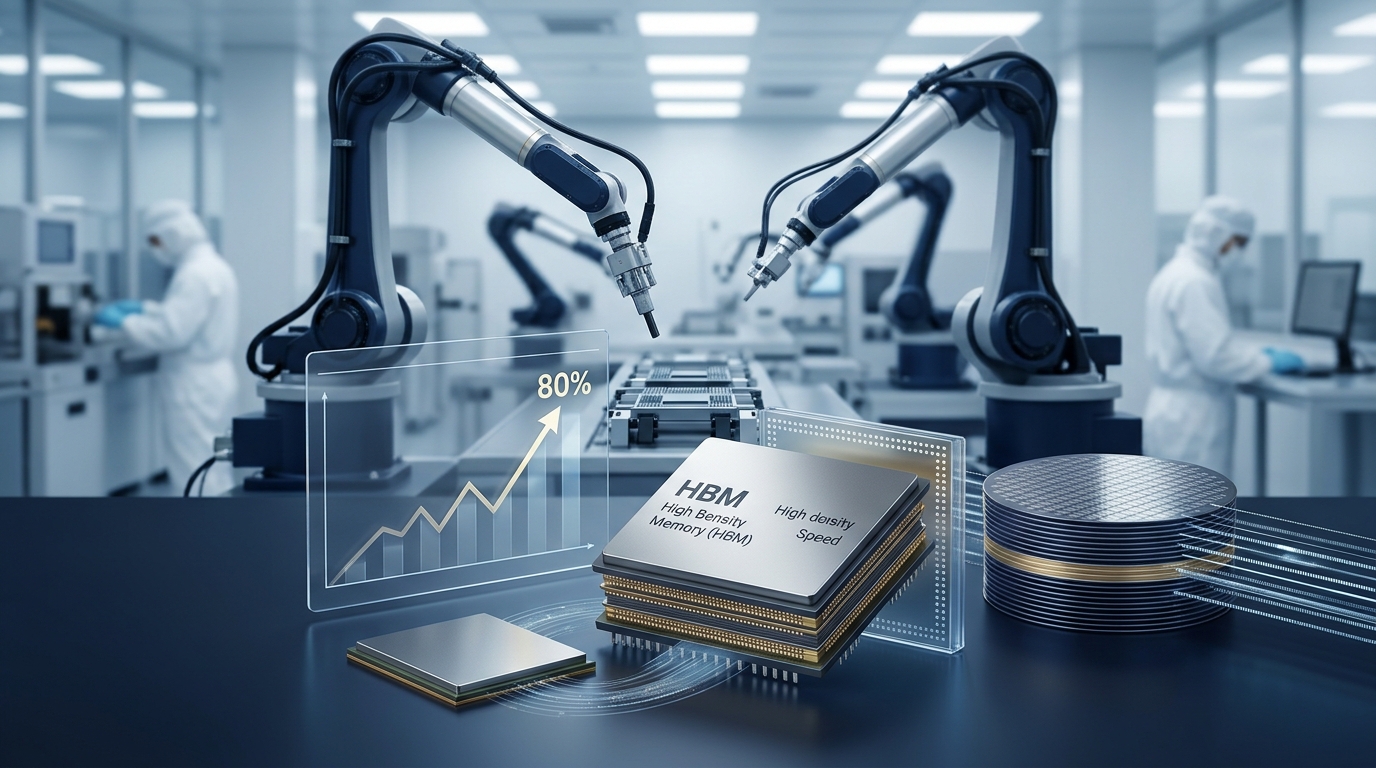
SK hynix did not just beat estimates this morning. It made the skeptics’ argument structurally harder to hold. The company reported Q3 operating profit of ₩83.33 trillion, while revenue rose to ₩104.62 trillion and operating margin reached 80%. Shares in Seoul closed 10.89% higher, and South Korea’s KOSPI closed above 6,000.
The magnitude matters. Revenue grew 327.9% year-on-year, while operating profit surged 557.2%. That is not a cyclical uptick. At 80 won of operating profit per 100 won of sales, SK hynix is running margins that most semiconductor companies do not reach in their best decade.
Company Profile
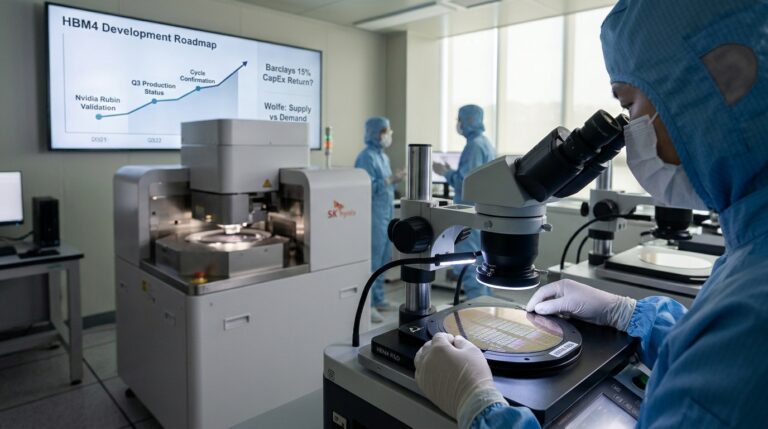
SK hynix controls more than half of global HBM market share by revenue and is a major supplier to Nvidia. Its business is concentrated in DRAM and NAND flash, with HBM now the highest-value product in the portfolio. The record quarter was driven by soaring memory prices, a ramp toward HBM4 becoming the main shipment and revenue driver in Q4, and strength in server memory.
The Numbers
- Revenue: ₩104.62 trillion, up 32% quarter-on-quarter and 327.9% year-on-year; first time above ₩100 trillion
- Operating profit: ₩83.33 trillion; up 38% sequentially and 557.2% year-on-year
- Operating margin: 80%, up 3 percentage points from Q2
- Net income: ₩39.78 trillion
- Cash: ₩114.5 trillion; net cash of ₩98.7 trillion
Net income was weighed down by a net non-operating loss of ₩32.63 trillion, including an ₩11.6 trillion foreign exchange loss and a ₩22.9 trillion investment asset valuation loss. The operating line tells the real story.
Why the Stock Is Moving
Two things are changing today, not one. The earnings beat is the smaller catalyst. SK hynix said on the earnings call that when combining volumes already secured under long-term agreements with demand currently being negotiated, its DRAM and HBM volume for the next three years through 2029 is effectively sold out. Customer orders are more than twice the volume SK hynix can currently supply. That is the sentence that ends the peak-cycle debate, at least for today.
The company also laid out an approximately ₩100 trillion ($75 billion) shareholder return plan for fiscal 2026, comprising cash dividends of ₩30 trillion or more and share repurchases and cancellations of ₩60 trillion or more.
Capital return plans of this scale carry a signal beyond the dividend line. SK Hynix’s moves to monetize assets near cycle peaks have historically told investors more about management’s forward pricing view than any earnings call.
What This Means for Micron and Samsung
Susquehanna’s Hosseini reiterated his neutral rating, citing Micron’s more diversified memory portfolio and Samsung’s foundry business as offering a better risk-reward profile. That relative preference is worth watching at the US open.
Samsung may close the gap in HBM as its yields improve, and tighter execution on next-generation HBM could spur a reassessment of Samsung’s memory earnings and valuation. For Micron, the read-through is simpler: every data point SK hynix put on the table this morning confirms that the supply-demand imbalance powering Micron’s own margin expansion is intact.
The structural case for Micron and Samsung rests on the same supply math driving SK hynix. The three companies controlling over 90% of global DRAM production have each chosen to convert capacity to high-margin HBM, tightening conventional supply and lifting margins across the sector.
Forward Scenarios
Bull: HBM4 overtakes HBM3E in Q4 shipments as guided, long-term agreements hold pricing above spot, and the remaining 2026 shareholder returns compress the float further. Micron and Samsung rerate on coattails.
Base: Margins plateau near 80% as HBM4 ramp absorbs capital; the supply agreements provide earnings floors, and the memory supercycle extends into 2027 without a sharp demand correction.
Bear: Management’s outlook that memory supply shortages will persist through 2030 proves too optimistic; a hyperscaler capex pause exposes the gap between committed volumes and actual pull-through orders.
Technical Overlay
SK hynix shares closed 10.89% higher in Seoul on Wednesday. The gap open leaves the stock above its 50-day and 200-day moving averages on the Korean exchange. For US-listed Micron, the relevant test is whether today’s read-through holds MU above its own 50-day level near $155 into the open.
Bottom Line
The bears needed SK hynix to confirm that AI memory demand was softening. Instead, they got an 80% operating margin, three years of sold-out capacity, and a $75 billion shareholder return plan for 2026. Management expressed confidence that the AI-driven memory supercycle will persist, pointing to a broadening of AI investment beyond hyperscalers. The question for Micron and Samsung at the US open is not whether this quarter was good. It is whether either stock is pricing in a cycle that now looks structurally longer than the market believed 24 hours ago.