DoorDash did not just beat the quarter. It reset what the company is.
On October 29, DASH reported Q3 revenue of $4.62 billion, up 34% year over year, and EPS of $1.06 against a consensus of about $0.81. That is a 31% beat. Adjusted EBITDA rose 41% to $1.06 billion, and GAAP net income rose to $466 million from $244 million a year ago. In the same press release, DoorDash announced a definitive agreement to acquire Instacart for $65.00 per share in cash and stock, an equity value of roughly $17 billion and a 26% premium to Instacart’s October 22 close.
Shares closed October 29 up 5.6%. The market is telling you something.
The Business
DoorDash already commands roughly 59% of spending across major U.S. delivery platforms, according to Consumer Edge credit and debit data through Q3 2026. That is not a fragile lead. The U.S. restaurant category just posted its fastest sequential growth in more than five years. Marketplace gross order value hit $33.9 billion, up 36%. Grocery and retail GOV grew at more than double the pace of restaurants in the quarter.
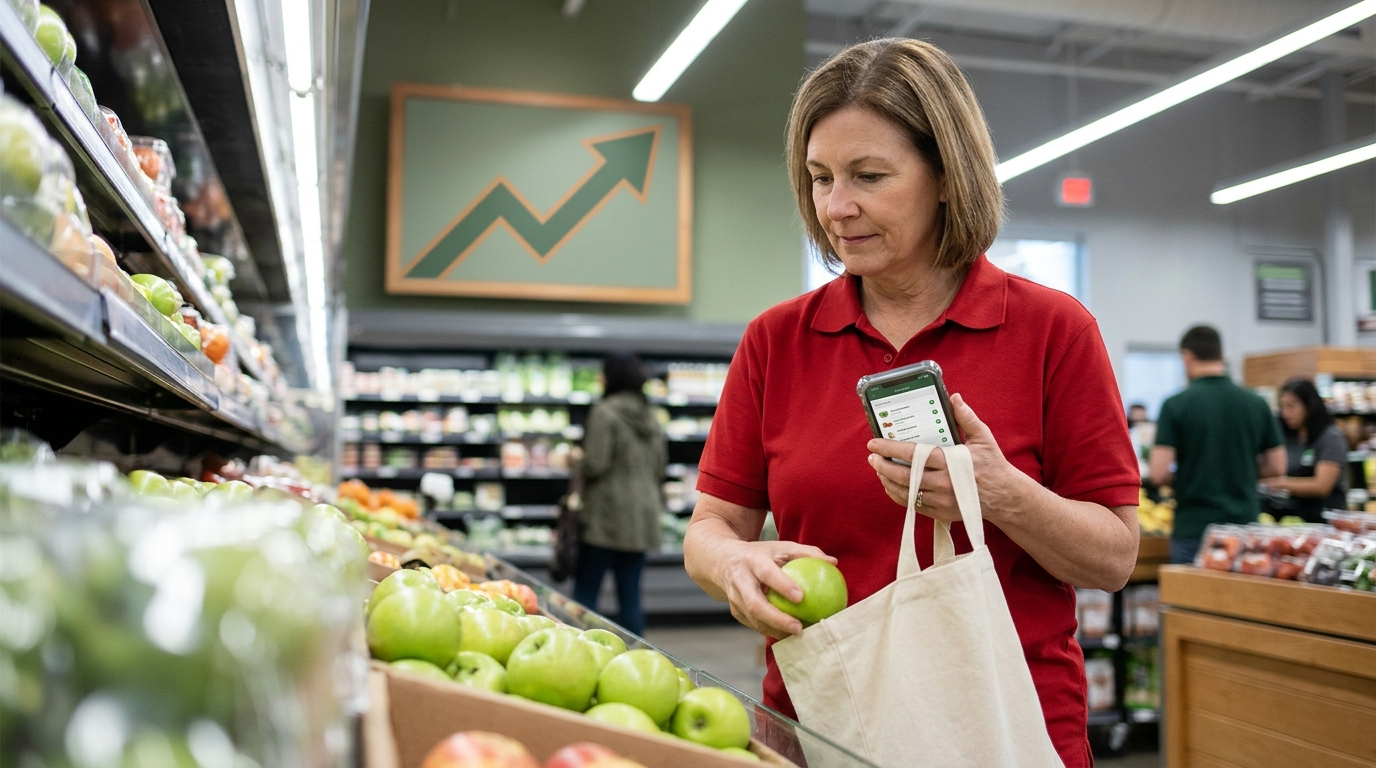
That last figure matters because it is exactly what the Instacart deal is designed to accelerate. Instacart brings Instacart+ membership, a first-party fulfillment technology stack, deep CPG advertising relationships, and grocery partnerships DoorDash would spend years replicating on its own. Combined, the platform would give grocers and retailers of every size access to DoorDash’s delivery network alongside Instacart’s enterprise software.
Why Wall Street Is Paying Attention
The market’s reaction was not reluctant. DASH up 5.6% on a day when the company announced a $17 billion acquisition is a statement. Acquisitions at this scale typically trade the acquirer lower, not higher, in the session they close.
Management’s synergy framing is the reason. CFO Ravi Inukonda laid out a specific timeline: year one is reinvestment, with more than 100% of synergies plowed back into the platform. Year two shows progress. Year three delivers $500 million of incremental net synergies to the bottom line. Those savings come from cross-listing merchants between the two apps, expanded CPG ad reach, and cross-selling Instacart’s fulfillment software. DashPass and Instacart+ members would pay one fee instead of two, saving customers an estimated $100 million annually on memberships alone.
BTIG reiterated its Buy rating with a $225 price target as recently as October 21. The one-year analyst consensus sits at $257, implying roughly 44% upside from Wednesday’s close of $169.49.
What’s Driving the Opportunity
Deliveroo, which DoorDash acquired on October 2, 2025, has already broadened the international revenue base. Now Instacart adds the domestic grocery layer. The combined entity would face Amazon and Walmart in grocery rather than ceding that ground entirely to them. DoorDash’s U.S. restaurant moat is intact while the new surface area expands.
One detail worth noting: DoorDash’s single global tech platform remains on track for completion by the first half of 2027, which means the integration of Instacart’s platform lands on a consolidated infrastructure rather than a legacy patchwork. That reduces one of the biggest execution risks in any large-scale merger.
What Could Go Wrong
The risks here are real and worth sizing carefully.
The deal is not expected to close until the second half of 2027, subject to regulatory approval and Instacart shareholder vote. Regulatory scrutiny is the central uncertainty. DoorDash and Instacart together would hold a commanding share of third-party grocery delivery, and authorities will examine market concentration before greenlighting the combination. Any meaningful condition or divestiture could shrink the synergy pool.
On the financial side, management plans to reinvest more than 100% of synergies in year one, meaning investors waiting for the $500 million to hit the income statement are waiting until at least 2029 or later. That timeline requires faith in execution while DASH trades at roughly 94 times trailing earnings. Rival Uber, which announced an agreement to acquire ezCater on October 6, 2026, is not sitting still. And Walmart and Amazon remain formidable in grocery delivery, with logistics advantages neither platform can easily replicate.
If the deal is delayed, blocked, or lands with conditions that force divestitures, the stock loses a significant part of its current premium quickly.
The Bottom Line
DoorDash enters this morning with a 34% revenue growth rate, an earnings beat that was not close, a grocery acquisition the market viewed as additive rather than dilutive, and a credible three-year synergy path with a specific number attached. The standalone business is accelerating. The Instacart deal is optional upside if regulators cooperate. Few stocks offer that combination today. The risk is real but it is knowable. DASH earns its place as the single most compelling buy in delivery right now.