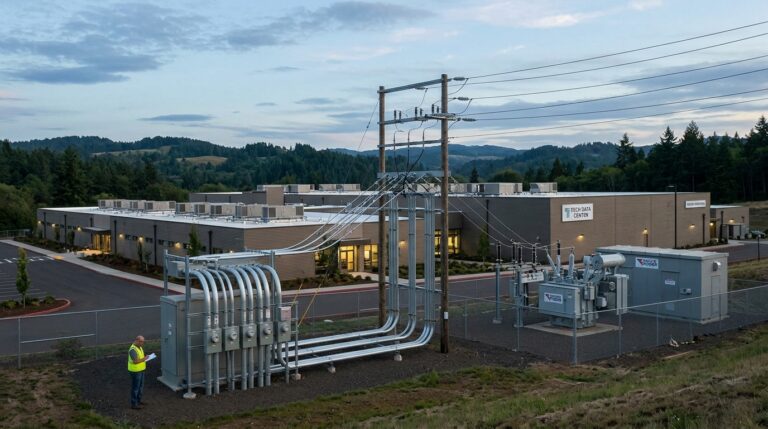
Copper spent most of 2026 being priced as an AI infrastructure metal. Banks were circulating $15,000-a-tonne targets, LME inventories fell for 42 straight sessions through mid-August, and the thesis was airtight: every rack of Nvidia chips needs to be wired, cooled and connected to the grid. A single gigawatt-scale AI campus can consume up to 50,000 tonnes of copper on its own. The price obliged, with the LME cash settlement reaching $14,822 a tonne in October.
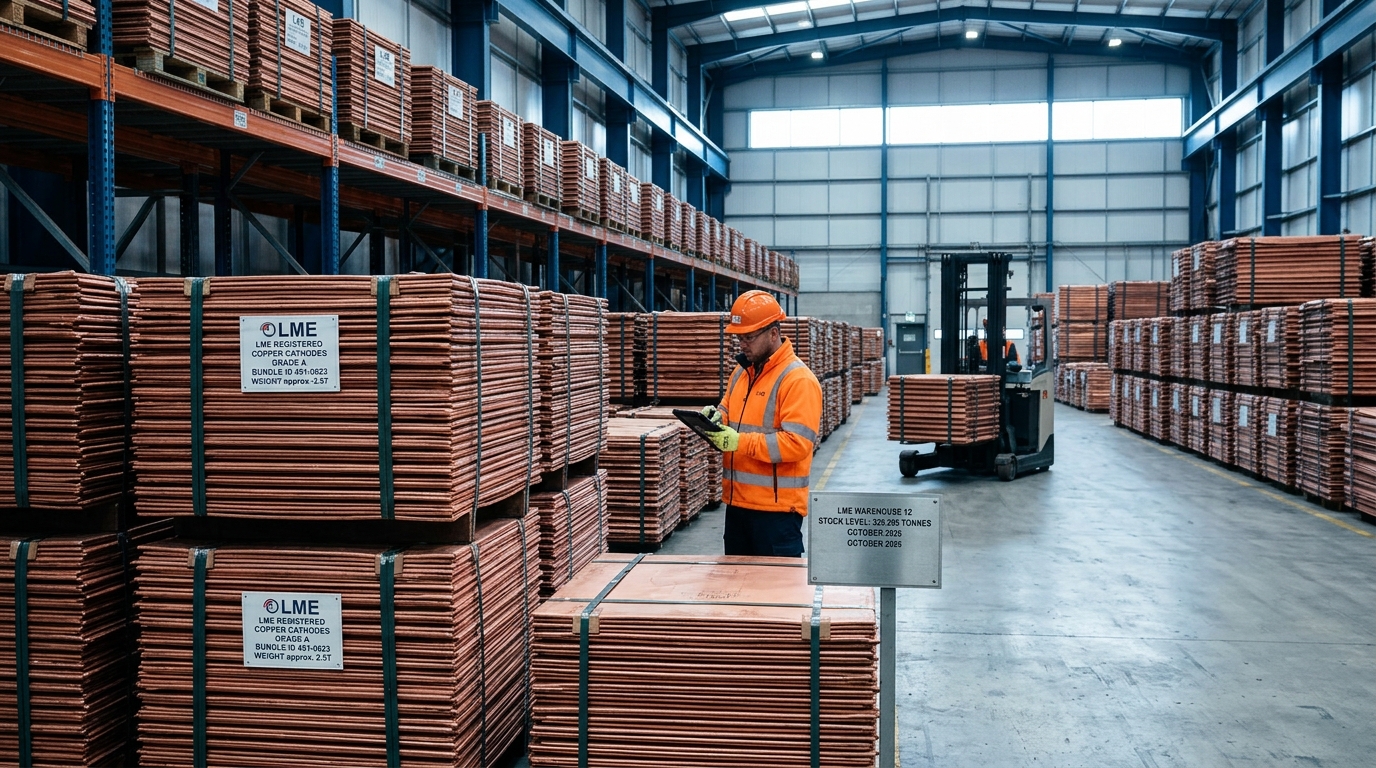
Since then, the message from the physical market has changed. LME copper cash settled at $13,712 a tonne on November 12, while LME stocks stood at 328,600 tonnes. When the price peaked, LME inventories were about 231,000 tonnes. That is roughly 98,000 tonnes of additional metal sitting in London warehouses in a few weeks, the highest warehouse total since early July. The price is down more than 7% from its record. Those two facts together are harder to dismiss than a week of equity volatility.
What the Physical Market Is Saying
LME copper stocks surged from roughly 205,000 tonnes at August’s low to around 320,000 tonnes by mid-November, easing fears of an immediate global shortage, while turbulence in tech and AI stocks and shifting U.S. policy expectations have forced the market to price near-term data centre demand differently. That is a double blow to a metal whose 2026 rally rested on two pillars: constrained supply and surging AI-driven consumption.
The supply side has clearly loosened. Visible stocks worldwide are up this year, though the build has been concentrated in the U.S. They have now started rising. The LME side of that condition has been met.
The demand side is wobbling too. At LME Week, copper’s share of the “most upside” vote came in at 50% in one informal poll, with tin at 27%, signalling professionals are pricing in execution risk on AI demand timing. On Trafigura’s figures, data centres consume about 1 million tonnes of copper, roughly 3% of global demand. That is real, but it is not the whole market, and near-term delivery timing matters for the spot price regardless of what happens by 2028.
Where It Shows Up
The miners have already felt it. Southern Copper (SCCO) sank 7.3% in a single session in late October, two days after reporting the best quarter in its history. Freeport-McMoRan (FCX) fell about 6.3% as copper futures slid about 2.7% by early afternoon.
Freeport and Southern Copper have no meaningful buffer of diversified revenue. Teck’s copper segment gross profit before depreciation and amortization reached $1.6 billion in Q3, versus $740 million a year earlier, driven by copper prices averaging $6.40 per pound in the quarter. At $13,712 a tonne, that average is now closer to $6.22 a pound. The margin math is still attractive, but it has directionally moved against the bulls. Antofagasta, as a pure Chilean copper play, faces the same arithmetic.
What to Watch Next
Three signals matter most from here. First, whether the LME cash-to-three-month spread stays in backwardation, which signals prompt tightness, or flips toward contango, which signals relief. As of November 12, cash settled $57 above the three-month price, still in backwardation but narrowing. Second, Shanghai warehouse stocks and Chinese physical premiums, because China’s onshore inventories have been unusually low in recent weeks, a backdrop that can support spot prices. Chinese demand restocking could absorb the LME build quickly, or not at all. Third, the U.S. tariff decision: a proposed 15% refined-copper tariff from January 1, 2027 and 30% from January 1, 2028 would shape whether the COMEX-LME spread re-widens and U.S. suction returns.
The long-term structural case for copper is not broken. The IEA’s 2026 Global Critical Minerals Outlook estimates that, based on the project pipeline under today’s policy settings, the copper supply deficit could reach about 25% in 2035. But the market is not priced on 2035. It is priced on the next quarter, and right now the LME is sending a message that the AI-demand story moved faster than the physical reality could follow.