September 8, 2026
Bonus Content: United Natural Foods Q4: Food Costs Matter More Than EPS
Dear Reader,
Elon Musk has spent years quietly developing a new machine.
It’s not a rocket… robot… or car…
Most investors have never heard of it.
But the United States Patent Office has already revealed how it works.
The evidence is buried inside Patent No. US 11,291,508 B2.
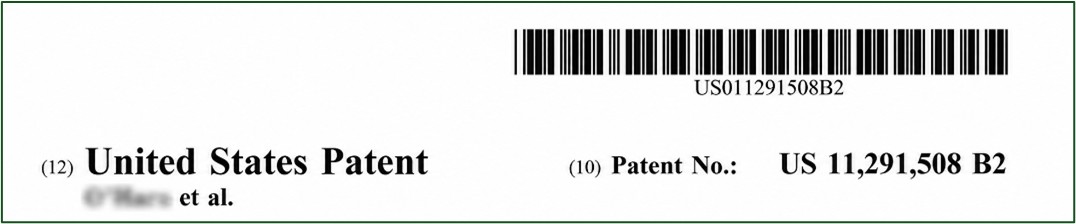
Click here to examine the discovery and the stocks connected to it.
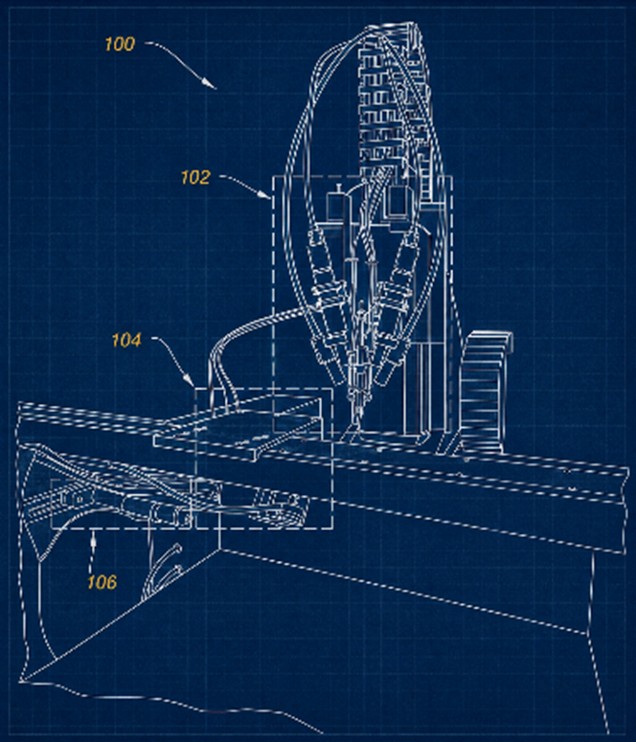
Let me be clear…
This is something completely new.
If it works, it could open an enormous new market for artificial intelligence and launch what Wall Street veteran Matt McCall calls the sixth “Musk Stampede.”
Click here to see what Elon’s patented machine could make possible
Matt has spent more than 25 years identifying major technology trends before they became obvious.
Over that time, he has uncovered more than 50 stocks that later climbed 1,000% or more at their peak.
Now he believes one small public company could benefit as Elon brings this patented technology into the mainstream.
It’s already attracted an eight-figure investment from Nvidia.
And a major gathering beginning November 14th could bring fresh attention to the entire field.
Click here to learn how to get the name and ticker symbol before November 14th.
Good investing,
Matt McCall
Former Fox Business analyst, Editor of McCall Innovations Report
P.S. The patent is already public. The companies surrounding it are still almost entirely unwatched.
United Natural Foods Q4: Food Costs Matter More Than EPS
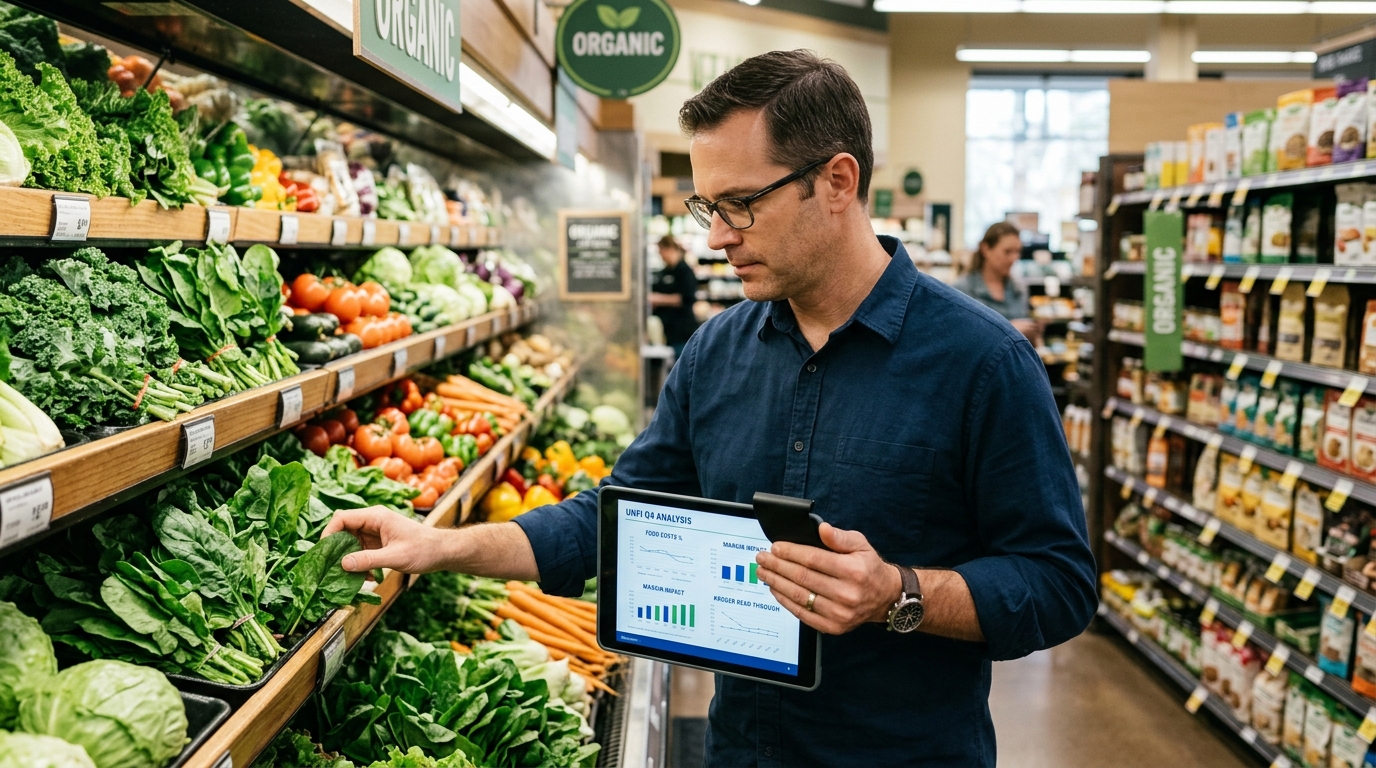
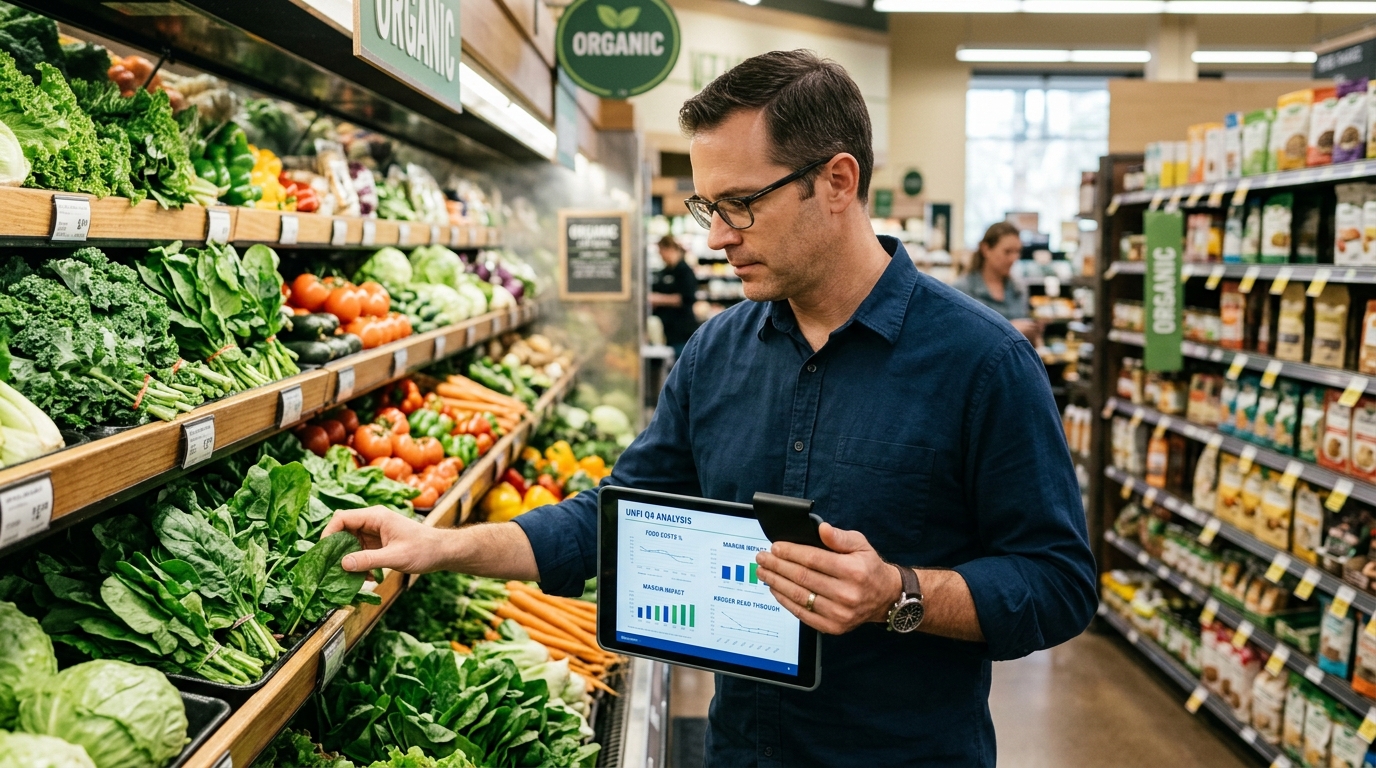
United Natural Foods (UNFI) dropped its fiscal fourth-quarter results before the bell this morning, and the headline comparison is arresting on its face: consensus called for $0.62 in adjusted EPS on roughly $7.68 billion in revenue, against a loss of $0.11 per share on $7.7 billion a year ago. A swing of that magnitude, in a business this thin-margined, does not happen by accident. It happens because costs have been taken out deliberately. The question is whether that story holds through fiscal 2027, and whether management’s color on food-price conditions gives Kroger investors anything to trade on before Friday.
Analyst Targets (Pre-Report)
- Zacks consensus: Hold / EPS estimate $0.62 / Revenue $7.6B
- AlphaStreet consensus: EPS $0.62 / Revenue $7.68B
- Full-year FY2026 guidance range: $2.40–$2.60 adjusted EPS
The Numbers
Wall Street expected $0.62 per share on $7.68 billion in revenue, a dramatic improvement from the year-ago quarter when UNFI posted a loss of $0.11 per share on $7.7 billion in sales. The company has beaten consensus by an average of 29.9% over the trailing four quarters, which makes the bar look deceptively modest. Revenue, by contrast, has been intentionally compressed.
Nearly 500 basis points of recent quarterly revenue declines stemmed from what UNFI calls “accretive optimization,” strategic decisions to exit lower-margin business including the transition out of its Allentown, Pennsylvania distribution center. That is not demand weakness. It is surgical. Management has indicated the conventional product-focused network optimization actions will not be fully lapped until the first quarter of fiscal 2027, meaning this fourth quarter still absorbs some disruption from warehouse consolidations and route realignments.
The profitability trajectory into Q4 was real. In the fiscal third quarter, gross margin improved 20 basis points to 13.6%, operating expenses declined nearly 7% year over year, adjusted EPS rose 75% to $0.77, and distribution center productivity improved more than 7%, supported by lean practices and supply-chain technology.
Why the Inflation Commentary Matters
At the Q3 call in June, UNFI discussed year-to-date inflation running at low single digits and indicated it expected that to continue, with a focus on working with suppliers to keep pricing stable and predictable. That was June. A lot has changed since then on the commodity side.
On September 3, Reuters reported that Tyson Foods updated its fiscal 2026 outlook, citing additional pressure in its beef segment during the fourth quarter, driven by significant margin compression amid volatile cattle prices and a historically tight U.S. cattle supply. Tyson now expects its beef segment to post an adjusted operating loss of $625 million to $775 million for the year. That is a supply-chain stress signal, not a peripheral one. UNFI distributes products across roughly 30,000 retail locations.
USDA data showed beef and veal prices were 11.8% higher year over year through June, with ground beef at $6.825 per pound, and USDA forecasts a 10.7% increase for the full year 2026. What UNFI management says on this morning’s 8:30am call about whether that pressure has filtered into their cost structure or boosted short-term product value gains is the data point that Kroger analysts will be reading most closely.
The Kroger Bridge
Kroger reports its second-quarter fiscal 2026 results on September 11, with analysts expecting about $1.05 in adjusted EPS. The Consumer Price Index for August is scheduled for 8:30am Eastern that same morning, creating a narrow window where investors will be digesting both a major grocery retailer’s results and official inflation data. UNFI’s call today is the first clue about how food-cost pass-through is playing out at the distributor level before either of those events land.
The specific question: did beef inflation provide a short-term revenue boost to UNFI through product cost escalation, or did it compress gross margin as the company absorbed costs before passing them through? Management flagged in June that if inflation sustained at or above low single digits, they have 60-90 days of advanced price notice to work with suppliers and customers, and that they may see “some secondary and temporary gains in the short term” but the focus remains on keeping prices low and predictable for the industry.
Forward Scenarios
Bull: UNFI beats on EPS and management guides fiscal 2027 revenue growth acceleration as optimization drag fades. Natural product sales, which grew over 4% in Q3, sustain mid-single-digit momentum. Gross margin holds above 13.6%. The company has guided for a return to sales growth in fiscal 2027 after cycling its network optimization actions, and a clean Q4 would validate that trajectory.
Base: EPS in line with consensus. Revenue misses slightly, as it did in Q3. Sales normalization, excluding network optimization and one-off project impacts, tracks in line with the targeted $90 billion addressable market. Management maintains fiscal 2026 guidance. The stock trades sideways and focus shifts to Kroger Friday.
Bear: Revenue misses materially again. Management flags that beef cost volatility compressed distributor margins more than expected in August. The key question is whether the profitability recovery is on track even as revenue remains under pressure; sustaining the earnings trajectory depends on how quickly the optimization drag fades into fiscal 2027. If guidance is reduced, the Q3 stock reaction, which saw shares drop 18.67% pre-market on a revenue miss alone, is a relevant reference point.
Bottom Line
The EPS comparison is compelling on paper. But UNFI’s Q4 matters most today not because of what the company earned, but because of what management says about where food costs are heading into a fiscal year that begins next month. The central question for the food supply chain this week is how much of the beef inflation now pressuring Tyson is landing on the consumer’s plate, and how much is being absorbed somewhere along the distribution chain. UNFI management’s answer, given this morning at 8:30am, is the sharpest read on that question available before September 11, when the CPI and Kroger results arrive the same morning.