
September 17, 2026
Bonus Content: J.B. Hunt Lost 13% in a Day. The Diesel Shock Spreads.
Editor’s Note: We’re delighted to bring you the latest stock pick from our colleague, Wall Street legend Marc Chaikin. You may recognize Chaikin’s name from frequent appearances on CNBC, Bloomberg or Fox Business. His client list has included billionaires such as Paul Tudor Jones, Steve Cohen, and George Soros. His Power Gauge system flashed bullish on Nvidia right before it rose 50,001%. And it just flashed bullish on another off-the-radar AI stock poised to trigger a $248 trillion “White Swan” event as soon as Sept. 29. See below for Marc’s research and free recommendation.
Dear Reader,
I’ve uncovered the single best AI stock in the world.
And it could explode in value on or before Sept. 29.
That’s the date I anticipate a major announcement.
It relates to a brand-new technology this company just launched.
A technology so powerful…
It could speed up AI breakthroughs 360 times over.
Breakthroughs in medicine, energy, quantum computing and AI itself…
Breakthroughs that were five years away…
Could come in just FIVE DAYS once this technology launches.
I’m talking about something I call AI “micro clusters.”
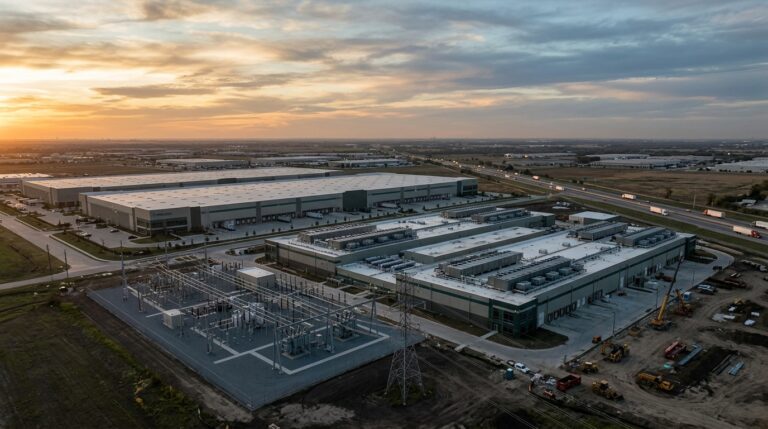
These are clusters of AI compute that will soon replace the massive data centers blotting the American landscape right now.
Micro cluster technology uses 99% less energy than data centers.
It takes up 99% less real estate.
Yet it’s more than 1 trillion times more powerful than today’s data centers.
Micro clusters are about to trigger this $248 trillion AI “White Swan” event.
Those who understand what’s coming could get very rich.
Those who ignore what’s coming could see their AI portfolios wiped out.
The good news?
One company has engineered the special chips that will power this breakthrough.
The U.S. government is pouring billions into this company’s account ahead of the launch.
And when this story breaks into the mainstream…
I believe billions, even trillions more dollars will flow into this stock.
→ It’s not Nvidia.
→ It’s not Apple.
→ It’s not SpaceX.
It’s an off-the-radar AI play that could explode on or before Sept. 29.
The time to get in is right now.
So, I created this urgent presentation detailing the whole opportunity.
I explain the technology.
I take you “inside” the secretive lab where it’s being finalized.
And I even give you the name and ticker of the company behind the coming technology revolution.
Fair warning: This presentation contains time-sensitive information.
I may have to take it offline as soon as 12 midnight, tonight.
Good investing,
Marc Chaikin
Founder, Chaikin Analytics
P.S. The company I name in this presentation represents the future of AI. Its new technology is about to replace AI data centers when it comes to major AI breakthroughs. And it will, I predict, trigger a $248 TRILLION reboot of the AI markets… and one of the biggest moneymaking opportunities we’ll ever see… about 50 times bigger than the whole AI boom to date, in fact. Go here for full details, including the company’s name and ticker. And if interested, I urge you to get in on or before Sept. 29, when this company presents its latest findings at a major tech conference in Europe.
J.B. Hunt Lost 13% in a Day. The Diesel Shock Spreads.
Analyst Targets
- Consensus full-year 2026 EPS estimate: approximately $7.75 per share (FactSet)
- Implied Q3 EPS at warning midpoint: approximately $1.77, roughly 16% below the prior $2.10 quarterly consensus
What Happened
J.B. Hunt Transport Services warned that its third-quarter earnings per share will fall between 5% and 10% from the second quarter as diesel prices and other costs rise across the freight sector. The warning did not come from an earnings release. CFO Brad Delco made the comments at a Morgan Stanley investor conference. Markets responded immediately. J.B. Hunt stock fell 13.3% on Wednesday, one of the company’s sharpest one-day drops in years.
Delco described fuel costs as having produced price swings unlike anything he could recall in his career, calling the moves “some of the most radical and abnormal swings in fuel prices that I think we’ve ever seen.”
The Numbers
The company flagged $25 million in incremental driver-related costs, including recruiting, bonuses, and related expenses, and at least a $10 million sequential fuel headwind. The update implies Q3 EPS of $1.77 at the midpoint of the range, roughly 16% below the current $2.10 consensus estimate. For context, J.B. Hunt earned $9.31 per share in 2022. That figure declined to $6.12 in 2025. Analysts currently anticipate full-year 2026 earnings of roughly $7.75 per share.
Diesel prices were up about 10% from July to August and continued to climb through September. AAA’s national average for diesel reached $6.23 per gallon on September 14, 2026, a record level in AAA’s data, and up from roughly $3.7 per gallon around this time last year.
Why the Stock Is Moving
The miss against consensus is only part of the answer. The deeper problem is structural timing. Intermodal contract pricing typically lags truckload pricing by multiple quarters. That lag is precisely what can pressure Q3 margins: costs reset quickly with a diesel spike, but revenue follows more slowly as contracts reset. The company pointed to particular pressure in its intermodal operation, where contract pricing is reacting more slowly to rising costs.
The 2026 third quarter may snap a streak of four consecutive quarters of year-over-year margin and earnings improvement. That streak had fueled a strong year-to-date rally in JBHT shares before Wednesday, which amplified the air pocket when the warning arrived.
Delco added at the conference: “Gas prices jumped another $0.30 this week. We should be concerned about the consumer.” That line matters beyond JBHT. It signals that fuel’s pass-through into freight and delivered goods costs is intensifying heading into Q4.
Macro and Industry Context
The diesel price shock reflects disrupted shipping through the Strait of Hormuz and tighter refined-product markets, factors that have pushed diesel higher than gasoline in this cycle. This is not a blip easily reversed in a quarter.
Industry competitors including Old Dominion Freight Line, Knight-Swift Transportation, XPO, and Landstar System also traded lower in sympathy after the JBHT warning, a signal the market viewed it as a sector-wide cost event rather than a J.B. Hunt-specific execution problem. UPS has announced its 2026 holiday demand fees, joining FedEx and the U.S. Postal Service in higher peak-season charges than last year, layering additional freight cost pressure onto the supply chain as volumes build toward the holiday window.
Bull / Base / Bear Scenarios
Bull: Management argued that the cost inflation is “more cyclical than structural,” and that higher driver costs are a sign of a strong freight market. If diesel retreats from record levels and intermodal contracts reset in the 2027 bid season, Q3 becomes the trough and the stock’s forward valuation looks cheap at current levels.
Base: Diesel stays elevated through year-end. Intermodal contracts begin resetting across Q4 and Q1, partially recovering margins. Record fuel prices and elevated truckload rates remain catalysts for road-to-rail conversion, supporting volume even if per-unit economics are compressed near term. The stock stabilizes but lacks a catalyst for a sustained recovery until pricing clarity emerges.
Bear: The Strait of Hormuz disruption persists into 2027, keeping diesel elevated. Intermodal pricing can lag truckload pricing by two to three quarters, meaning even an autumn reset cycle yields limited near-term relief. Full-year EPS comes in well below the $7.75 consensus, and multiple compression follows.
Technical Overlay
Wednesday’s 13% gap lower pushed through the stock’s 200-day moving average and erased roughly four months of gains in a single session. The gap fill around prior support near $265–$270 now acts as overhead resistance. Watch for volume confirmation on any recovery attempt before treating the damage as absorbed.
Bottom Line
The question investors need to answer is not whether Q3 is bad, Delco has already quantified that. Investors are watching Q3 results for confirmation of the CFO’s range and any signal on pricing power in Q4 contract discussions. The real question is whether the intermodal lag becomes a tailwind in early 2027, or whether elevated diesel costs keep pressure on margins long enough to force estimates lower across the freight sector. J.B. Hunt is the first major carrier to put a precise number on this cost shock. It will not be the last.