Dear Reader,
Most people are looking at AI the wrong way.
They’re chasing the next hot stock.
The next chatbot.
The next flashy headline.
But AI does not run on excitement.
It runs on power.
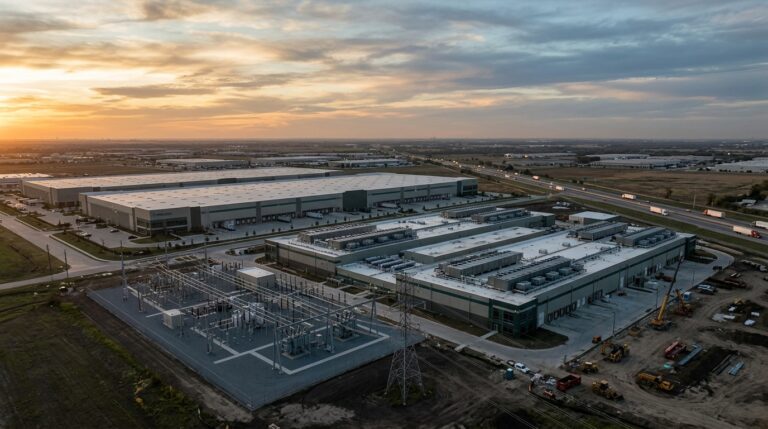
It runs on data centers.
It runs on infrastructure.
And right now, that buildout is turning into one of the biggest money flows in America.
He believes it sits in the path of the AI infrastructure boom…
And could be one of the most important retirement opportunities most people have never heard of.
The part that makes this urgent?
Trump has reportedly invested up to $25 million of his own money.
Alex says regular Americans can learn how to access this fund for around $15 through a regular brokerage account.
This is the kind of thing I’d rather see early than read about later.
Good investing,
Rachel Gearhart
Publisher, The Oxford Club
Intel Jumps 4% on SK Hynix Talks. The Real Test Is Ohio Demand
Analyst Targets
- Tigress Financial: Buy, $145 price target
- Consensus (49 analysts, S&P Global): Buy, $115.74 average target
- Median street target (48 analysts): $110
- Next earnings: October 21, 2026 — consensus EPS $0.39, revenue $16.72B
One Headline, Two Stories
Intel closed Tuesday at $97.14. By Wednesday’s close it was at $101.05, up roughly 4% on volume running about 38% above its 20-day average. SK Hynix’s Nasdaq ADRs added about 2%. The catalyst: a Reuters exclusive, citing three people familiar with the talks, that SK Hynix is in early discussions to manufacture memory chips at Intel’s long-delayed Ohio campus, which would be the first SK Hynix memory production on US soil.
Two structures are under discussion. In one scenario, SK Hynix could lease part of Intel’s Ohio facility. In another, the two companies could form a joint venture with major cloud firms seeking to secure memory chip supplies. SK Hynix confirmed it is exploring options but was precise about what it would not confirm. “SK Hynix is exploring various options to strengthen its global competitiveness, but no specific plans or arrangements have been finalized at this time,” the company said in a statement. South Korea’s trade ministry added its own caveat: any decision involving a “national core technology” would be subject to review under the Industrial Technology Protection Act.
What Ohio Actually Is Right Now
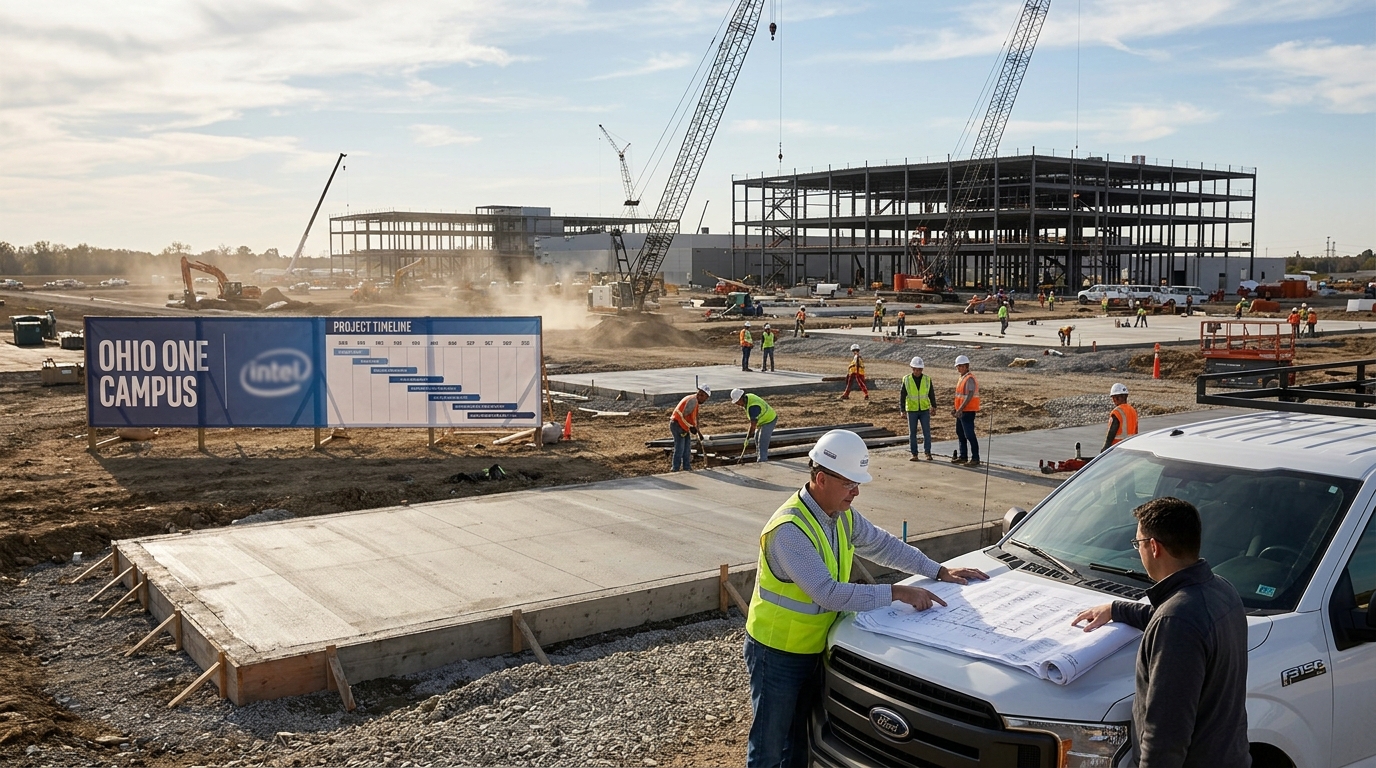
Intel broke ground in New Albany in September 2022, originally targeting production by 2025. That schedule moved to 2027, then 2028, and now 2030-2031. The tech giant is investing $28 billion in the project, which includes two chip factories. The campus has CHIPS Act backing, meaningful construction progress, and no confirmed production customer. A memory tenant would change the last item.
The two companies have an established relationship: Intel sold its NAND memory business to SK Hynix in a $9 billion deal, which means an agreement in Ohio would put the buyer of Intel’s old memory business back inside an Intel campus.
The Numbers That Matter More Than the Headline
Intel Foundry reported an operating loss of $2.1 billion on sales of $5.8 billion in the second quarter of 2026.
The external revenue line is where the SK Hynix story lands. Just $293 million of the foundry’s Q2 2026 revenue came from external customers, roughly 5% of what the segment sold. Nearly all the rest is Intel buying wafers from Intel, so the loss is Intel’s own to carry. Intel has pointed to 2027 for foundry break-even, and its finance chief has said that requires only a few billion dollars of additional external revenue. Against a $1.2 billion annual external pace, a few billion sounds modest. Against where the unit stands today, it is a significant multiple of current outside business.
Why the Stock Moved, and What It Priced
Markets priced two things simultaneously: the possibility that SK Hynix becomes the foundry’s first real external anchor tenant, and the signal quality that carries. SK Hynix is the world’s second-largest memory-chip maker and the primary supplier of high-bandwidth memory for AI accelerators including those built on Nvidia silicon. Landing it as an Ohio customer would validate Intel Foundry to a class of customer that has never committed volume there. The move in the stock is pricing the option, not the contract.
While the CHIPS and Science Act succeeded in attracting leading-edge logic fabrication commitments to Arizona and Texas, advanced memory silicon has remained a vulnerability in the US supply chain. High-bandwidth memory production is widely viewed as offshore today. A working Ohio memory line would address that directly, which is why cloud providers desperate to lock in AI compute supply are reportedly part of the joint-venture conversation.
Bull / Base / Bear
Bull: A lease or joint venture is signed by mid-2027, SK Hynix brings meaningful DRAM or HBM wafer volume to Ohio, external foundry revenue crosses $3 billion annually, and Intel Foundry hits its break-even target on schedule. The stock, already up sharply in 2026, earns its valuation premium.
Base: Talks extend well into 2027, South Korea’s regulatory review adds friction, and any deal is narrower in scope than Reuters described. External foundry revenue inches higher but remains well below break-even requirements through 2027. Intel closes the gap on its own, one quarter at a time.
Bear: Talks collapse, the geopolitical review in Seoul kills the deal, and Intel is left with the same problem it had Tuesday: a $28 billion Ohio campus with no production customer and a foundry losing $2 billion a quarter. The stock gives back Wednesday’s gain and more if Q3 external revenue disappoints.
Technical Overlay
Intel gapped from $97 to open above $100 Wednesday, closing at $101.05. The $100 level now functions as near-term support; a close below it on volume would signal the move was purely event-driven. Resistance sits in the $108 to $112 range, where the stock stalled twice in August. The 50-day moving average was running below $95 into the week, so Wednesday’s gap put the stock roughly 6% above it.
What to Watch
- Any formal announcement from SK Hynix or Intel specifying deal structure or scope
- South Korea trade ministry ruling on whether HBM or DRAM transfer triggers Industrial Technology Protection Act review
- Intel Q3 earnings on October 21: external foundry revenue is the line, not total foundry revenue
- Micron’s response, as the top-tier memory maker with substantial US manufacturing, it is a directly affected competitor
Bottom Line
Wednesday’s move is justified as an option premium, not an earnings event. The foundry math requires external revenue to multiply several times from its current $1.2 billion annual pace before losses stop. SK Hynix, if it commits, would be the single largest step toward that target Intel Foundry has ever taken. But talks are not contracts, and Ohio’s history shows how long Intel is willing to wait for demand it can count on. The question investors should be asking is not whether this deal is real. It is whether, even if signed, it closes the gap in time to validate a stock that has already moved aggressively on the promise of a foundry turnaround still two years from proof.