Most retailers spend billions trying to earn customer loyalty. Costco charges for it upfront, and 84.1 million people keep saying yes.
That basic asymmetry is worth holding onto when reading Thursday’s fiscal 2026 results, which landed after the close with the fourth quarter coming in ahead of Wall Street on both the top and bottom lines: total revenue of $95.72 billion, up 11.1% year over year, and GAAP EPS of $6.75 against consensus of roughly $6.55. The quarter included a non-recurring $0.15-per-diluted-share benefit from IEEPA tariff refunds after partial reinvestment in member value. Strip that out and underlying earnings still grew more than 12% year over year. Solid, not spectacular. But that framing misses where the durable value is accumulating.
The Annuity Nobody Talks About
Paid executive members reached 42.3 million, up 9.4% from a year earlier. Total paid members reached 84.1 million, up 3.8%. Total cardholders reached 150.4 million, up 3.6%. The U.S. and Canada renewal rate was 92.3%, up 10 basis points sequentially.
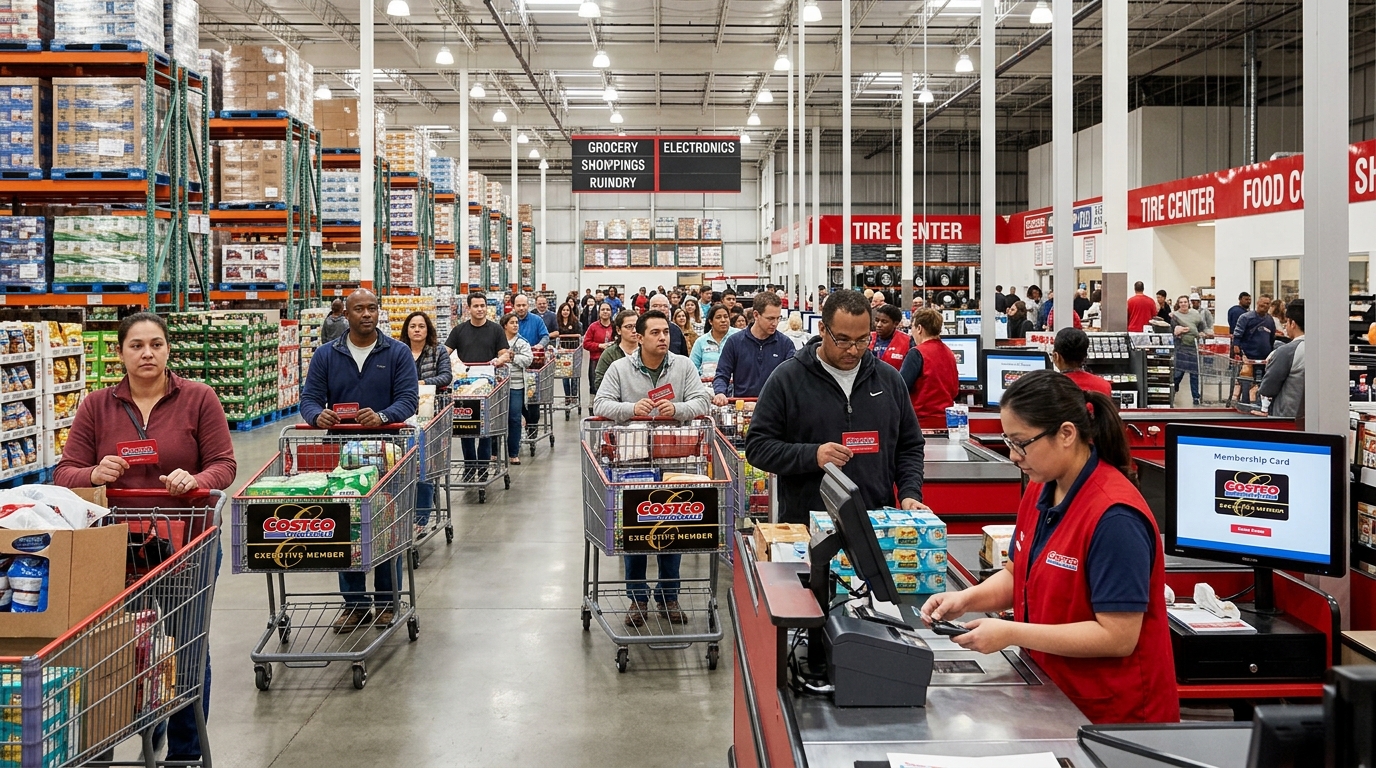
The executive tier is the number that matters most. Executive tier memberships carry a $130 annual fee versus $65 for the basic tier, and CEO Ron Vachris said on the earnings call that improving executive penetration is likely to support renewal rates over time. Executive memberships now account for 75.6% of total sales penetration. That is not a loyalty program. It is a structural revenue floor that competitors cannot replicate with a coupon.
Executive members typically shop more often, spend more during each visit, and generate higher recurring membership income, creating a more attractive earnings mix. Vachris said executive membership penetration reached an all-time high during fiscal 2026. Members under age 40 have increased by nearly 60% since the COVID period and now account for more than one-quarter of Costco’s membership base, and while those members initially spend less than the average member, management said spending tends to rise as their households and incomes mature. In other words, Costco is preloading future earnings growth with younger cohorts who are still in the early innings of their spending curves.
Why This Model Is Hard to Copy
Walmart, Target, and Kroger all have loyalty programs. None of them have a 92.3% U.S. renewal rate. The difference is structural. Costco’s model inverts the typical retail relationship: members pay before they shop, so Costco’s incentive is to make every visit worth the annual fee rather than to extract margin on each transaction. Costco reinvested most tariff refunds into lower prices across key categories, and even with the one-time item, underlying earnings still increased more than 12% year over year. The refund became a tool to deepen member value rather than a windfall to protect margins.
CEO Vachris said gas penetration among U.S. member households reached an all-time high in fiscal 2026, with the company estimating it saved members over $3.2 billion versus average pump prices in its markets. Pharmacy sales grew nearly 20% behind double-digit script growth. Each incremental service deepens the economic case for renewal and raises the switching cost for members who have organized a meaningful portion of their household spending around the warehouse.
What Could Go Wrong
The headline membership growth rate is slowing. Membership income growth decelerated to 7.3% year over year, and total paid membership of 84.1 million came in below consensus of around 85 million. The counterargument is that the mix is improving even as the headline slows: fewer low-value basic members and more high-value executive members is a better business, not a worse one. But investors will watch whether that tradeoff holds through fiscal 2027.
Management said comparable sales growth in the 6% to 7% range is likely a more normal level from here, given current membership trends and renewal patterns. Costco plans to open 33 warehouses in fiscal 2027, including five relocations, targeting 30 net new locations annually, with capital expenditures of approximately $7.5 billion. That is a significant capital commitment in an environment where the Federal Reserve has recently resumed tightening.
The Long-Term Verdict
Forty-two million people paying $130 a year for the privilege of buying paper towels in bulk is either the strangest or the most rational thing in retail, depending on how you look at it. The renewal rate says those members have made their judgment: the value is there. For a long-term investor, the more interesting question is whether that membership base, growing at nearly 10% at the premium tier, keeps compounding into a business that Walmart and Target genuinely cannot replicate. The fiscal 2026 numbers suggest it can.