The question long-term investors should be asking about Eli Lilly is not whether Mounjaro and Zepbound keep selling. They do. In the second quarter of 2026, Mounjaro and Zepbound delivered a combined $14.0 billion, with Mounjaro alone surging 91% year-over-year to $9.9 billion. The real question is what a company does with that kind of cash. The answer Lilly is giving right now is worth studying carefully.
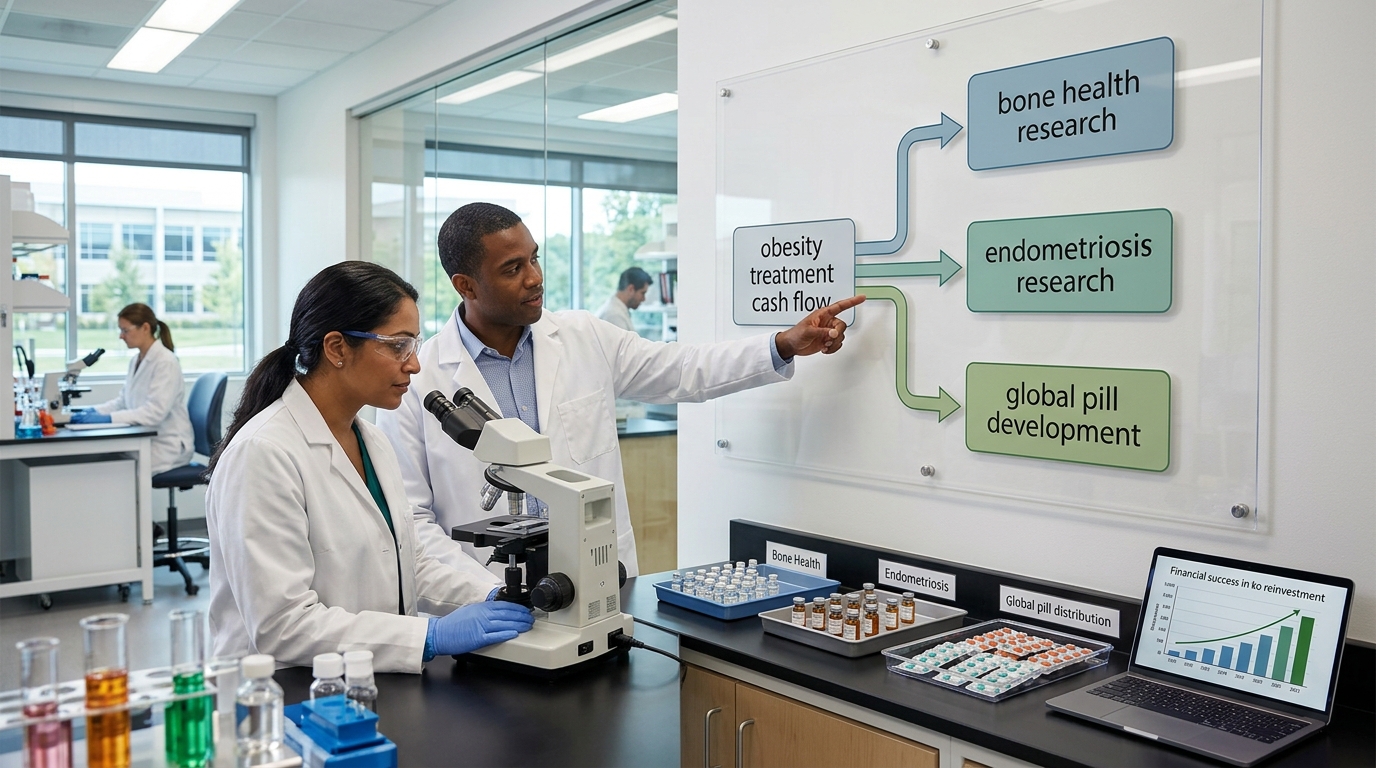
Lilly has been laying the groundwork for a broader move into women’s health, assembling experts and hunting for new medicines across conditions including bone health and endometriosis, according to people familiar with the matter. Bloomberg reported the effort on September 10, 2026. Two days later, Lilly’s executive vice president Ilya Yuffa steps onto the platform at the Morgan Stanley 24th Annual Global Healthcare Conference, with a fireside chat scheduled for 1:50 p.m. Eastern on September 14. The timing is not coincidental. When a company’s international chief appears before a major Wall Street healthcare audience days after a Bloomberg piece on strategic expansion, the agenda tends to be broader than quarterly results.
The women’s health build-out is one leg of what is becoming a multi-front capital deployment. Lilly posted $19.8 billion in first-quarter 2026 revenue and has been channeling that cash flow into an aggressive dealmaking campaign, about $25 billion across ten announced acquisitions so far this year. The company is no longer shopping at the early-stage discount rack. It now pursues experimental drugs that are more likely to work, and carries larger price tags because of it. Bone health and endometriosis fit that profile: underfunded, underserved, and large enough to reward a well-capitalized entrant who moves deliberately.
The second leg is geographic. Foundayo, orforglipron in tablet form, received FDA approval on April 1, 2026, making it the only GLP-1 pill patients can take any time of day without food or water restrictions. Lilly has said more than 80% of Foundayo prescriptions have gone to patients who had never previously taken a GLP-1 medication, evidence the pill is expanding the market rather than cannibalizing Zepbound. The UK’s medicines regulator authorized Foundayo on August 10, 2026, making it the first European country to approve the drug, arriving about two months after Novo Nordisk’s oral Wegovy was approved in the same market. With more than 40 markets currently under regulatory review, Lilly expects a global rollout in all major markets in 2027. Bank of America estimates that roughly 60% of Foundayo’s peak sales will come from outside the United States.
This is the pattern that distinguishes compounders from mere product companies. A single dominant franchise generates cash. That cash funds adjacencies. The adjacencies reduce dependence on the original product and extend the growth runway by years. Charlie Munger called it the lollapalooza effect when multiple forces reinforce each other. What Lilly is engineering right now fits.
The risks are real. Competitive pressures are emerging, including generic semaglutide in markets like India. Women’s health is a long development cycle with clinical and regulatory uncertainty at every stage. In Europe, how Foundayo reimbursement interacts with the most-favored-nations pricing policy Lilly agreed to with the Trump administration is an open question. Integration risk from ten acquisitions in a single year is not trivial.
But consider what Lilly looks like on the other side of a successful execution. JPMorgan raised its 2027 revenue estimate to $105.67 billion in early September and projects combined incretin sales of $62 billion this year, $78 billion by 2027, and north of $100 billion by 2030. That is before women’s health contributes a dollar of revenue. The obesity windfall is not just paying for today’s growth. It is buying tomorrow’s business. Investors who understand that distinction are the ones who hold long enough to benefit from it.