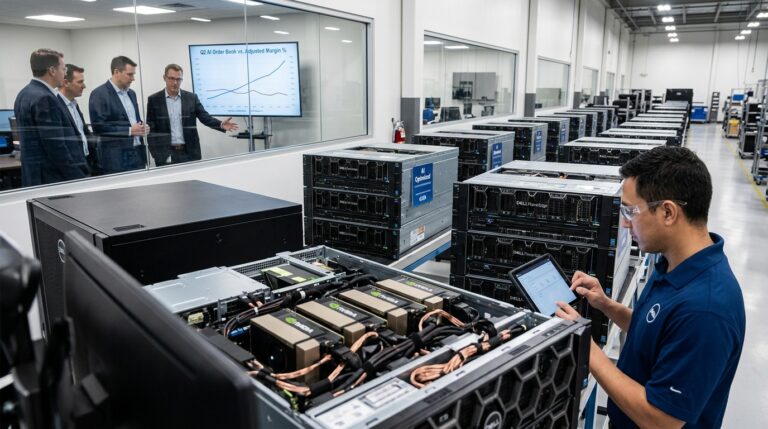

The people who built the AI trade are cashing out. Across Nvidia, Palantir Technologies, and CoreWeave, insiders have been consistent net sellers throughout 2026, and the aggregate figure is impossible to wave off. Based on Form 4 filings over the trailing five-year period through early September, insiders at Nvidia, Palantir, and Meta have collectively dumped approximately $18.6 billion more in stock than they have purchased. That is the headline. The fine print is where the real trading framework lives.
Who Is Selling and How Much
At Nvidia, one name dominates. Nvidia insiders have collectively sold more than $664 million worth of stock in 2026, with director Mark Stevens accounting for roughly 67% of all insider sales recorded by company executives and directors this year. Stevens did not slow down into September. On September 3, 2026, Stevens sold 1,022,239 shares in Nvidia for about $235.6 million. No Rule 10b5-1 trading plan is indicated for those sales, which is the detail that separates this activity from standard scheduled liquidation.
Palantir’s insider selling is more distributed and more persistent. CEO Alex Karp has made multiple massive Palantir stock trades since 2026 began: a February 20 sale raising $66 million and a May 20 sale raising $54 million. On August 20, Karp sold an additional 492,348 shares at an average price of $174.79, totaling about $86 million. Co-founder Peter Thiel has been equally active. Thiel’s largest single transaction of the year came in March, when he sold 2 million shares for about $289.7 million at a weighted average price of about $144.85 per share. That transaction was executed under a Rule 10b5-1 plan adopted in November 2025. Thiel has sold hundreds of millions of dollars of Palantir stock in 2026 without buying a single share back.
CoreWeave is the most complicated case. CoreWeave has experienced a high level of insider selling since going public in March 2025, with MarketBeat and other trackers putting the last 12 months of insider sales in the roughly $8 billion range. Q2 2026 ended up being CoreWeave’s largest quarter of insider sales yet, with the figure coming in at $3.27 billion. Chief Strategy Officer Brian Venturo is among the largest sellers in the post-lockup period, though the exact cumulative dollar total attributed to him varies by tracker and changes with market prices and aggregation methodology.
10b5-1 Plans: The Mitigating Factor That Still Has Limits
Most of the CoreWeave and Palantir activity flows through pre-arranged 10b5-1 plans. These plans are pre-arranged schedules that allow executives to sell shares at predetermined intervals and prices, regardless of what is happening with the business in real time, and they are specifically designed to reduce the risk of trading on non-public information. A meaningful slice of executive pay comes in restricted stock that vests on a schedule, and holders often owe tax on that stock the moment it vests, whether or not they want to sell.
The Stevens sales at Nvidia present a different picture. With no 10b5-1 plan attached, they carry a heavier informational weight, even if the most plausible explanation remains estate or trust management. Other Nvidia executives and directors who sold shares in 2026 include EVP Ajay Puri, CFO Colette Kress, and directors John Dabiri, Stephen Neal, and Aarti Shah. None came close to Stevens in dollar volume. The last time a Nvidia insider reported an open-market purchase was in December 2020. That asymmetry matters for positioning.
Business Fundamentals vs. the Selling Signal
The selling is not happening into weakness. Palantir’s revenue grew 93% year-over-year in Q2 2026 to about $1.94 billion, beating estimates. CoreWeave posted a similarly strong Q2. Revenue climbed about 112% during the quarter from a year earlier, with Q2 revenue of about $2.58 billion against an expected $2.56 billion. The company’s revenue backlog now stands at about $104 billion as of June 30, 2026, and management has said that figure excludes more than $25 billion in additional customer commitments booked early in Q3. Insiders are selling into operating momentum, not out of it.
Scenario Framework
- Bull Case: Insider selling is mechanical, diversification-driven, and irrelevant to trajectory. Revenue acceleration at Palantir and CoreWeave sustains multiple expansion. Nvidia’s September sales near $227 per share represent peak selling, not a ceiling. Buyers absorb the supply without structural damage to price.
- Base Case: Selling creates a persistent technical overhang in CoreWeave, where the scale and persistence of selling create a structural overhang that is difficult to ignore, even if many transactions were executed under 10b5-1 plans. Stocks with strong fundamentals grind higher but face recurring distribution pressure near highs.
- Bear Case: Insiders don’t view their respective shares as a good deal, particularly given Palantir and Nvidia’s price-to-sales ratios well above historic averages. A multiple compression event, triggered by a macro shock or earnings miss, converts the insider selling pattern from background noise into confirming evidence of a top.
What Traders Should Watch
The actionable distinction is between plan-governed and discretionary sales. Plan-governed selling at CoreWeave and Palantir is largely noise. Where no 10b5-1 plan is indicated, as with recent Stevens transactions at Nvidia, the timing premium exists. Monitor Form 4 filings on EDGAR within the two-business-day disclosure window. Flag any CEO or CFO open-market sale that is not covered by a pre-filed plan. Track the buy-to-sell ratio monthly: corporate insiders purchased just $6.9 billion in shares in the first half of 2026, only modestly above the seven-year low of $6.7 billion recorded in 2025. When buying fails to recover even as stocks pull back, the signal sharpens considerably. Preparation, not prediction, is the edge here.