
Dear Reader,
A microreactor just generated neutrons at Idaho National Laboratory.
Now the U.S. Army wants the next thing: electrons.
On June 4, Antares Nuclear completed a zero-power criticality test for its Mark-0 demonstrator. According to the Army, it became the first company in the Department of Energy’s Reactor Pilot Program to receive authorization and complete a fueled criticality test.
That isn’t commercial power yet.
And it isn’t the stock I’m writing you about.
But it is a massive signal.
The world’s largest military is no longer treating compact nuclear power like a science-fair project.
The Army says this work supports its Janus Program to deploy advanced microreactors – and says the goal is reliable nuclear power at a military installation in 2028.
Why?
Because mission-critical systems cannot sit around hoping the grid cooperates.
For years, this technology was easy to dismiss.
Now the Army is testing, authorizing, and working toward deployment.
The category is crossing from white papers into physical milestones.
Learn more about the company that I believe could benefit from this shift here.
|
Yours in smart speculation,
Karim Rahemtulla, Head Fundamental Tactician
Monument Traders Alliance
Apple’s iPhone 18 Pro Demand Looks Stronger Than Day One
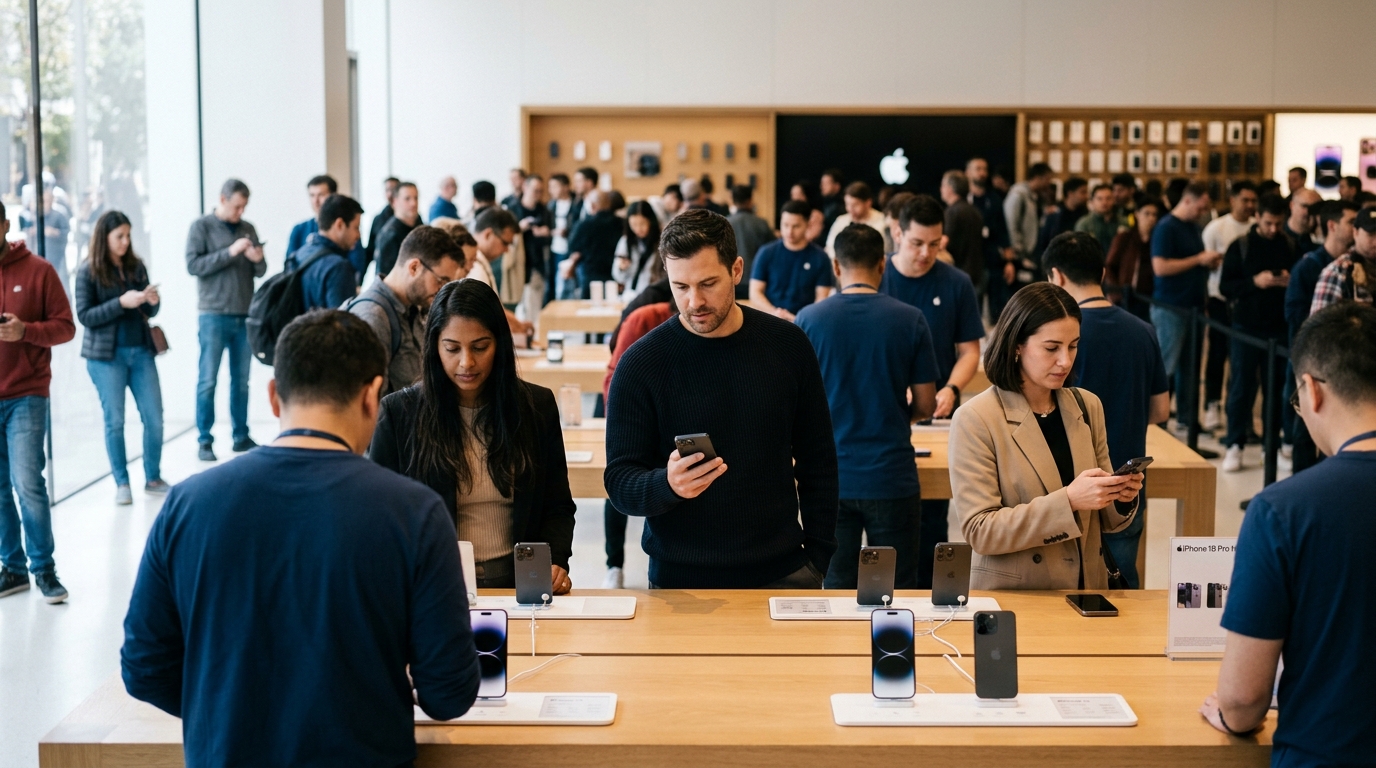
The read on iPhone 18 Pro demand changed this weekend. JPMorgan analyst Samik Chatterjee published a Sunday note showing that average lead times for the iPhone 18 Pro jumped to 23 days in week two from seven days in week one, while the Pro Max moved from 19 days to 30 days. Both models now broadly match the trajectory of the iPhone 17 series a year earlier. US, UK, and German delivery windows are, in JPMorgan’s phrasing, largely in line with the prior cycle.
That matters because the story heading into launch day on September 18 was the opposite. Walk-in availability across most configurations at US and UK Apple Stores fed a case for tepid demand. The same-day pickup angles were real, but they were the wrong signal. Chatterjee had already flagged in his first-week note that shorter initial windows reflected Apple concentrating early inventory toward high-end models, not a demand shortfall. Week two confirmed it: lead times for the 18 Pro expanded 16 days, and the 18 Pro Max expanded 11 days, from week one to week two.
What the Numbers Actually Say
- Week-one global average: 7 days (Pro), 19 days (Pro Max)
- Week-two global average: 23 days (Pro), 30 days (Pro Max)
- US week-two: 21 days (Pro), 28 days (Pro Max), versus 2 and 22 days in week one
- Germany week-two: 22 days (Pro), 29 days (Pro Max), from 5 and 16 days prior
- China: the sole major market still trailing last year, though the gap is narrowing on the Pro
Morgan Stanley’s Erik Woodring reached a similar conclusion from a different angle. His September 16 note observed that global delivery windows of two to four weeks were roughly flat year-over-year, even as Apple’s second-half Pro and Pro Max production plan stands at 71 million units, up 18% from 60 million a year ago. Flat lead times against a substantial production increase implies demand is absorbing more supply than the market feared. Morgan Stanley carries an Overweight rating and a $360 target. Evercore raised its target to $380 on September 18, citing better-than-expected upgrade intent in its annual consumer survey of nearly 4,000 respondents.
Why the Misread Happened
Two structural factors distorted the launch-day signal. First, Apple skipped a base iPhone 18 this autumn, holding the standard model for spring 2027. That concentrates the entire September upgrade pool into Pro buyers, the segment most likely to wait for a specific color or storage tier rather than settle. Second, the foldable iPhone Duo opens for pre-order October 16 and ships October 23. JPMorgan has explicitly flagged that some high-end buyers are deferring until they can assess the Duo, particularly in China where foldable adoption is already established. Both dynamics suppressed week-one lead times without reflecting weaker underlying demand.
Bull / Base / Bear Into December
Bull: Week-three lead times hold or extend, China narrows further, and Duo pre-orders on October 16 prove additive rather than cannibalistic to the Pro Max. Apple earns more revenue per device with no base model competing for shelf space, and average selling price drives the December quarter.
Base: Lead times moderate into week three as JPMorgan expects, settling at parity with the 17 cycle. China remains the soft spot. The Duo sells into its own demand pocket. December-quarter iPhone revenue comes in line with consensus, with margin upside from higher ASPs on the Pro mix offsetting component cost inflation.
Bear: Price increases across both Pro models narrow the buyer pool at the margin. The Duo pulls demand from Pro Max rather than expanding it. China lead times fail to converge with the prior year, reflecting competitive pressure from Huawei and Xiaomi in the foldable segment. GF Securities’ 72-million unit build estimate proves the ceiling, not the floor.
What to Watch
JPMorgan has stated that definitive demand signals will surface around November, when supply chain feedback on revised production plans typically emerges. The more immediate trigger is Duo pre-order velocity on October 16. If early Duo lead times extend sharply, the cannibalization concern fades. If they stay flat or short, the mix question sharpens.
For the supply chain, TSMC manufactures the A20 Pro chip at 2nm. Modem mix is more nuanced than early expectations: the iPhone 18 Pro uses Apple’s C2 modem, while the iPhone 18 Pro Max uses Apple’s C2 modem outside the U.S. and a Qualcomm modem in the U.S. Broadcom, Skyworks, and Qorvo all carry iPhone content exposure on any revision to unit assumptions. The direction of week-three lead times, due in JPMorgan’s next tracking note, will set the tone before Duo pre-orders open. That is the number to watch.