The headline Saturday was unmistakable: Yemen’s Houthi forces said they attacked “sensitive sites” in Riyadh with missiles and drones, with smoke rising near King Khalid International Airport. They also claimed a separate strike on an Aramco facility in Yanbu, Saudi Arabia’s primary Red Sea export hub. And on Monday morning, Brent was lower.
Brent fell to $101.71 at 02:13 GMT on September 21, its lowest since September 10. That made it a fourth straight daily decline, with Brent sitting roughly $6 below its September 14 high near $108. WTI followed to $98.15, down 2.14%. The war premium is being sold, methodically, with or without fresh missiles.
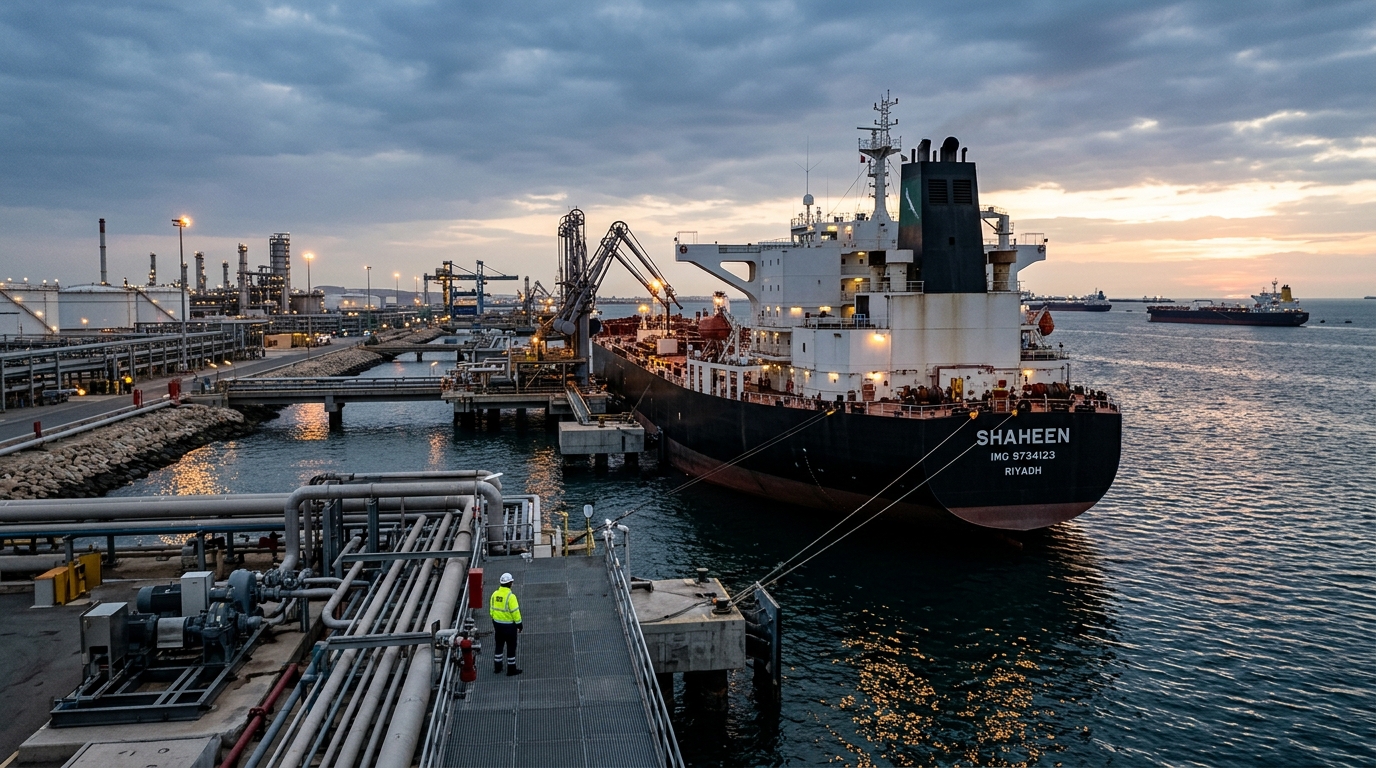
The reason is not complicated. Provisional Kpler export estimates show Saudi oil exports recovered to just over 4 million bpd so far in September after slumping to 2.4 million bpd in August, the lowest since at least 2013. That recovery has come even as the kingdom’s East-West pipeline has been disrupted and Red Sea shipments faced interruption, forcing more oil out through the Persian Gulf and the Strait of Hormuz. Markets looked at the barrels actually moving and sold the headlines.
JPMorgan analysts said in a September 18 note that “Middle East oil flows remain surprisingly strong despite the disruption to Saudi Arabia’s East-West pipeline,” adding that total flows averaged 17.1 million bpd over the past 10 days, just 6.1 million bpd below the 2025 average. “The most notable pivot has come from Saudi Arabia,” JPMorgan added, with satellite data indicating Saudi oil moving through the Strait of Hormuz averaged 2.9 million bpd over the past six days, up from just 700,000 bpd in August.
That is the trade. Brent is not reacting to geography or geopolitical risk in the traditional sense. The market has decided that Saudi export flows, not Saudi headlines, set the price. The practical implication for energy stocks is that integrated majors and refiners now sit in separate buckets.
Refiners such as MPC and VLO have been standout contributors in 2026 as crack spreads widen when crude input costs spike on supply fears while refined product demand remains relatively inelastic. But that dynamic cuts both ways: Marathon Petroleum and Valero risk margin compression if crude costs climb faster than they can pass through to consumers, with a sustained crude spike above $105 likely to strain both names. With Brent at $102 and moving lower, refiners are the relative beneficiary of this session. XOM and CVX are a harder call.
The second driver compressing prices is diplomatic. President Trump told Fox News he is open to meeting Iranian President Masoud Pezeshkian, who is traveling to New York for the UN General Assembly beginning Tuesday. The Iranian delegation’s attendance has renewed hopes for a diplomatic solution to the war, lifting broader market sentiment on Monday. “It seems that a degree of risk premium is being removed from oil prices on hopes that a diplomatic path to de-escalate the US-Iran war may arrive this week,” KCM Trade’s chief market analyst Tim Waterer told Reuters.
Whether UNGA delivers anything durable is genuinely unknowable. The US and Iran previously agreed to an April ceasefire and signed a June 2026 Memorandum of Understanding to end the conflict, but the MoU collapsed within weeks amid renewed fighting and expired in August. The pattern of premature optimism in this conflict is established.
The trading plan for energy stocks follows from these two competing forces. If UNGA diplomacy stalls and Saudi export recovery plateaus, crude firms and integrated majors are the first beneficiaries. The catalysts to monitor are Aramco’s timeline for pipeline restoration, any official supply commitments beyond October, and U.S. energy majors’ Q3 earnings calls in late October. If UNGA generates even a framework for renewed talks, the risk premium compresses further and VLO, MPC, and PSX widen their advantage over upstream names. Both scenarios are live this week. Position accordingly, and watch the flow data more closely than the headlines coming out of New York.