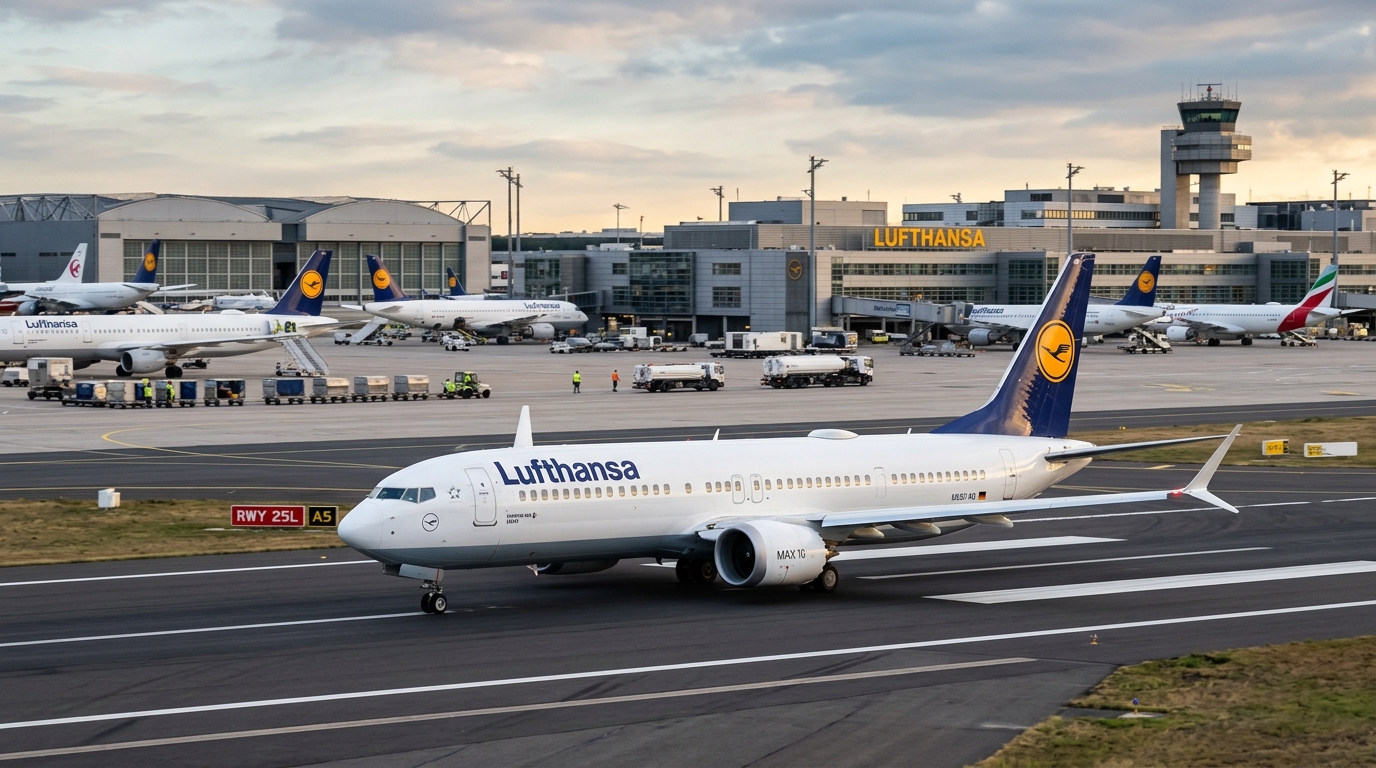
The most telling detail in Lufthansa’s announcement last Wednesday was not the size of the order. It was the destination of the jets. The 20 Boeing 737 MAX 10s are earmarked to replace older Airbus A320-family aircraft across the group’s airlines. Boeing metal, replacing Airbus metal, inside Europe’s largest airline group. That is not a routine fleet order. It is a signal.
The Business
Lufthansa’s supervisory board approved the exercise of options secured under a 2023 order for 40 Boeing 737-8 jets, a deal that included 60 purchase options for additional aircraft from Boeing’s 737 MAX family. Wednesday’s decision converts the first 20 of those options, selecting the MAX 10 rather than more MAX 8s. The headline number to watch is not 20. It is the 40 options still sitting unexercised.
The MAX 10, the largest aircraft in Boeing’s 737 MAX family, offers greater seating capacity than the MAX 8, Lufthansa said. The 20 aircraft carry a combined list value of approximately $3.4 billion. Nobody pays list, but the commitment is real.
Why Wall Street Is Paying Attention
Boeing’s recovery has been grinding and uneven, but commercial wins like this one matter to the investment thesis. The Lufthansa order is the first MAX 10 commitment from the German group, and it arrives at a moment when the variant is closing in on FAA certification. Boeing said in late July that the MAX 10 completed its final planned certification flight test after a campaign spanning 976 flights, with the team still targeting certification in 2026 and commercial deliveries beginning in 2027. Bloomberg reported in July that people familiar with the deliberations expected FAA certification likely around October, barring any unexpected issues.
For investors in Boeing, that certification date is not academic. Until certification is complete, Boeing cannot deliver the MAX 10 to customers, which constrains delivery revenue and free cash flow. A certified MAX 10 paired with a committed European customer changes the commercial picture meaningfully.
What’s Driving the Opportunity
The Lufthansa order reinforces a broader dynamic: legacy European carriers that built their short-haul fleets on Airbus are now at least partially opening the door to Boeing. The competitive case for the MAX 10 against the A321neo is not settled, but Lufthansa’s willingness to commit $3.4 billion at list for a jet still awaiting its type certificate suggests the airline sees durable value in diversifying its narrowbody supply chain.
The 40 remaining unexercised options are the real prize. If Boeing delivers on the MAX 10’s certification timeline and Lufthansa’s initial experience with the MAX 8 fleet is positive, those options could convert into one of the largest single-customer narrowbody additions Boeing has secured from a European flag carrier in years.
What Could Go Wrong
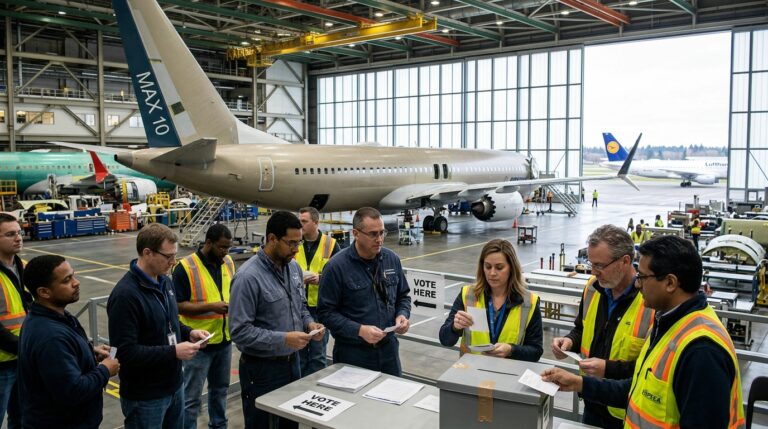
Two risks stand out, and one is immediate. SPEEA members are scheduled to vote on Boeing’s revised contract offer between September 24 and October 1, 2026. If the membership rejects this offer, the current contract expires October 6 and a strike becomes possible as early as October 7. SPEEA represents roughly 17,000 Boeing engineers and technical workers, and the dispute matters because engineering support is integral to the certification and compliance work that keeps programs moving. A work stoppage would risk further slowing progress on the MAX 10.
Boeing’s most recent offer includes 34% in total wage funds over the life of the contract, with 26% of that fully guaranteed for every represented employee. In August, SPEEA members rejected an earlier offer, with professional-unit members voting it down by 64.25% and technical-unit members rejecting it by 71.87%. The bargaining team is now recommending a yes vote on the revised terms, but member sentiment remains the variable no one can model with confidence.
The second risk is delivery timing. Deliveries start in the early 2030s, meaning Lufthansa’s fleet impact is years away. Any slip in MAX 10 certification, or a labor disruption that delays production ramp, extends that timeline further.
The Bottom Line
Lufthansa ordering Boeing to replace Airbus jets is precisely the kind of competitive displacement that Boeing’s recovery thesis requires. The 40 remaining unexercised options matter as much as the 20 just committed, and a successful MAX 10 certification in 2026 would unlock deliveries, production economics, and customer confidence simultaneously. The SPEEA vote, closing October 1, is the near-term test. A ratified contract removes a serious operational risk. A strike would land at the worst possible moment for a program trying to prove it has finally crossed the finish line.