
I’m Garrett Goggin, a 20+ year veteran gold analyst, in the last 3 years alone I’ve spotted Montage Gold before it went up 2,567%, G2 Goldfields before it went up 1,298%, Reunion Gold before it went up 716% and Highlander Silver before it went up 741%.
And I’ve just released a new research report on a unique high-yielding gold security.
It’s backed by, what I believe, is the world’s best gold mine around today.
You get the best of both worlds: a security with a yield that pays you now – plus long term upside on a world class gold mine.
Best,
Garrett Goggin, CFA, CMT
Lead Analyst and Founder, Golden Portfolio
Schneider Electric’s $22.6 Billion PTC Bet: What the Synergy Math Requires
Analyst Targets
- Schneider Electric (SU.PA): Median analyst target €345, per a broker roundup from Ideal Investisseur on October 5, 2026. Ideal Investisseur put the target/price spread at +26.2% at the time of publication
- Autodesk (ADSK): Median price target $302.50 across 14 analysts over the past six months, per Quiver Quantitative. Shares rose 4.5% on October 5, 2026 on deal read-through
The Transaction
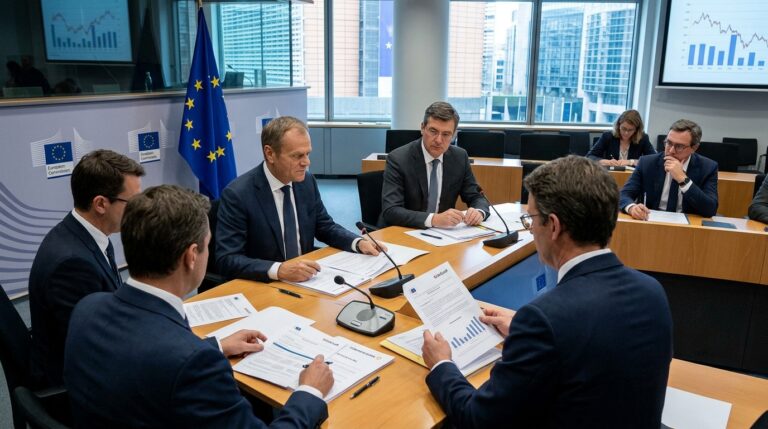
Schneider Electric struck its biggest deal ever on October 5, 2026, agreeing to buy US software company PTC for around $22.6 billion. PTC shareholders will receive $205 per share in cash, a 42.3% premium to the last closing price, implying a $23.7 billion enterprise value. Schneider plans to fund the deal through equity issuance of roughly €5-6 billion and new debt of approximately €16-17 billion.
Schneider’s own shares fell about 10% in Paris trading on October 5, 2026 as investors weighed the size of the acquisition, the premium, and the outlook for software valuations amid AI-related uncertainty. The equity issuance remains ahead. That overhang is not settled.
What PTC Is
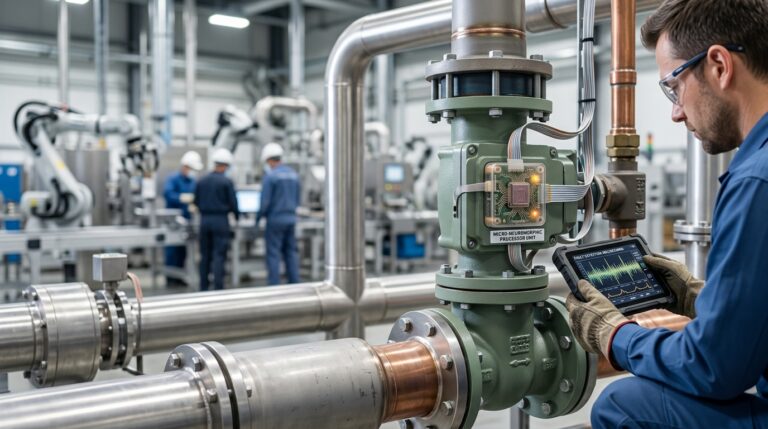
PTC’s strength lies in helping manufacturers design complex products and manage their data throughout the lifecycle, led by Creo CAD and Windchill PLM, alongside Onshape, Codebeamer, and ServiceMax. In its third fiscal quarter 2026 results, PTC guided to fiscal 2026 revenue of $2.69 billion to $2.75 billion and free cash flow of about $850 million.
The acquisition will increase Schneider’s software revenue by roughly three times. After closing, Software and Services revenue is estimated to account for 24% of total Schneider revenue, with over 15,000 software personnel and more than 50,000 software customers.
The Synergy Math
This is where the deal is made or broken. The deal carries an implied enterprise value of $23.7 billion, equivalent to 21 times estimated 2027 adjusted EBITA on a standalone basis, or 13 times when full run-rate synergies are included. Schneider forecasts €250 million in annual run-rate cost synergies by the third year after completion and approximately €800 million in revenue synergies, to be generated through joint go-to-market initiatives, broader geographic reach, and combined digital solutions.
The 13x synergy-adjusted multiple is what makes the price defensible. That said, the deal values PTC at roughly 8.7x revenue. Jefferies framed it bluntly: “AI disruption fears are still weighing on software valuations, which allows acquiring PTC at a decade low valuation but could still weigh on Schneider post deal.”
Schneider expects the deal to be immediately low single-digit accretive to adjusted earnings per share in the first full year of consolidation, rising to mid-to-high single-digit accretion once full run-rate synergies are realized. The revenue synergy line, at €800 million, is the number that requires the most scrutiny. Cost synergies are largely controllable; cross-selling engineering software into Schneider’s energy and automation base is not.
The Siemens Problem
Only one company currently owns both design software and automation hardware at scale, and that’s Siemens. Between NX, Teamcenter, and its roughly $10 billion acquisition of Altair (enterprise value), Siemens has a significant head start, and PTC gives Schneider a shortcut into that league. Siemens Digital Industries reported about €17.0 billion in fiscal 2025 revenue. The gap is real, but the combined entity changes the conversation.
The harder question is whether Schneider can keep PTC neutral. Many PTC customers run Siemens, Rockwell Automation, or ABB automation, so any preferential integration toward Schneider hardware would weaken the interoperability message and give rivals an opening. Rockwell, already under pressure, faces a widening gap in software breadth with no obvious response of comparable scale.
What the Deal Does to Peers
The massive $22.6 billion deal triggered a swift sector-wide valuation re-rating, shedding light on how underpriced engineering design and product lifecycle software assets may be. Autodesk rose about 4.5% on October 5, 2026, a direct read-through from deal multiples to the closest listed comparable. Dassault Systèmes and Autodesk can pitch their independence from automation vendors to PTC customers wary of the integration, especially before the expected third-quarter 2027 close. That’s a real window.
Bull / Base / Bear
Bull: Revenue synergies hit €600 million or more by year four. The combined Schneider-PTC platform becomes the de facto industrial AI stack for datacenter and factory customers. Schneider shares recover the deal-day losses within 12 months as EPS accretion accelerates and the equity overhang is absorbed cleanly.
Base: Cost synergies arrive on schedule; revenue synergies reach roughly half the target by year three. The multiple compresses to 16x on a blended basis. Schneider trades sideways through 2027 while digesting €16-17 billion in new debt, then re-rates as free cash flow recovers.
Bear: PTC’s hardware-neutral positioning erodes under Schneider’s ownership, triggering customer attrition to Dassault and Autodesk. Revenue synergies disappoint. The equity issuance prices at a discount, and Schneider carries a leverage ratio that limits flexibility through the next capex cycle.
What to Watch
- The equity issuance price and structure: €5-6 billion in new shares is the largest near-term risk for Schneider holders
- Schneider’s Q3 revenue release, moved to October 16, 2026, for the first post-deal read on underlying momentum
- Regulatory clearance timeline: closing is expected by the third quarter of 2027, subject to PTC shareholder approval and regulatory clearances
- PTC customer retention data once close is confirmed, particularly accounts that run Rockwell or Siemens automation
Bottom Line
The price is not the issue. At 13x synergy-adjusted EBITA, Schneider is acquiring a compressed asset with genuine strategic logic at a multiple well below recent industrial software precedents. The issue is what comes after. Roughly €22 billion of new financing must be raised and serviced, the equity overhang cleared, and €800 million in revenue synergies earned from a customer base that values hardware independence. Get that right and this deal redefines Schneider as a genuine Siemens challenger across the industrial lifecycle. Fall short on the revenue line and the market will treat the €16-17 billion debt load as the defining feature of the next two years.