October 16, 2026
Bonus Content: ASML’s Record Quarter Can’t Close a Two-Year Supply Gap
When news broke overnight about China’s Moonshot AI unveiling its new model…

The market gapped down 1% before most traders even poured their morning coffee…
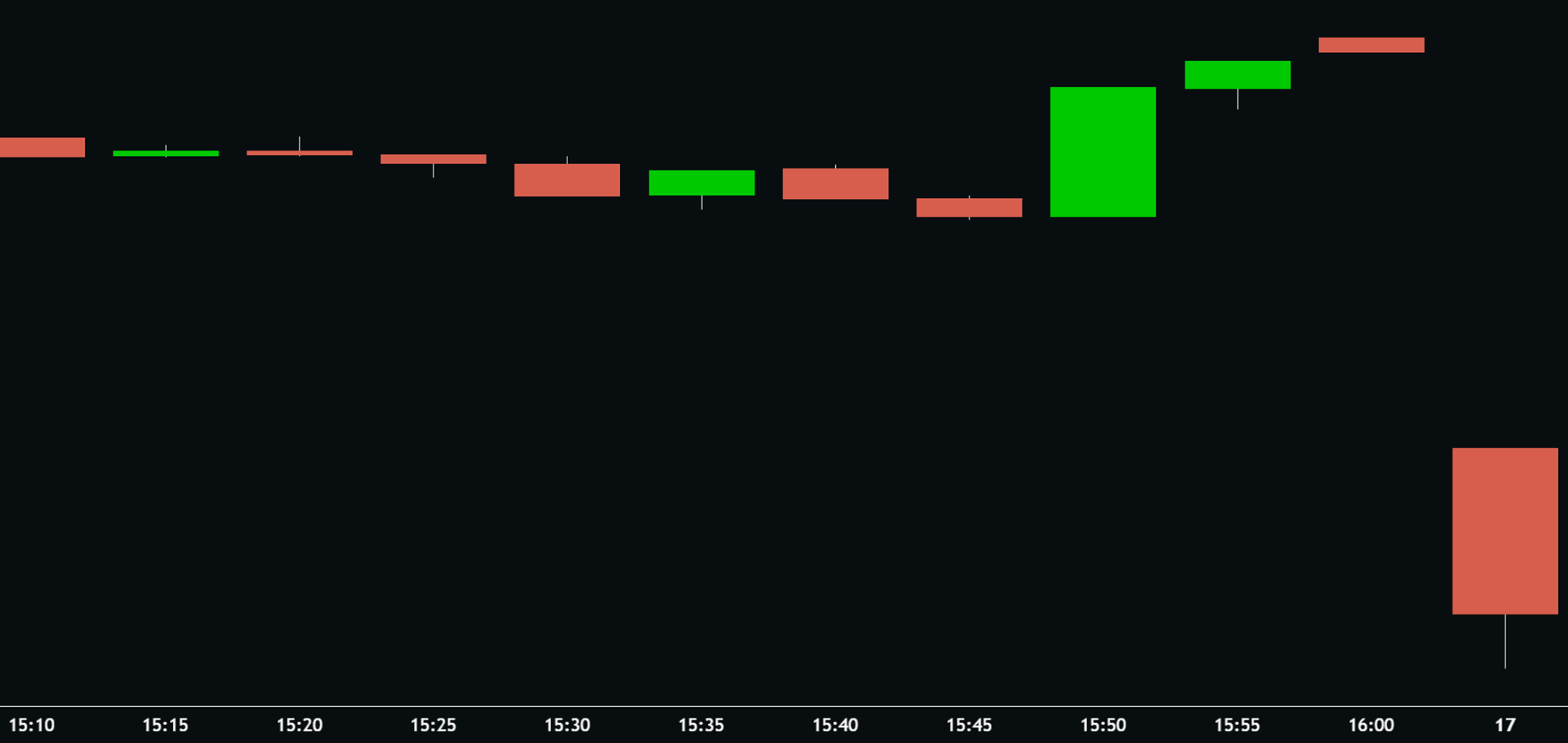
For standard portfolios, it looked like the start of another stressful day…
And over the next two hours, the market barely crawled higher… moving a tiny 0.2%…
To traditional buy-and-hold investors, a 0.2% move is practically useless…
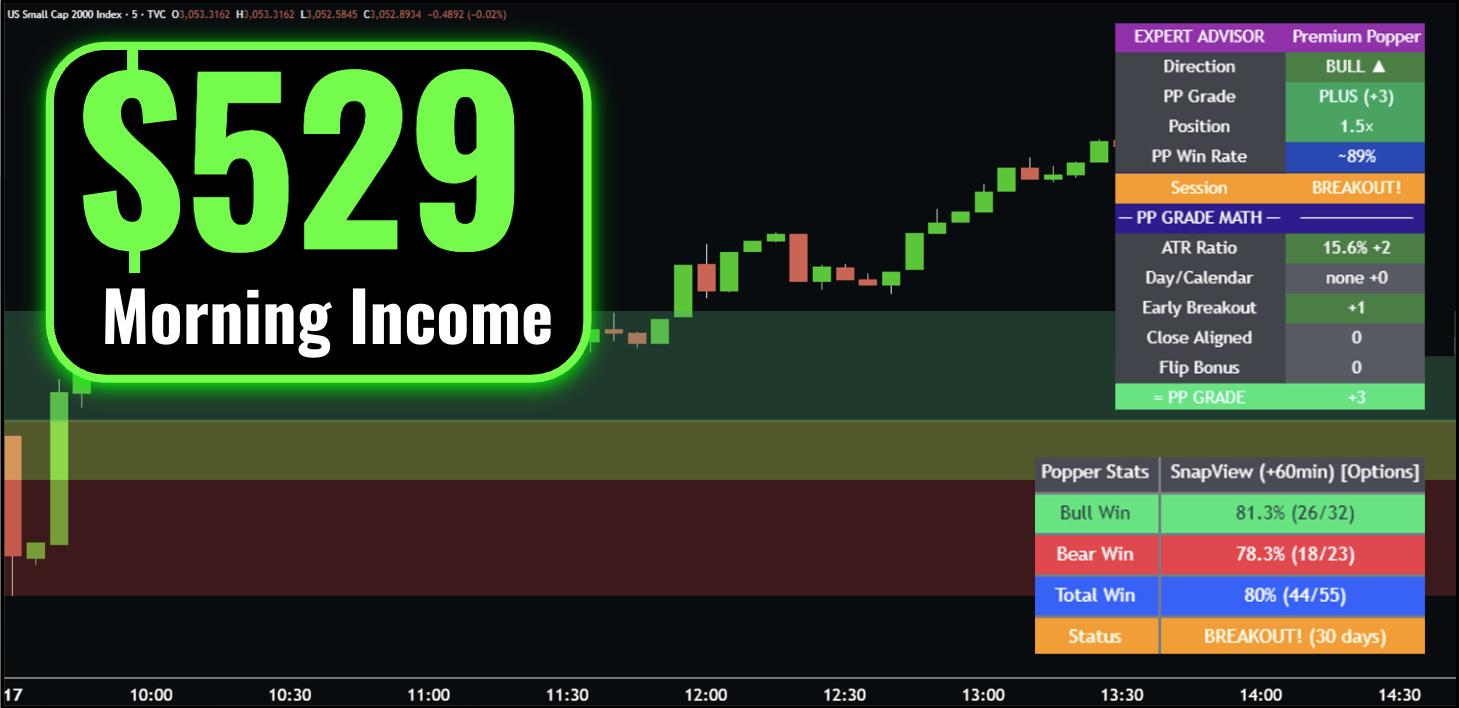
Yet, according to our research, anyone who ignored the overnight headlines and waited until exactly 9:50 AM Eastern could have locked in a $529 payout before lunchtime… on a simple $1,000 starting stake…
That would not have been an isolated fluke either…
Back on June 25th, when inflation surged past 4%…
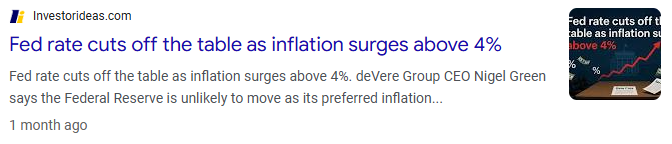
And panicked investors expected a massive market beatdown… the market moved just 0.3% after the open… yet that exact same morning setup yielded another $526 payday before lunch…
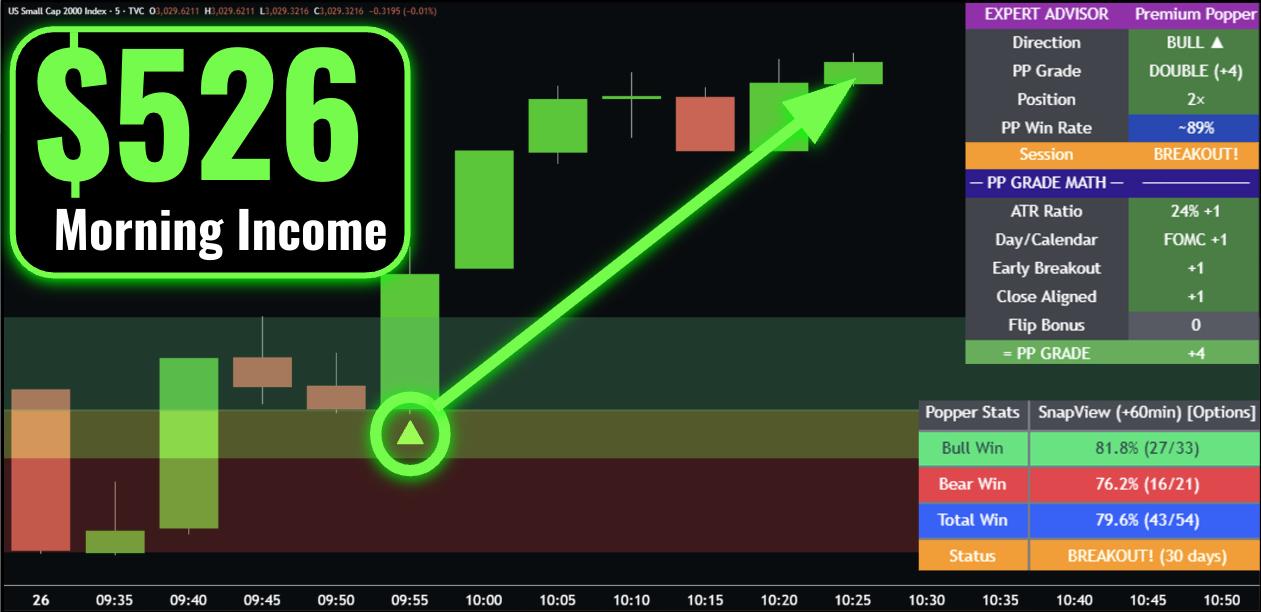
Of course, there would have been smaller gains and some that did not work out, but…
How would it have been possible to pull $500+ out of the market on a tiny fraction-of-a-percent crawl… while traditional traders are getting chopped to pieces?
It all comes down to an institutional phenomenon that happens during the first 20 minutes of every trading day…
Between 9:30 AM and 9:50 AM, Wall Street heavyweights enter a massive brawl to settle block orders… pushing nearly 25% of the entire day’s volume into a brief 20-minute window…
Right around 9:50 AM, the brawl ends… the dust settles… and the market literally hands us its direction for the rest of the morning…
By placing just one simple trade on one ticker right as that direction becomes clear…
You give yourself a shot to walk away with $500 in hand before lunch, leaving you completely free for the rest of your day…
While I cannot make any guarantees in the market…
Recently, I sat down live on camera with a former money manager to lay out the floor data behind this 9:50 AM morning phenomenon…
And how anyone with a normal brokerage account can take advantage of this step-by-step…
Tap here to watch the complete video breakdown before access is taken down.
See you there,
Silas Peters
ASML’s Record Quarter Can’t Close a Two-Year Supply Gap
Analyst Targets
- BofA Securities: Buy, EUR 2,557 target (maintained Oct. 6)
- Barclays: Buy, EUR 2,450 target (maintained Oct. 6)
- Evercore ISI: Outperform, EUR 1,950 target (lowered from EUR 2,000)
- Morgan Stanley: Buy, EUR 1,700 target
- UBS: Buy, EUR 2,350 target
Consensus across 32 analysts sits at EUR 2,045, implying roughly 20% upside from Tuesday’s close near $1,718. The rating distribution is emphatic: 38 buys, 3 holds, 1 sell.
The Quarter in Numbers
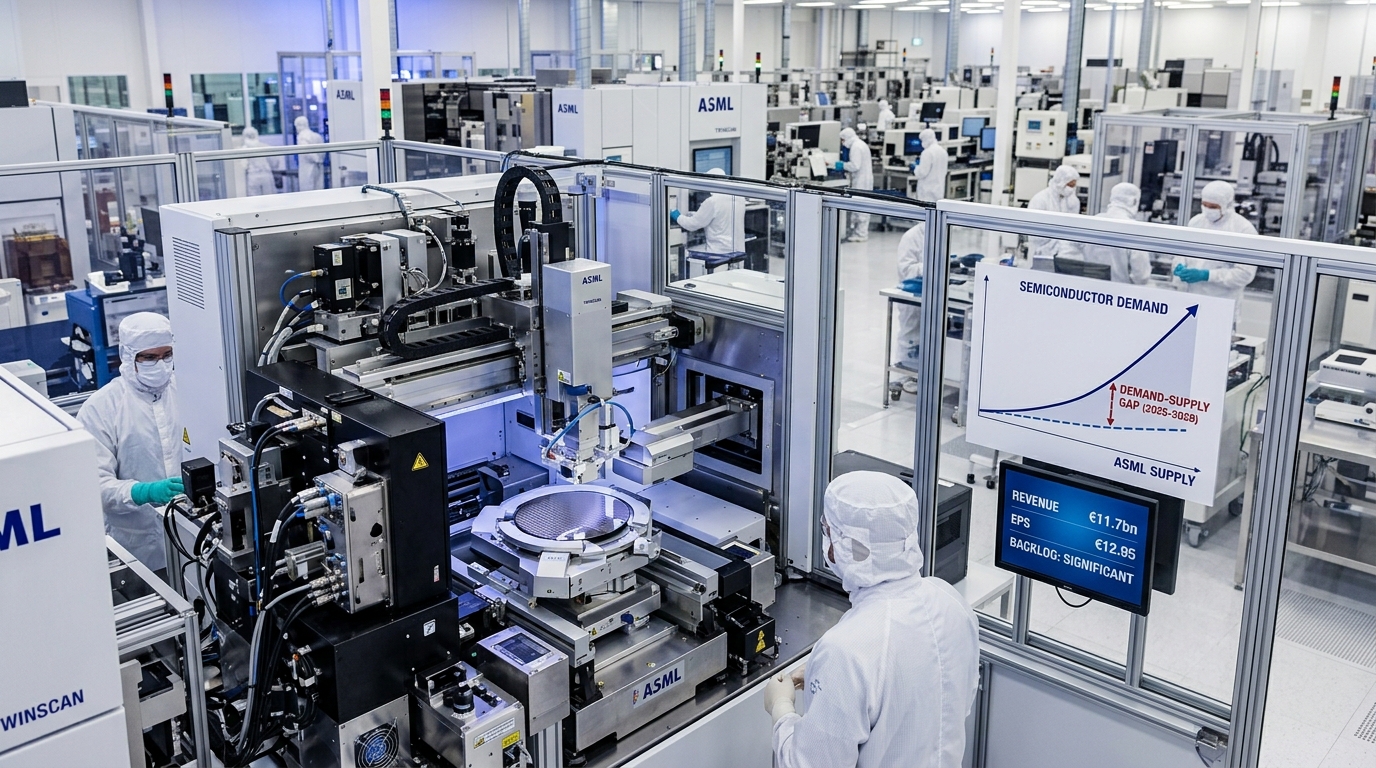
ASML delivered its strongest quarter on record by every meaningful measure. Revenue of €11.66 billion rose 55% year over year. Gross margin hit 57.5%, above the guided 55-57% range. Net income reached €4.96 billion versus €2.92 billion in Q2. Basic EPS came in at €12.95 against a consensus of roughly €10.68, a beat of more than 21%. Systems shipped: 113 new lithography units, up from 86 in Q2.
One line item warrants a note. Net income included a gain related to ASML’s investment in Mistral AI. Strip that out at a notional 17% tax rate and operating EPS still cleared consensus comfortably. The core equipment business is not borrowing from investment gains to look profitable.
Q4 guidance landed at €14.2-15.2 billion, above the ~€14 billion Street estimate, with gross margin guided to approximately 57%. Full-year 2026 revenue guidance was raised for the third time, now €44-45 billion versus the previous €43-45 billion range, representing roughly 36% growth from 2025.
Why the Stock Is Down 3%
The selloff is not about the numbers ASML reported. It is about the number it cannot yet put on paper: the machines it cannot build fast enough to sell.
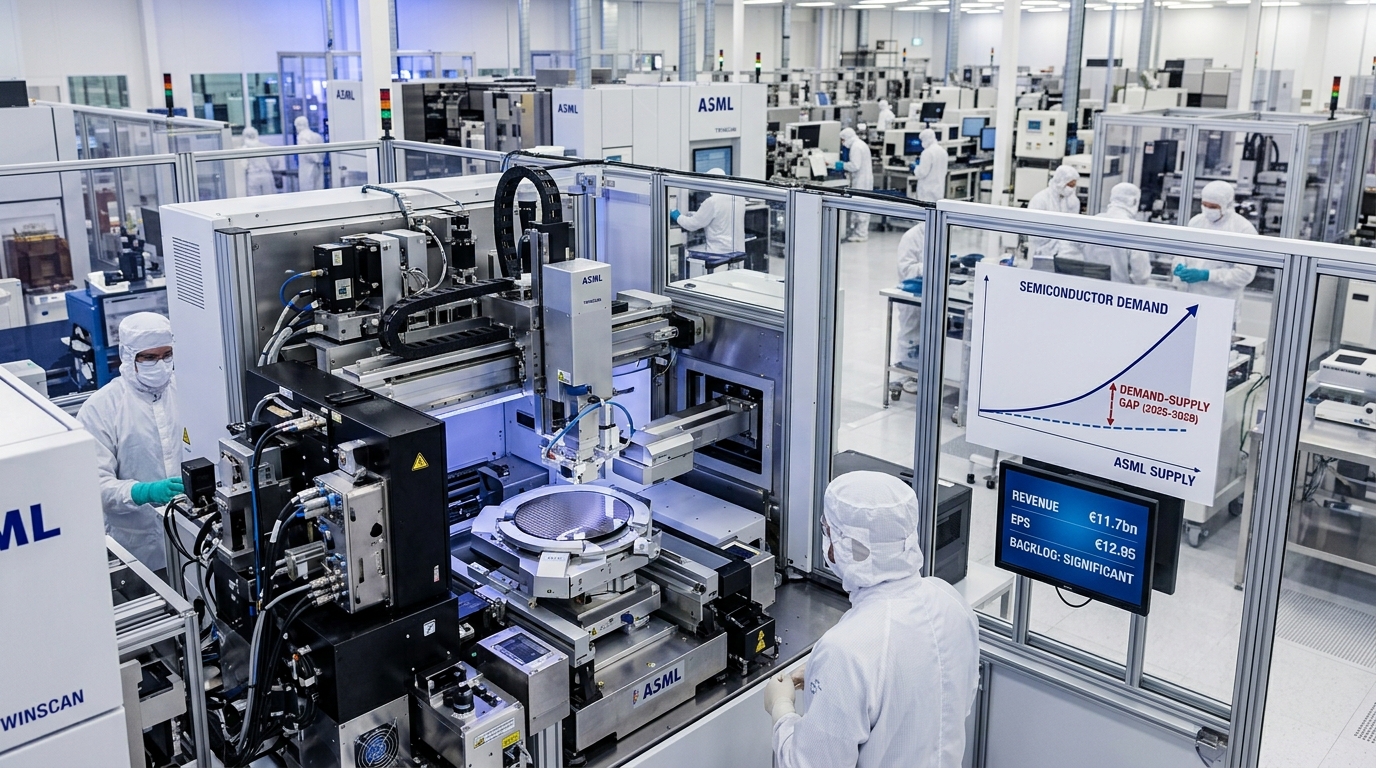
CEO Christophe Fouquet said on the earnings call that every major customer is raising short- and medium-term demand forecasts, and that customers expect their supply will not meet demand through at least 2028. The company had previously outlined plans for a 30% capacity increase in 2027 and was investigating a further 30% increase for 2028. Fouquet walked up to the microphone and said that 30% in 2027 and 30% in 2028 will not allow ASML to meet customer demand. Some customers are showing strong interest in placing orders for 2029 and even 2030, an unprecedented planning horizon for semiconductor equipment.
That disclosure cuts two ways. It confirms the AI infrastructure buildout is real and durable. It also means ASML is telling the market it will leave revenue on the table for at least two years because it physically cannot manufacture tools fast enough. A stock trading at roughly 54 times trailing earnings does not reward supply constraints, even structural ones.
The selloff also pulled Micron, SanDisk, and Applied Materials lower, as the semi equipment complex reset around ASML’s capacity ceiling.
Macro Context
ASML’s installed base revenue of €3.3 billion, €400 million above guidance, reflects something important: chipmakers are squeezing every upgrade out of existing tools rather than waiting for new fab builds. TSMC, Samsung, and Intel are not slowing down. They are ordering upgrades because new machines are backlogged. That dynamic supports both ASML’s near-term revenue and Applied Materials’ process equipment business.
The same dynamic is reshaping pricing power across the memory stack. SK Hynix and Samsung are capturing the margin windfall as chipmakers squeeze existing capacity and conventional DRAM tightens.
The geopolitical overlay is not resolved. Export restrictions on China-bound tools remain an overhang on the addressable market, and any tightening of those controls would compress the order book that is already oversubscribed.
Forward Scenarios
Bull: ASML successfully accelerates 2028 capacity expansion beyond the original 30% target, tightens delivery timelines, and commands higher pricing as customers compete for constrained slots. Full-year revenue for 2027 pushes through €55 billion. Multiple re-rates toward historical peaks as the supply gap closes.
Base: The company delivers on the €44-45 billion 2026 guide, executes the existing capacity ramp, and enters 2027 with a sold-out order book at improved margins. EPS grows at a mid-20% pace. Stock recovers toward the EUR 2,000 range over 12 months as guidance proves conservative.
Bear: AI capex slows materially entering 2027. Customers push out or cancel orders for 2028-2030 delivery. With capacity costs already committed and the order book front-loaded, ASML faces margin compression and a guidance cut that hits the stock at a demanding multiple.
The bear case carries one additional variable that ASML’s order book cannot price. A frontier model safety failure has already shown how quickly the AI capex assumption can be challenged from the demand side.
Technical Overlay
ASML’s U.S.-listed shares broke below $1,700 in overnight trading, filling a gap that formed during September’s rally. The prior support cluster near $1,755 has been breached. Near-term resistance sits at $1,801, with a more contested zone at $1,870. A close above $1,801 on volume would signal the post-earnings flush is complete. Continued pressure targets the $1,640 area, where the stock traded during September’s AI-slowdown selloff.
Bottom Line
ASML’s Q3 tells you the AI chip cycle is not a forecast. It is a purchase order, denominated in euros, already in the book. The company’s problem is that demand is growing faster than it can build the machines to meet it, and that gap will persist for at least two years by management’s own account.
The 3% drop is not a verdict on ASML’s business. It is the market’s acknowledgment that a stock priced for perfection carries extra risk when the company announces it cannot serve all its customers on time. Investors who can hold a two-year horizon own one of the few companies in the world whose customers are begging it to take more of their money. That is a different kind of problem to have.