
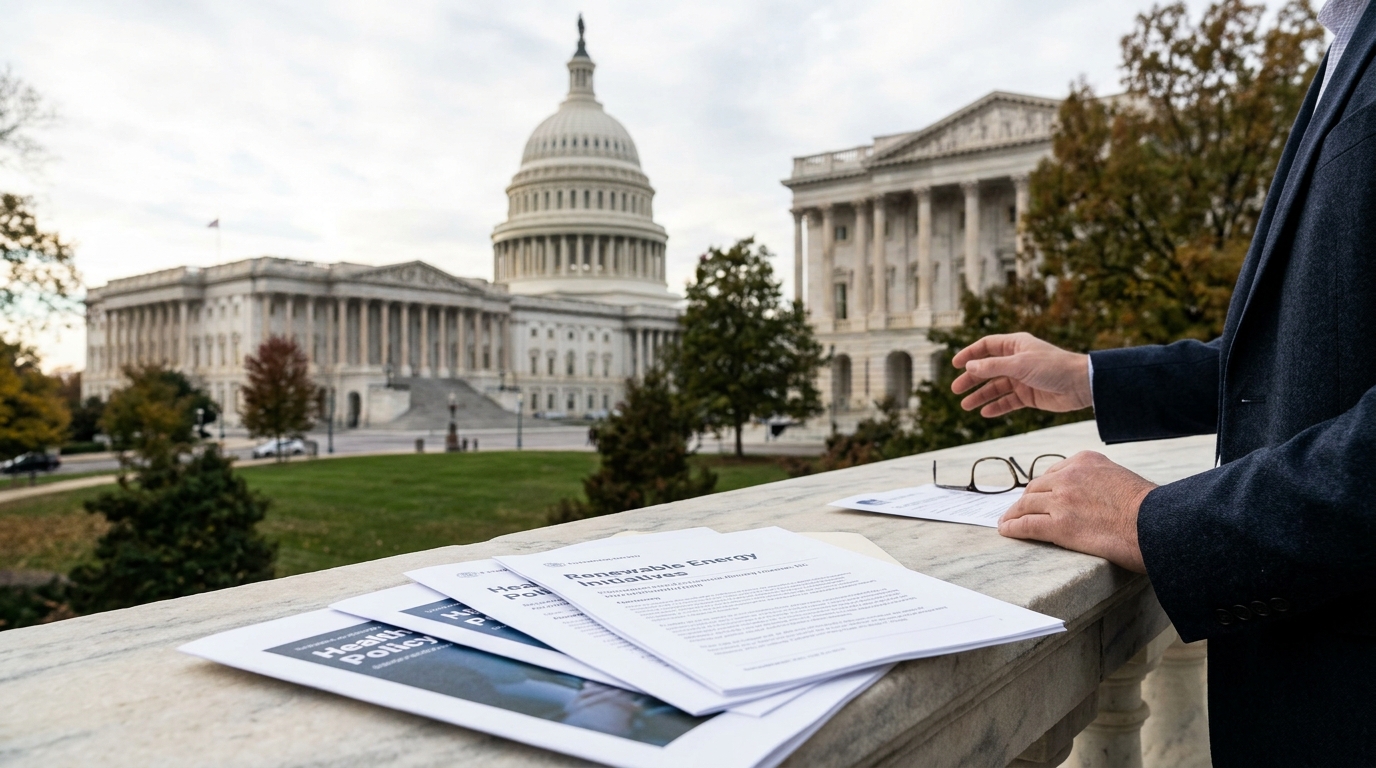
The models are no longer ambiguous. Decision Desk HQ puts Democrats at an 80% probability of winning the House and 56% for the Senate as of October 24. Prediction markets have gone further: Kalshi prices Democratic House control at about 91% and the Senate at about 66%. Nine days from the November 3 vote, the election has crossed from background variable to dated, positionable event. The question is not whether the market knows the odds. It is which parts of the market have actually moved on them.
Defense has. Lockheed Martin peaked around $683 in March and spent the following seven months adjusting toward a Democratic Congress. By mid-October the iShares U.S. Aerospace and Defense ETF had fallen sharply from its late-summer highs, with Northrop Grumman down steeply from its 52-week peak. The fear driving the selling is that a Democratic House would scrutinize Pentagon contractors’ ties to the Trump administration and apply more friction to the largest discretionary programs. That read has real logic, but the earnings data complicates it: Lockheed reported a record $292 billion backlog on October 22, raised its full-year outlook, and the stock jumped roughly 7% on the day, trading near $590. Vertical Research and Citigroup have both flagged the selloff as oversized, pointing out that missile defense and munitions replenishment carry genuine bipartisan support. The sector has priced a lot of bad news. Whether it has priced too much is the open question.
Health care has moved too, but in the opposite direction and for a different reason. The S&P 500 health care sector is up more than 9% over the past three months, the second-best performer in the index. UnitedHealth Group has outperformed over the past six months. Part of that is an operating story, UNH beat Q3 estimates, reported $112.7 billion in quarterly revenue, and raised full-year adjusted EPS guidance to at least $20.50. But Axios reported this week that traders appear to be pricing in increasing Democratic odds as a signal that some of the Medicaid cuts in Trump’s 2025 budget law could be reversed. Raymond James cut its UNH target on October 15 citing midterm election risk around Stars and risk adjustment, while JPMorgan raised its target to $524. The sector has moved, but the move is driven by two stories at once, and only one of them requires Democrats to win.
The place where the midterm odds have landed most quietly is energy. XLE sits near the top of its 52-week range, close to its high despite Brent crude above $112 a barrel providing fundamental support. A Democratic Congress with subpoena power would bring materially more scrutiny to fossil fuel pricing and permitting. Some Wall Street strategists, including at Morgan Stanley, have flagged that energy producers could face closer attention on prices, taxes and fossil fuel policy under a Democratic outcome. The crude price tailwind has masked whatever political discount should already be in XLE. If oil stabilizes and the election result lands as the models expect, that gap closes.
Two macro markets are worth watching alongside the sectors. The 10-year Treasury yield sits near 5%, driven this week more by AI financing jitters than by fiscal projections, but a Democratic Congress capable of blocking further deficit expansion could, over time, apply modest downward pressure on the long end, or, alternatively, trigger gridlock-driven standoffs that keep term premiums elevated. The dollar index pulled back from an 18-month high near 102.95 earlier this month to close around 101.73 on October 20. A Congress that constrains executive spending authority could weigh further on dollar strength, but that transmission runs through months of appropriations fights, not through election night.
The counterargument to any of this adjustment is Trump’s veto. Even a Democratic sweep cannot pass legislation the president signs. That structural constraint means the policy shifts most priced into health care, Medicaid restoration, ACA subsidy reinstatement, face an executive branch obstacle that prediction markets do not fully capture. For defense, bipartisan contract funding means the backlog holds regardless. The honest read is that the market has done some of the work, done it unevenly, and left the energy sector almost entirely alone.
The calendar next week runs the Fed decision on October 28, then the October jobs report on November 6 and CPI on November 10, both arriving after the votes are counted. Between now and November 3, the most useful signal will be whether XLE starts to close the discount it should already carry, and whether defense dip-buyers or election sellers win the argument in LMT and the ITA.