
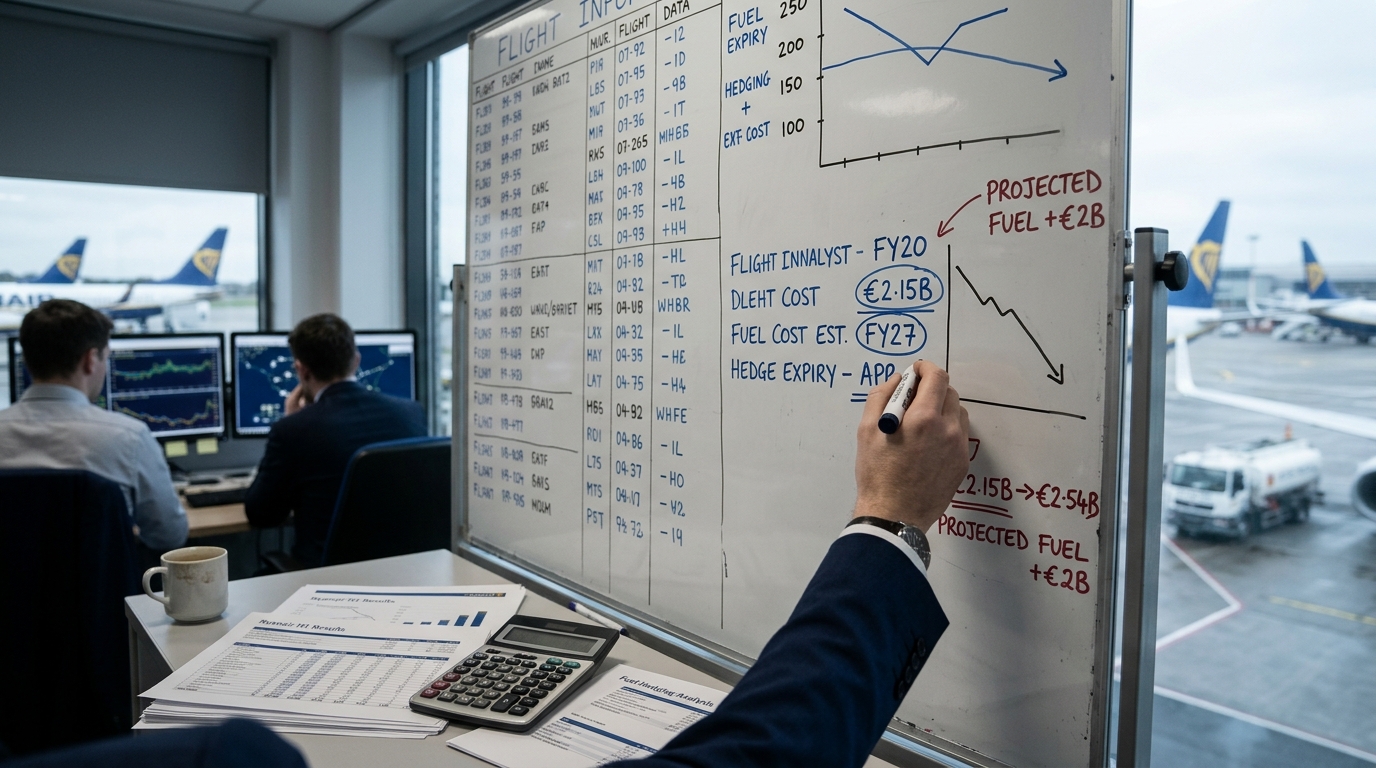
The headline profit drop is real but almost beside the point. Ryanair’s first-half results, released this morning, showed after-tax profit falling 15% to €2.15 billion from €2.54 billion a year earlier. That number is painful. The one that should concentrate investor attention is €2 billion: the estimated increase in the fuel bill for the year beginning April 2027, when the hedge that has protected Ryanair throughout this cycle largely runs out.
Analyst Targets
- JPMorgan: EUR 29 target (lowered from EUR 32), maintains coverage
- Barclays: Downgraded to Equal Weight from Overweight
- Raymond James: $74 target (lowered from $78)
- Bernstein: Buy, $77 target
The Numbers
For the six months to 30 September, the picture looked like this:
- Profit after tax: €2.15bn, down 15% from €2.54bn
- Revenue: €10.08bn, up 3%
- Passengers: 125.8 million, up 6%
- Average fares: down 4% to €55.70
- Operating costs: €7.69bn, up 10%
- Fuel and oil costs: €3.40bn, up 15%
- Unit costs: up 5%, almost entirely fuel-driven
The 20% of jet fuel that Ryanair left unhedged doubled to about $130 a barrel, compounding the effect of a 4% drop in average fares.
Why the Stock Is Moving
The first-half result topped expectations at the operating level, but the market’s focus has shifted entirely forward.
For FY28, Ryanair has hedged 25% of its fuel at about $95 a barrel, and estimates its fuel bill will rise by about €2 billion at current forward prices. That compares to the $67-a-barrel rate covering 80% of FY27 consumption. The delta is stark. Management said that while it expects short-haul fares to rise materially next year, that increase is unlikely to fully offset the estimated €2 billion fuel bill increase.
Ryanair said it doesn’t expect higher fares to fully cover the fuel increase, and is therefore launching a cost review that includes lowering crew rations, a potential temporary pay freeze, and expanded use of AI to drive further efficiencies. O’Leary has said European fares could rise by 15% to 20% across the industry next year as hedges expire broadly.
The scale of that cost pressure puts the industry’s earlier optimism in sharp relief. European and U.S. carriers had briefly priced in a structural fuel-cost reset when the Iran peace deal sent jet fuel sharply lower.
The company declined to provide full-year FY27 profit guidance, citing limited visibility into the final quarter and sensitivity to unhedged fuel prices, geopolitical developments, and potential ATC strikes.
Macro and Industry Context
Ryanair’s FY27 hedge has been the envy of the sector. That advantage dissolves from April. All of them face the same cliff; Ryanair was simply last to reach the edge, and the fall is therefore more visible in a single results release.
O’Leary expects jet-fuel prices to stay elevated well into 2027 without a swift end to the Middle East conflict. That framing matters for how investors model the base case.
Forward Scenarios
Bull: A ceasefire or sustained oil-price retreat pulls spot jet fuel back below $90 a barrel before the hedge roll. Ryanair’s structural cost lead over rivals tightens the earnings gap, and fare increases absorb more of the FY28 cost rise than management currently projects. Analyst targets near €29–$77 have meaningful upside from current levels.
Base: Jet fuel stays near current forward prices. The €2 billion fuel headwind materialises mostly as guided. Fare increases cover roughly half. The cost review yields savings but not enough to fully offset. FY28 profit comes in well below FY27. The stock stays range-bound pending clarity on hedges and geopolitics.
Bear: Conflict escalation pushes unhedged fuel above $140 a barrel. Fare increases stall amid consumer hesitancy. The cost review proves insufficient. With no FY27 guidance already given and FY28 hedge cover at just 25%, there is no quantitative floor to estimates.
Technical Overlay
RYAAY trades in the high-$50s in current sessions. The stock sits below its 200-day moving average and well under the $74–$79 range where Bernstein and Raymond James have set recent targets. A gap left by the Q1 results in July remains unfilled above. Support from the 12-month low becomes the next reference if this morning’s move extends lower.
Bottom Line
Ryanair’s first-half result was always going to be an awkward number. A 15% profit decline at Europe’s most efficient airline still leaves it profitable and cash-generative where rivals are not. The question investors should be pricing today is not what happened in the six months to September, it is whether €2 billion in additional fuel costs from April 2027, covered by a hedge book that is only 25% full at about $95 a barrel, can be absorbed by fare increases and cost cuts. Management says probably not in full. That honest answer is why analyst targets are moving lower and why this result is less a half-year report than a warning about next year’s earnings base.