
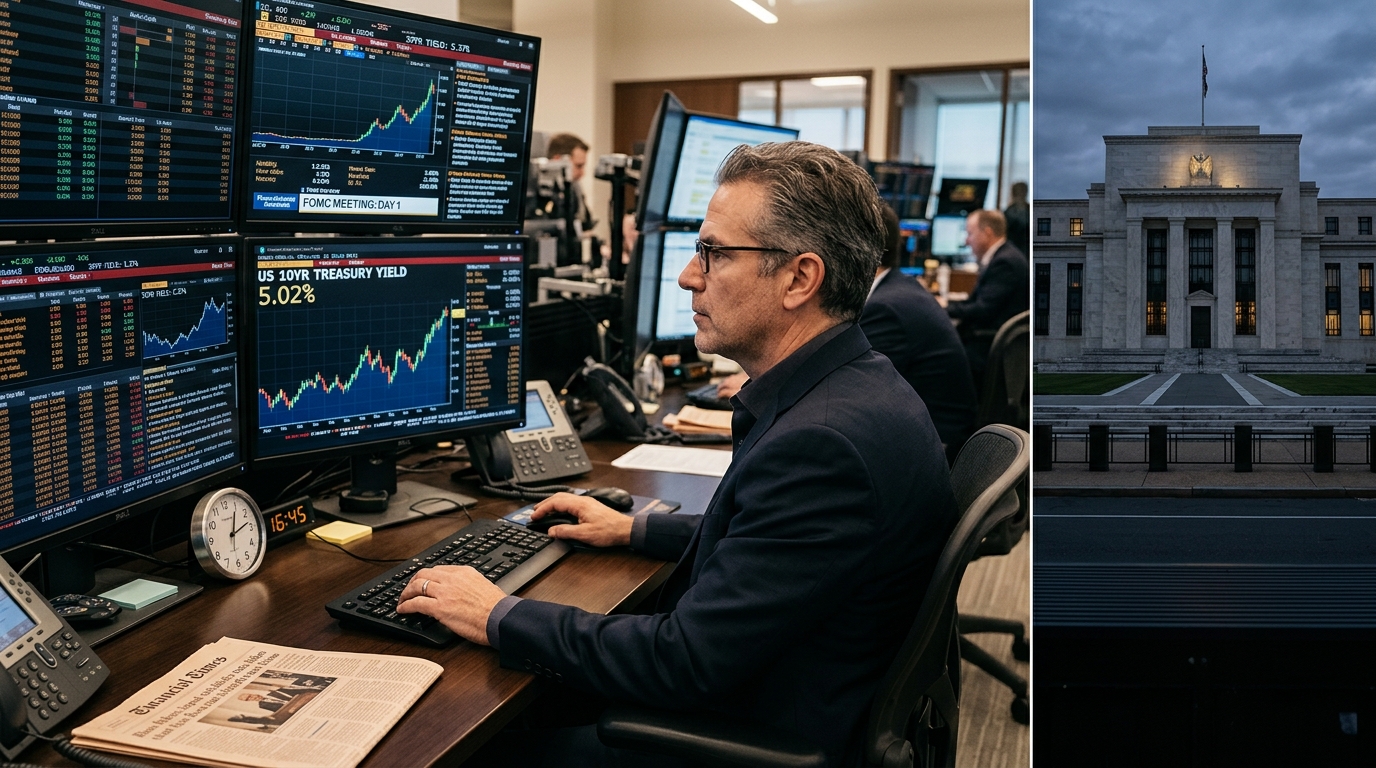
The bond market stopped waiting for the Fed sometime around midnight. The 10-year US Treasury yield rose to the highest level in almost two decades Tuesday, hitting 5.02% and surpassing its 2023 peak to reach a level not seen since 2007. The 30-year is at 5.37%. Day one of the two-day FOMC meeting, and the long end of the curve is already delivering the tightening the Fed is still deliberating.
Oil prices resumed their climb as Saudi Arabia’s East-West pipeline remained shut, and markets are pricing in roughly a 85% probability of a 25-basis-point rate hike by the Fed on Wednesday. Goldman Sachs revised its forecast from no change to a hike following Friday’s August inflation reading, with chief economist David Mericle writing that market pricing had moved “high enough that the FOMC will likely want to avoid the market reaction that would likely follow from remaining on hold.” In other words: the Fed may be hiking partly because not hiking would be its own kind of market event.
The Business
Yields that are climbing because of strong economic growth carry different implications for stocks and the broader economy than yields driven by resurgent inflation, mounting government deficits, or stress within the Treasury market itself. Right now, all three are in play simultaneously. The rise in yields stems partly from a supply-demand imbalance as enormous debt from the Treasury and corporations competes for investor capital. Brent crude approaching $110 a barrel is compounding the inflation channel. The result is a yield that isn’t just high, it’s high for several reasons at once, which makes it harder to dismiss.
Why Wall Street Is Paying Attention
The critical question for investors today is not whether the Fed hikes tomorrow. That outcome is essentially settled. The question is what the updated dot plot signals about the pace and endpoint of this tightening cycle, and whether Warsh will again sit out his own forecast.
At the June 2026 FOMC meeting, his first as Fed chair, Kevin Warsh did not submit an interest rate projection for the dot plot. A longtime critic of forward guidance, Warsh has argued that the Fed should remain flexible as economic conditions change. Warsh told reporters he had “refrained from offering any projections,” consistent with his long-held views, leaving the forecast to the other 18 FOMC members.
That June ambiguity bought time. It doesn’t look so comfortable at 5.02%.
What’s Driving the Opportunity
The June dot plot implied one quarter-point hike for all of 2026. But following several data points, including the August CPI report, futures traders are now pricing in more than one additional quarter-point move by year’s end. Warsh’s preference for minimalist communication has reduced the Fed’s reliance on forward guidance, placing greater emphasis on incoming economic data and the updated dot plot. As a result, Treasury yields are likely to remain highly sensitive to inflation readings, particularly as energy prices continue to influence the near-term inflation outlook.
Some strategists believe long-dated bond yields may ease if the Fed hikes rates this week. Veteran strategist Ed Yardeni wrote that “a move this week would help restore the Fed’s inflation-fighting credibility and might ease some of the upward pressure on long-term yields.” That is the bull case for bonds. It requires the dot plot to signal clearly that Wednesday’s hike is the last, or close to it. Given that Warsh objects to the dot plot precisely because he believes it limits the Fed’s decision-making capabilities, getting that kind of clarity tomorrow is a stretch.
What Could Go Wrong
If Warsh again declines to submit his dot, and the committee’s projections shift further toward two or three hikes, the long end has room to push higher still. The 10-to-30-year spread is already wide. A curve that keeps steepening hits mortgage rates, corporate borrowing costs, and equity valuations simultaneously. There is also a credibility risk running the other direction: a hike paired with ambiguous forward guidance could read to markets as the Fed trailing the bond market rather than leading it, which does not restore confidence.
The Bottom Line
The 10-year at 5.02% is the most important number in markets right now, not because of the round figure, but because of what it demands. Investors await an update of the economic projections and the dot plot, which could lay the blueprint for the future of the fed funds rate. What Warsh says tomorrow, and whether he finally submits a dot of his own, will determine whether the long end continues moving on its own schedule or pauses to hear from the institution that is supposed to be setting the agenda. The bond market has already voted. The Fed has one day to respond.