The ticker is only the beginning. Here is what comes next.
You finally find a stock you like.
Then you open the options chain.
Which expiration? Which strikes? What entry price? How much is at risk?
Suddenly, finding the stock feels like the easy part.
Matt, the trader behind Income Blueprint, knows that bottleneck.
He describes going through 40 or 50 stocks, sometimes finding one he liked only to discover the options didn’t fit.
That’s the problem he built the tool to help solve.
Income Blueprint ranks stocks with a five-part scorecard, then evaluates the options for pricing, liquidity, and potential return.
It surfaces three top-ranked stock signals, with the available approaches for each.
Open a setup and you can review the proposed options, entry price, expiration, and estimated risk and reward together.
Now you have something concrete to evaluate before deciding whether to trade.
Matt walks through the process in a free presentation.
He also explains how to get 30 days of tool access and options training at no cost, with no credit card required.
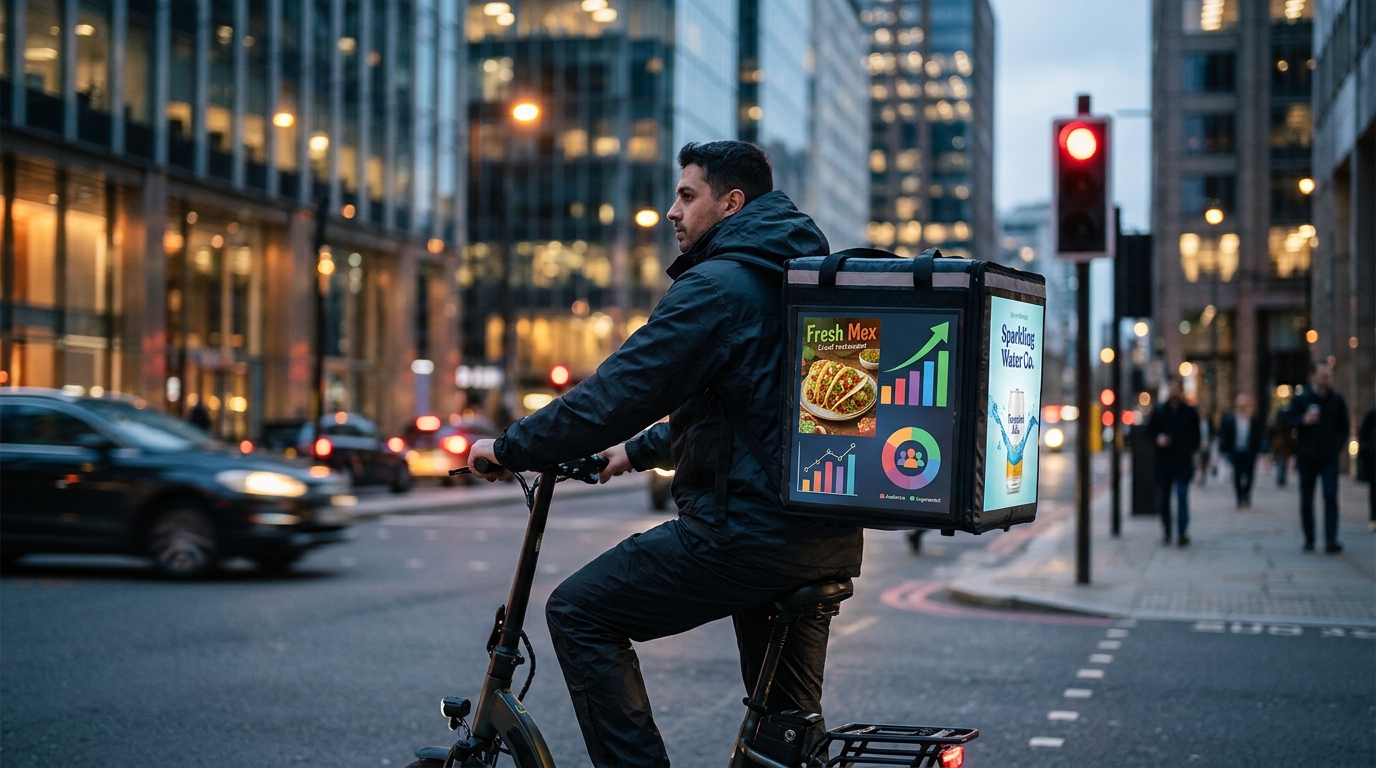
DoorDash Is Building an Ad Empire Inside Delivery
DoorDash controls roughly 67% of U.S. food delivery market share, based on the most recently reported Bloomberg Second Measure data (as of April 2024). That figure has been reported so often it has stopped feeling like a surprise. The more consequential number is the one almost nobody is talking about: the advertising business DoorDash has quietly assembled on top of that scale.
In Q3 2026, revenue grew 34% year over year to $4.6 billion, with marketplace gross order value up 36% to $33.9 billion. Those are the headline metrics. But the structural story is in a different line of the business.
The Advertising Play Everyone Underestimates
In June 2026, DoorDash relaunched its ad business under a new designation: a Global Commerce Media Platform spanning DoorDash, Wolt, and Deliveroo, now serving more than 400,000 advertisers. The Spotlight homepage ad format delivers twice the click-through rate of standard banners. Media dollars flowing through Symbiosys, the offsite ad engine DoorDash acquired in 2025, have nearly doubled since the deal closed. A LiveRamp partnership found that over 80% of consumers reached through DoorDash campaigns are new to those advertisers’ customer bases. That is not a feature update. That is a full-stack commerce media build.
The strategic logic is straightforward. DoorDash users arrive with intent already formed, an order occasion in mind, a wallet open. That behavioral signal is exactly what advertisers pay a premium to reach on Amazon or Walmart Connect. DoorDash is now selling the same access, against first-party transaction data that cookie deprecation cannot erode.
Then Came the Instacart Move
On October 29, 2026, DoorDash announced it will acquire Instacart for approximately $17 billion, a 26% premium to Instacart’s closing price on October 22, 2026, the last trading day before media reports about a possible transaction. The deal has been framed in headlines as a grocery delivery play. It is also, and perhaps primarily, an advertising consolidation. Instacart runs its own ads business across nearly 100,000 store locations and more than 2,200 retail banners. Combined, the two platforms would give advertisers access to a data footprint that neither could offer independently.
Advertisers have already responded positively. Trade press coverage has focused on what the combination could mean for commerce media buying across grocery, restaurants, and retail. The deal is not expected to close until late 2027 or the first half of 2028, pending regulatory review and other closing conditions. That timeline matters: DoorDash’s ad business must keep compounding on its own until the combination is legal.
Bull / Base / Bear
- Bull: The Instacart deal closes without material divestitures, advertising revenue accelerates as a named growth driver in Q4 results, and DoorDash emerges as a third major commerce media platform behind Amazon and Walmart.
- Base: Revenue growth holds in the low-30% range, advertising scales steadily, and the Instacart integration timeline slips but does not break the investment thesis.
- Bear: Regulators demand structural remedies that limit the data-sharing rationale, and advertising growth stalls as Uber Eats presses its own ad platform harder in contested markets.
Bottom Line
DoorDash’s delivery dominance is not the debate. The question is whether the market is pricing the advertising flywheel correctly. At roughly 67% U.S. market share and 400,000-plus global advertisers, the platform already has the inventory. The Instacart acquisition, if it closes intact, would add the grocery data layer that turns DoorDash Ads from a strong niche product into a genuine rival to established retail media networks. That is the valuation reset worth watching, not the next order count.