June 28, 2026
The $600B Tab Nobody Can Pay Right Now
OpenAI’s IPO delay just cracked the biggest assumption in the AI trade.
Here is the thing about the OpenAI IPO delay. It is not really a story about one company’s timing. It is a story about the single largest unverified assumption holding up a multi-trillion dollar market.
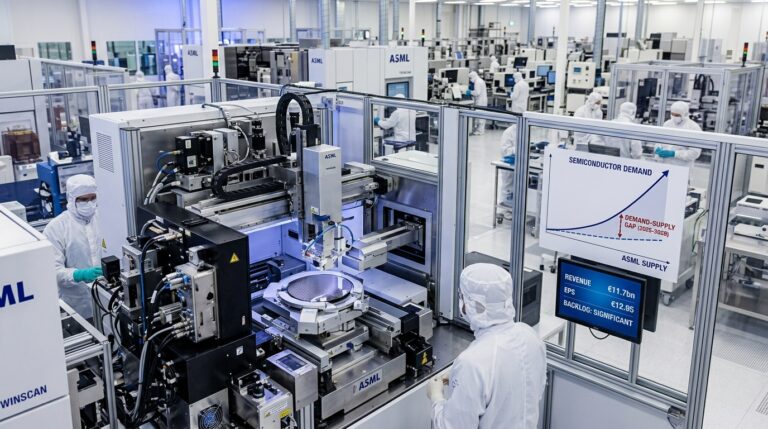
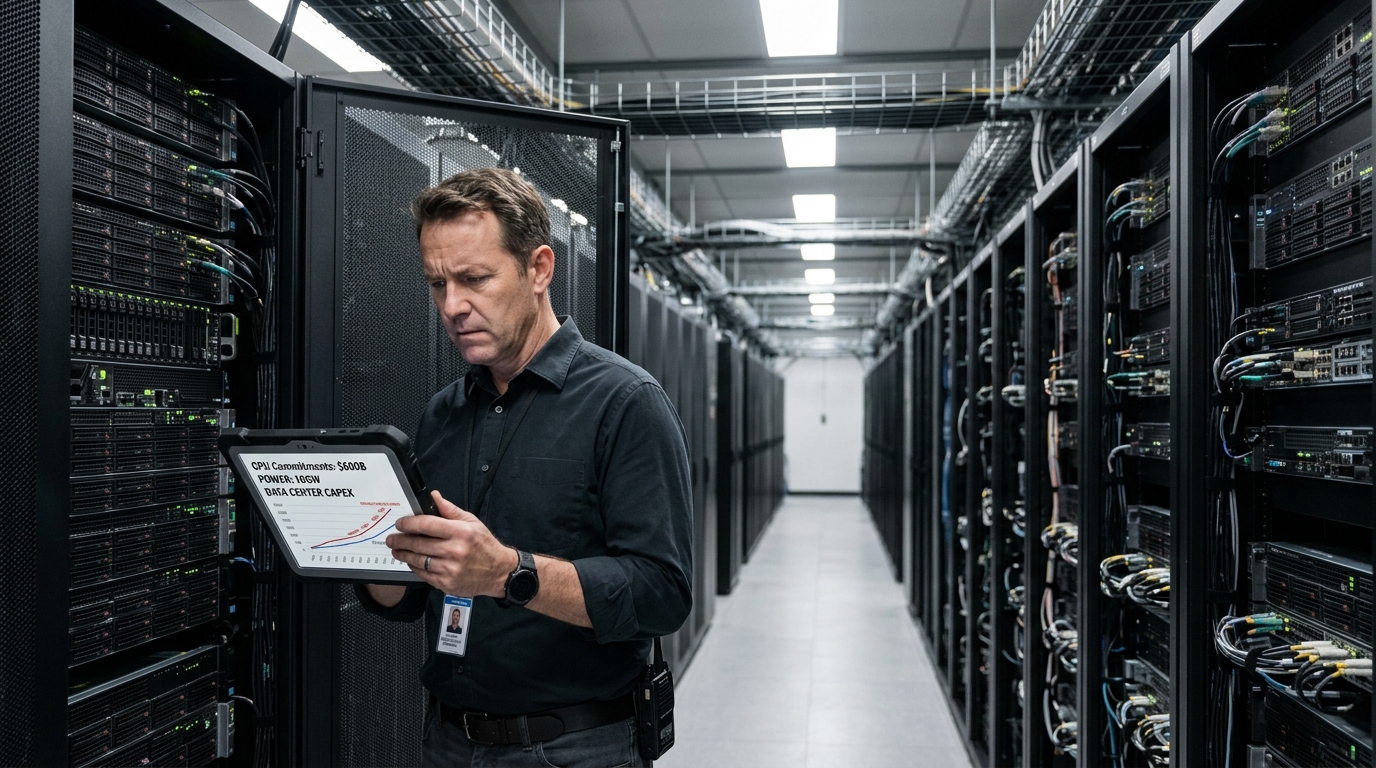
OpenAI has reportedly committed to something on the order of $600 billion in future computing capacity: 10 gigawatts of Nvidia systems, 6 gigawatts of AMD chips, and roughly $300 billion with Oracle for cloud capacity stretching through 2031. That is a staggering sum for a company that posted $13.07 billion in 2025 revenue and a $20.92 billion operating loss in the same year. The entire semiconductor sector has been pricing in those purchase orders as if they were locked, guaranteed, and fully funded.
They are not.
No. 1 Stock to Buy for THIS MONDAY
Heads up: Tim Bohen’s new algorithm just uncovered a dirt-cheap stock that could DOUBLE or MORE this coming Monday. This powerful algo has already identified Monday moves of 149%, 190%, and even a whopping 536%…
Click here to see how to get positioned ahead of this Monday’s setup!
Reports surfaced Friday that OpenAI is leaning toward delaying its IPO until 2027. The company’s advisors reportedly laid out two paths: wait until 2027 and chase a $1 trillion valuation, or go public sooner at a lower price. CEO Sam Altman reportedly rejected any cut to that trillion-dollar target. Worth noting: OpenAI already confidentially filed its S-1 with the SEC on June 8, and the March 2026 funding round placed the company’s valuation at $852 billion. A delay to 2027 would be a deliberate choice to wait for the market to close that gap.
The market’s reaction said everything. Chip stocks bore the brunt. Nvidia slipped roughly 1.5% Friday while Advanced Micro Devices and Broadcom fell further. The Philadelphia Semiconductor Index dropped 4.8% on Friday alone. For the week, the SOX fell 7.9%, its worst weekly performance since early April. Globally, SoftBank plunged 13% in Tokyo, South Korea’s Kospi lost nearly 6%, and Japan’s Nikkei shed more than 4% in a single session.
The Funding Gap That Changes Everything
OpenAI’s audited 2025 financials, which surfaced via journalist Ed Zitron and verified by the Financial Times, show $13.07 billion in revenue against $34 billion in total costs, a $20.92 billion operating loss, and a $38.53 billion net loss attributable to OpenAI after a $41.55 billion non-cash fair-value adjustment tied to its nonprofit-to-for-profit conversion. The company’s current annualized revenue run rate is approximately $25 billion. Still deeply unprofitable, though the expense ratio did improve from $2.37 per dollar of revenue in 2024 to $1.60 in 2025.
Slight tangent, but it matters: OpenAI’s own CFO, Sarah Friar, has reportedly warned colleagues that the company could struggle to pay for all that compute if revenue growth slows. That warning, sitting inside one of the most valuable private companies in history, is the kind of thing that gets buried in AI euphoria but should probably be the first question analysts are asking.
An IPO would have solved this. It would have been the clean mechanism for OpenAI to raise the capital its spending commitments require. So when reports suggest one of the biggest buyers in AI is hesitating to tap public markets, partly because of recent volatility in tech stocks and the rocky post-debut performance of SpaceX shares, some investors may start to question how durable all that promised spending actually is.
SoftBank Is the Most Exposed Name in the Room
If OpenAI is the center of the trade, SoftBank is the most concentrated single expression of it. And the math there deserves more attention than it is getting.
SoftBank’s cumulative investment in OpenAI stands at approximately $64.6 billion, representing roughly 13% of the company. The IPO delay news wiped over $38 billion from SoftBank’s market cap in a single Friday session. To put that single-day collapse in context: earlier this month, SoftBank had just overtaken Toyota as Japan’s most valuable company. That milestone lasted about a week before Friday’s selloff.
The single-day drop was 13%. And layered on top of that: SoftBank carries a $40 billion unsecured bridge loan that matures in March 2027. The company originally sought $10 billion in May through a margin loan backed by its OpenAI stake, cut that target by 40% to $6 billion after lender enthusiasm faded, and even the reduced $6 billion target has since stalled. Lenders cannot reliably set a loan-to-value ratio on a private company with no public market reference price.
That is a company with a ticking clock.
Trump to Unleash Giant $2.7 Trillion Gold Mine?
Executive Order #14153 outlines what Jim Rickards believes are Trump’s intentions to unleash the largest mineral reserve in the country.
According to Jim’s research, he estimates it contains up to $2.7 trillion in gold, silver, copper, and other precious elements that could:
- Build 12,500 AI data centers
- Power 24 million tomahawk missiles
- Rebuild America’s broken electric grid – 25 times over
- Construct 3 million high-performance jet engines for the Air Force and Navy
- And repair nearly every major bridge, skyscraper and pipeline across the country
This single company – trading for just $2 per share – holds 100% of the rights to this asset.
But you need to act before June 30 to take advantage before the President makes his next move…
That’s when a landmark policy decision could reprice this $2 stock, overnight.
This opportunity is so explosive, it’s possible shares could skyrocket 50-times or more by the end of Trump’s term.
But – time’s running out.
The $64.6 billion OpenAI stake is worth $64.6 billion in 2026 and worth $64.6 billion in 2027 on paper. But a delay in going public means no liquidity event, no clean path to repay a $40 billion bridge loan, and no public pricing mechanism to unlock further borrowing against the position. The carry cost of delaying capital recycling for a year in a higher-for-longer rate environment is not trivial. And the rate environment just got materially more complicated.
Kashkari Flipped. That Changes the Denominator.
Minneapolis Federal Reserve President Neel Kashkari said Friday he has changed his outlook and now expects one interest rate increase will be necessary this year. In March, he had penciled in one rate cut. By June, that flipped to one rate hike. His remarks came on the sidelines of the Aspen Ideas Festival, one week after the FOMC voted 12-0 to hold rates steady in the 3.50% to 3.75% range.
His comments carry weight because Kashkari has long been seen as one of the Fed’s more dovish policymakers. His shift to a hike call suggests inflation concerns are spreading inside the central bank, and it leaves investors to rethink how long borrowing costs stay elevated. Nine of the 18 FOMC officials now expect at least one rate hike in 2026. The median forecast moved higher, from 3.4% in March to 3.8%.
This is the context that makes the OpenAI delay more than a one-day event. The Fed’s preferred inflation gauge, the PCE index, rose to 4.1% in May, its highest level since spring 2023. Core PCE, stripping out food and energy, reached 3.4%, also a more than two-year high. Inflation has now been above the Fed’s 2% target for five consecutive years.
Read that again. Kashkari explicitly stated that investment in data centers and AI infrastructure is itself inflationary, pushing up interest rates across the economy in the near term. The same capital spending that the entire semiconductor sector has been pricing as a permanent tailwind is now being cited by a voting Fed member as a reason rates might go higher. That is not a small idea.
What the Market Is Missing
Most of the coverage this week framed the OpenAI delay as a sentiment event. A confidence shock. But the more important question is structural.
While AI optimism has been enough to drive markets higher for much of the past year, investors are becoming increasingly focused on whether the enormous capital spending required to build AI infrastructure will generate sufficient returns. That question does not have a clean answer yet.
What is clear is that the AI earnings story, while real, is extraordinarily narrow. And a delay in the primary funding mechanism for the world’s largest AI buyer puts pressure on the width of that story in a way the broader index hasn’t fully absorbed.
The Honeywell Angle: A Completely Different Kind of Spinoff Story
While the AI complex was unwinding, one of the most interesting structural events of the quarter was completing quietly in the background. Today, June 29, Honeywell Aerospace begins regular-way trading on Nasdaq under the ticker symbol HONA, completing its formal separation from Honeywell International. The remaining automation business keeps the HON ticker and rebrands as Honeywell Technologies.
This one deserves more attention than it is getting. Honeywell Aerospace expects approximately $19.3 billion in 2026 sales, with EBIT of $4.6 billion to $4.7 billion, roughly a 24% EBIT margin. The company is targeting $6.5 billion of adjusted earnings by 2030, with 6% to 8% annual sales growth expected through that period, supported by commercial aviation aftermarket demand and defense. Its order backlog sits at approximately $19 billion, up 20% year over year, with orders up 28% over the past 12 months and a book-to-bill ratio of 1.1.
The GE Aerospace comparison is the one to watch. GE gave investors a working example of what can happen when a big industrial conglomerate turns into a focused aerospace company. That multiple expansion from conglomerate discount to pure-play premium took GE’s aerospace valuation significantly higher in the years after separation. Honeywell Aerospace starts with a growing backlog, a defense tailwind, and a cleaner financial story than most pure-play peers of its size.
The spinoff is tax-free for U.S. shareholders. Holders of record as of June 15 received one HONA share for every two HON shares. Given how strong the aerospace sector has been, HONA could attract meaningful institutional demand quickly. The remaining Honeywell Technologies could see some initial selling pressure as investors who wanted only the aerospace exposure exit the automation stub. If that happens, the selling in HON could be somewhat overdone in the near term, creating an interesting value situation in the automation business that often gets overlooked in spinoff dynamics.
Options Market Framework
Two trades worth structuring against this week’s developments:
On the AI infrastructure fragility theme: Implied volatility across semiconductor names has spiked after five consecutive down sessions for the Nasdaq and the worst SOX week since early April. For traders who believe the OpenAI delay is a near-term sentiment overhang rather than a fundamental break in AI capital spending, a defined-risk bull put spread on NVDA or AVGO in the August expiration captures elevated premium while limiting downside exposure to a specific level. If you believe the spending commitments remain intact and OpenAI’s delay is ultimately a 12-month timing issue rather than a cancellation, the risk-reward on selling near-term fear is asymmetric. That said, if Kashkari’s hawkish shift accelerates and the broader market begins pricing in a rate hike before year-end, growth multiples across the sector face additional compression regardless of the IPO timeline.
On Honeywell Aerospace (HONA): The first number to watch is HONA’s implied value against 2026 EBIT of $4.6 billion to $4.7 billion. If HONA trades at a premium aerospace multiple consistent with pure-play peers, the market is saying the business deserved a cleaner public valuation all along. For options traders, defined-risk call structures in the first 30 days of trading capture both the institutional demand from index positioning and the potential multiple expansion to peer valuations, with the primary risk being a broader defense sector rotation reversal.
The Best Time Of Day To Trade For A Better Retirement
This little known trading window is turning even novices into consistently profitable investors, and now, you can learn to take advantage of it for free!
With expert Dave Aquino’s latest free guide, “How To Master The Retirement Guide”, you’ll get step-by-step instructions to one of the most powerful market plays around today.
The Risk Wall Street Is Underweighting
The consensus still reads this week as a consolidation. A healthy pullback inside a structurally intact AI cycle. That may be right. But there is a version of this that is more uncomfortable.
OpenAI sits at the center of the entire demand chain. A delay in going public does not cancel those infrastructure deals. But it does raise the question of how a company burning through massive operating losses funds $600 billion in commitments without a major capital raise. And if the answer involves renegotiating some of those commitments, even the strongest AI infrastructure stocks face a demand revision that has not been modeled into current prices.
Add Kashkari’s explicit statement that AI data center spending is itself inflationary, layer in a potential rate hike before year-end, and the discount rate applied to every high-multiple AI name moves in one direction. The earnings are real. The question is whether the market has been valuing the peak version of those earnings against the lowest possible discount rate, and whether both of those assumptions are now shifting at the same time.
That is the version of this week that is still being debated on trading desks. The index barely noticed relative to the damage in semiconductors. The Nasdaq fell 4.7% for the week. The S&P 500 lost nearly 2%. The Dow edged up less than 1%. That divergence is not noise. It is the same rotation that has been building all year, suddenly accelerating.
The question now is whether this is a rotation or a structural reset. Nobody has a clean answer yet.
For informational purposes only.