June 29, 2026
Exxon and Chevron Had a Big Year. Then GL X Arrived.
Featured: Exxon and Chevron Had a Big Year. Then GL X Arrived.
Hey,
I have been getting a lot of the same question lately:
“Thomas, if this strategy is so good, why are you giving the guide away for free?”
It is a fair question. Especially in an industry where every “free” offer is usually just a Trojan horse for a $2,000 upsell or a 90-minute webinar you have to sit through.
So here is my honest answer.
I have been trading professionally for years. I have seen talented people blow up their accounts because they were following overly complicated systems sold to them by people who do not actually trade.
It bothers me. A lot.
The “Opening Bell Breakout” is the simplest, most repeatable strategy I have ever used.
It takes about 30 minutes a day.
It does not require expensive software.
And it has produced gains like 113% on GOOGL and 240% on META.
I put it into a free guide because I genuinely believe that if you see how it works, you will understand the kind of real, actionable trading education we provide at Base Camp Trading.
And maybe down the road, you will want to learn more from us.
But that is entirely up to you. There is no pressure. No auto-billing. Just the strategy, explained clearly, in a guide you can read in 10 minutes.
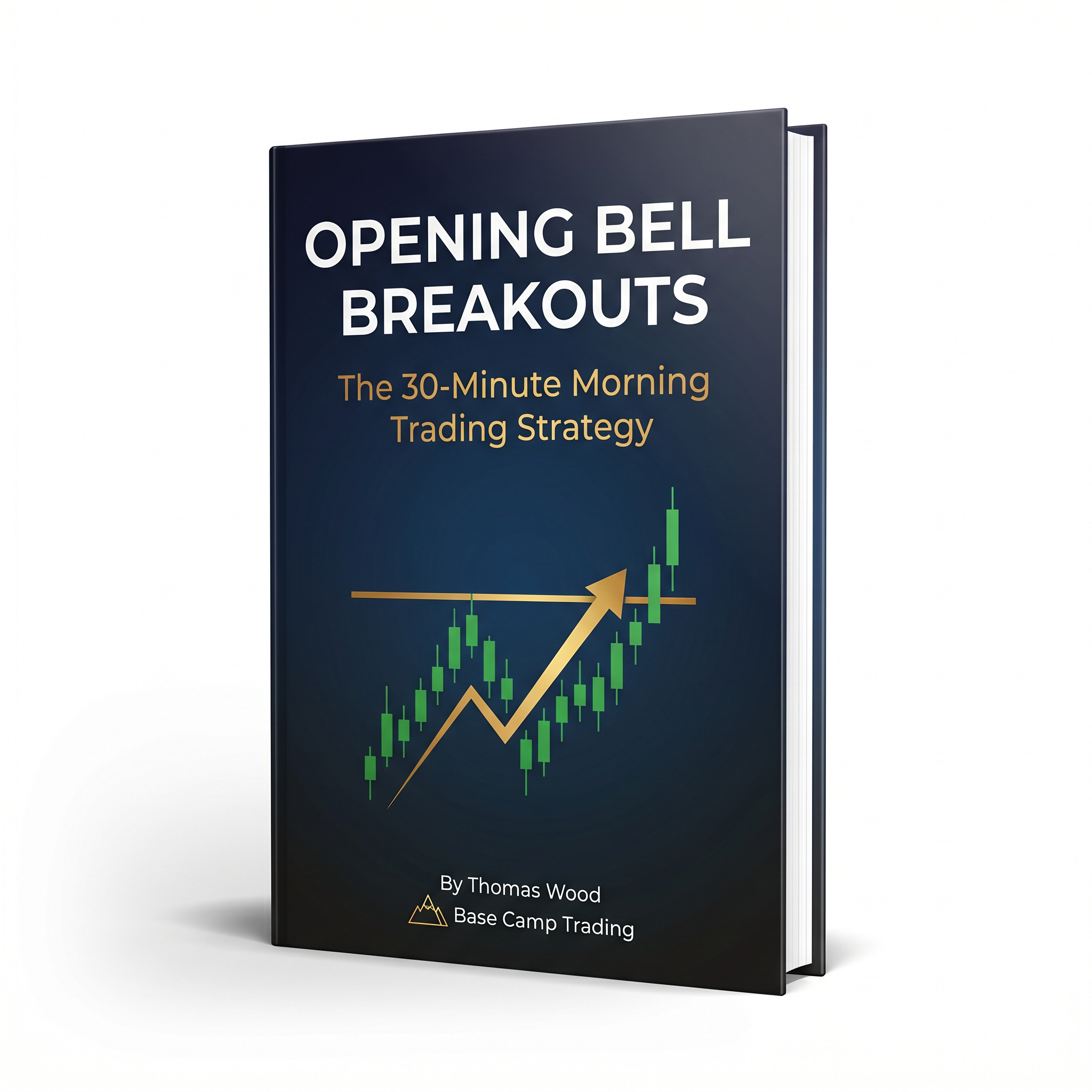
| Download the FREE Opening Bell Breakouts Guide |
If you have been burned before by “free” offers that were anything but, I understand. All I am asking is that you give this one a look.
Thomas Wood
Pro Trader, Base Camp Trading
FEATURED
Exxon and Chevron Had a Big Year. Then GL X Arrived.
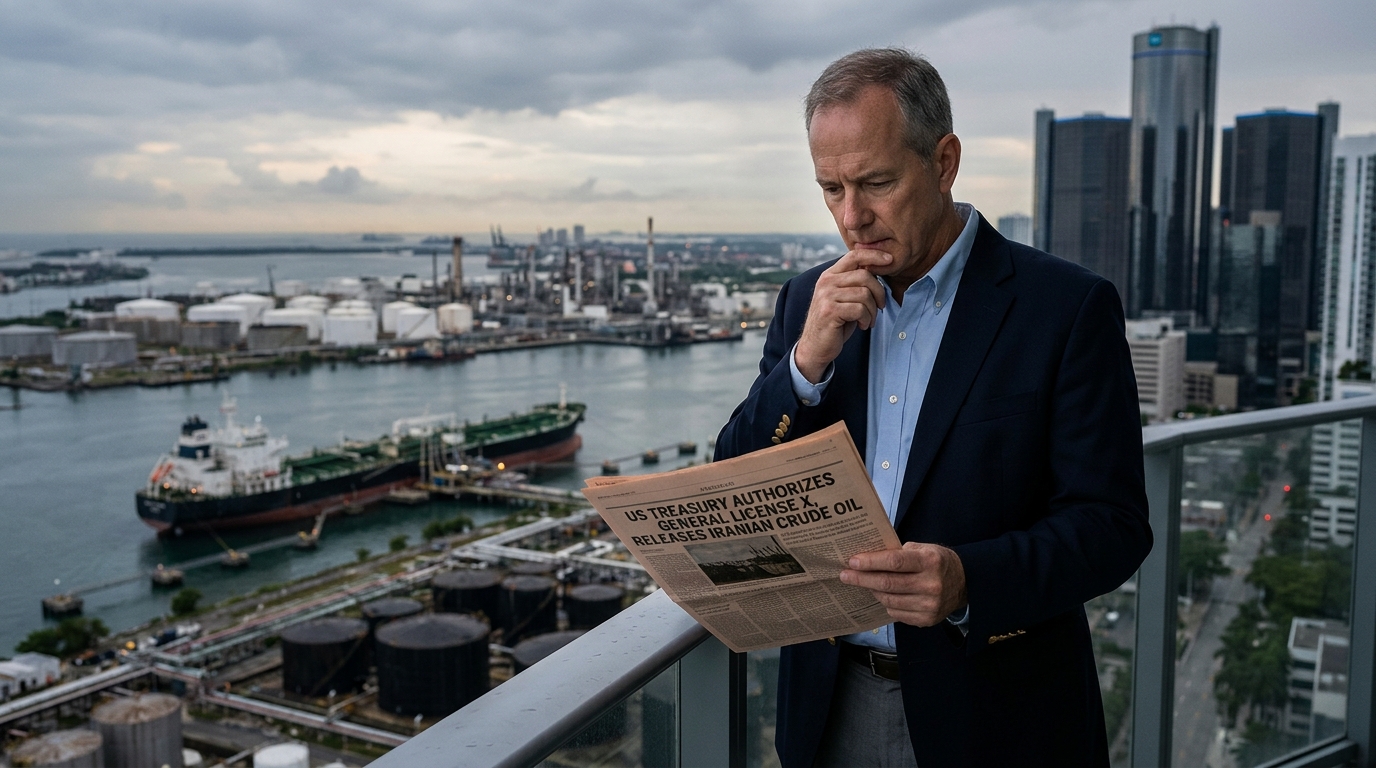
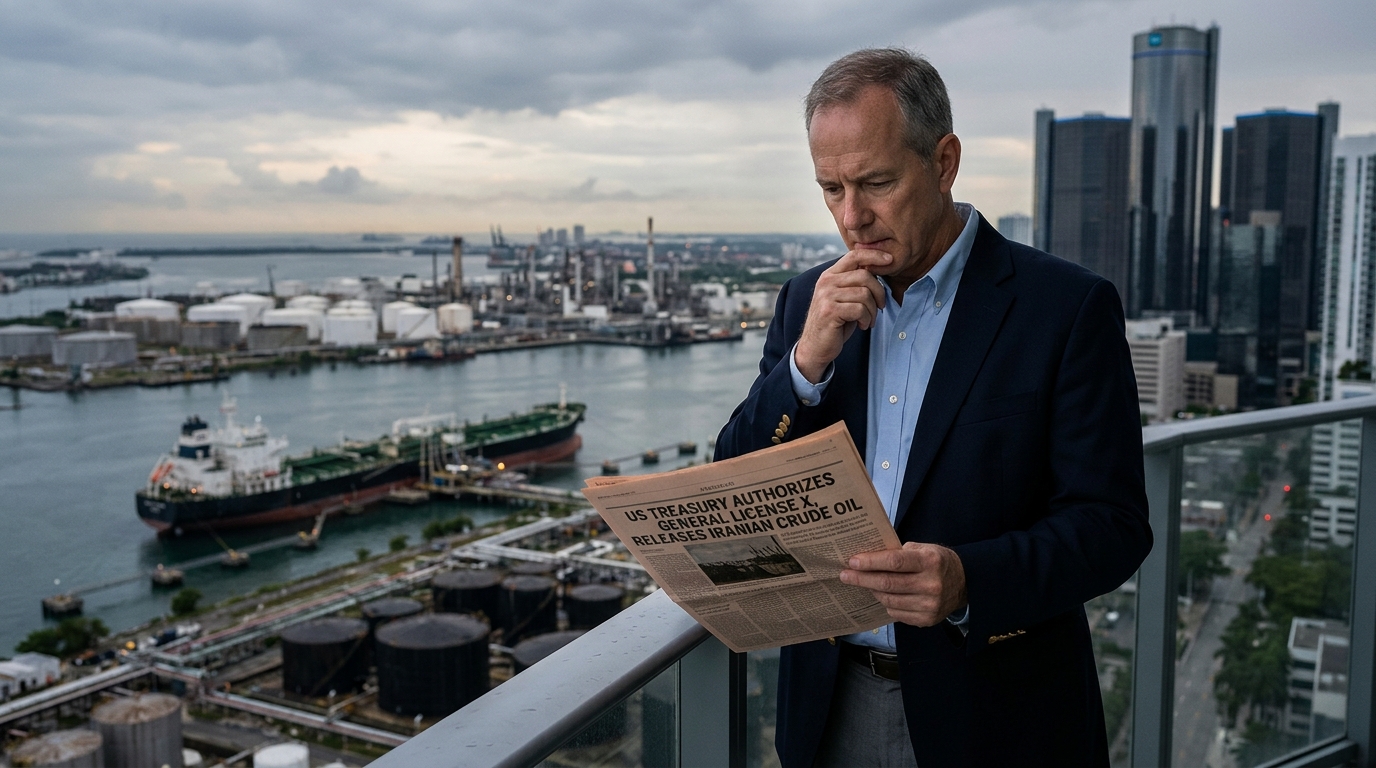
For most of 2026, owning XOM and CVX was about as close to a sure thing as the market offered. Then the U.S. Treasury moved on June 22, and the trade got a lot more complicated.
Here is where things stand, and why the next 53 days matter as much as anything else in energy right now.
What Happened
On June 22, OFAC published General License X. It is a broad 60-day authorization allowing buyers worldwide to purchase, transport, and arrange services for Iranian crude, petroleum products, and petrochemicals, with no volume cap. Buyers can pay Iran directly in U.S. dollar-denominated funds, removing one of the biggest practical barriers to Iranian oil reaching global markets. The license is a direct outgrowth of the U.S.-Iran Memorandum of Understanding signed June 17, which ended a nearly four-month effective closure of the Strait of Hormuz.
Brent crude fell more than 3.5% on the day GL X was published, and losses continued through the week. WTI is now trading near $69-70 per barrel after falling sharply since late May, when it briefly traded above $97.
GL X expires August 21. That date matters more than any earnings call between now and then.
What 2026 Looked Like Before This
To understand why this stings, you need to understand what the first quarter looked like for these two companies.
Exxon rose 41% in Q1. Chevron climbed 36%. Energy led every S&P 500 sector while the broader index fell 4.6%. The war had throttled the Strait of Hormuz, the narrow passage through which roughly 25% of the world’s seaborne oil trade normally travels, and Brent crude averaged $120 per barrel in April. Exxon’s Energy Products segment earned $2.8 billion in Q1 excluding identified items and timing effects, up from $856 million a year earlier.
That is what a supply shock does for an integrated major. And that is what is now partially reversing.
Exxon has dropped more than 22% from its $176.41 peak, trading near $136-137 as of late June. Chevron is down roughly 18-20% from its $214.71 high, now trading near $171-175. The IEA estimates cumulative oil supply losses from the Hormuz disruption now exceed 1.3 billion barrels, with flows through the Strait falling from around 20 million barrels per day before the conflict to an average of just 2.7 million barrels per day during March, April, and May.
5 Little-Known Stocks Behind Today’s Defense Tech Shift
Behind the headlines, a major transformation is underway.
Modern warfare is being driven by AI, autonomous systems, and next generation technology. A handful of lesser known companies are helping power this shift.
This report uncovers five stocks quietly playing a critical role in the future of defense.
The Business Behind the Headlines
Both companies are integrated supermajors spanning upstream exploration and production, midstream logistics, and downstream refining and chemicals. That diversification is exactly what helps them navigate commodity cycles better than pure-play producers. Exxon’s Permian Basin scale and Chevron’s 39-year dividend growth streak provide earnings and income support that is independent of geopolitical pricing.
Worth a brief aside here: Chevron’s acquisition of Hess added direct ownership of the Stabroek partnership in Guyana, long-life, low-breakeven barrels that materially change the production profile over the next decade. That is a fundamental improvement with nothing to do with any war premium. Same story with Exxon’s Permian scale and its recently secured 20-year power supply agreement with Microsoft in Texas. Neither company’s underlying business got worse this month.
What changed is the price they are getting paid per barrel.
The GL X Question
GL X is a 60-day window, not a permanent policy shift. Several dynamics complicate how quickly Iranian barrels actually reach global markets at scale. The license does not lift sanctions on Iranian sellers, only on buyers. Ongoing IRGC-related risks remain unaddressed, and legal experts note that the Foreign Terrorist Organization designation still applies to IRGC-linked entities under separate U.S. statutes, creating exposure that GL X does not resolve. Many U.S. banks and global insurers are proceeding cautiously as a result.
The physical picture is moving quickly, though. Since the MOU was announced June 14, UANI has tracked 32 tankers departing the Gulf of Oman laden with Iranian oil, representing approximately 43 million barrels. Kpler data shows confirmed oil shipments through Hormuz have risen to around 4.8 million barrels per day since the deal, though that remains well below the 20 million barrels per day that moved through the strait before the conflict. Crude throughput is running at roughly 50% of pre-conflict daily volume, according to the latest shipping data.
If U.S.-Iran negotiations collapse before August 21, the supply risk premium could return quickly. The situation is not stable. The IRGC reasserted control over Hormuz transit lanes as recently as June 25, ordering vessels in the southern corridor to turn back, though traffic continued flowing.
Meanwhile, global oil inventories have been draining fast. ExxonMobil’s Neil Chapman warned that the world is approaching inventory levels that are historically unprecedented. Goldman Sachs estimated the world was burning through 8.7 million barrels per day from global stockpiles at the height of the disruption. Rebuilding those inventories takes months, not weeks.
Forward Scenarios
Bull: GL X fails to materially increase Iranian supply due to banking, insurance, and IRGC-related legal hesitation. Negotiations stall or break down. Crude recovers toward $80-$85. XOM and CVX recoup meaningful ground from current levels, supported by Permian and Guyana production economics and dividend income.
Base: Iranian barrels gradually re-enter the market but well below what GL X theoretically allows. WTI stabilizes in the $70-$78 range. Goldman Sachs lowered its Brent forecast to $80 for Q4 2026 following the deal announcement. Both stocks trade sideways through August, underperforming the broader market but protected by buybacks and dividends. GL X either renews or transitions into a formal peace framework.
Bear: GL X proves more effective than expected. Iran pumps aggressively. WTI drifts toward $60. Both stocks give back the remainder of their 2026 gains. Dividend yields widen, attracting income buyers, but capital appreciation stalls until the next supply catalyst appears.
Technical Overlay
XOM is trading well below its 50-day and 200-day moving averages after the sharp drawdown from the $176.41 peak. Near-term support sits around $130-$133. Chevron is in a similar position relative to its moving averages, with support in the $155-$158 range. Neither stock has found a clear technical floor yet. The August 21 GL X expiry is effectively the next hard catalyst for a directional move in either name.
What Investors Should Watch
- U.S.-Iran Doha talks: U.S. and Iranian officials are scheduled to meet in Doha to continue negotiations on the Strait of Hormuz and other conflict issues
- IEA and EIA inventory data: global stock draws are the supply-side story that media keeps underweighting; rebuilding 1.3 billion barrels of lost supply takes time
- Hormuz throughput data: actual tanker flows are lagging the diplomatic news by weeks; Kpler and UANI data are the leading indicators here
- Permian and Guyana production updates: the fundamental earnings floor for both names, unaffected by the current geopolitical situation
- DOJ probe: Trump ordered the DOJ to examine whether oil companies are gouging consumers; any regulatory action adds headline noise but is unlikely to fundamentally alter the earnings case for either company
- GL X renewal or expiry: the August 21 deadline is binary; watch for any OFAC guidance in the weeks prior
Millionaire warns: “Move your money now.”
Larry Benedict generated $274 million in profits for his clients by knowing where money flows when the Federal Reserve shifts.
He says Trump’s Fed Takeover is triggering the most significant shift in U.S. markets in nearly 20 years.
He’s already identified the one ticker he expects billions to flood into… and he’s giving away the name for free.
Click here to get the full details before the window closes.
Bottom Line
The war premium that powered XOM and CVX to their 2026 highs was real money, but it was borrowed from a geopolitical event, not earned from a business improvement. GL X started giving that premium back. What the market has not fully absorbed is the inventory draw reality: the IEA estimates cumulative supply losses from the Hormuz disruption now exceed 1.3 billion barrels. Iranian crude re-entering a depleted market is a very different event from Iranian crude re-entering a well-stocked one.
The fundamentals of both businesses, Permian production, Guyana growth, decades of dividend compounding, have not changed. What happens next depends almost entirely on whether the Doha talks hold and whether Iranian barrels can actually move at scale before August 21. Neither of those outcomes is certain.
For informational purposes only.