October 13, 2026
Bonus Content: TSMC’s Record Quarter Is Confirmed. Thursday Is About Capex.
Dear Fellow Investor,
When Elon Musk transforms an industry, his own companies aren’t the only ones that strike it rich.
The suppliers around him get rich too.
- ON Semiconductor makes the camera sensors and power chips inside every Tesla, and it ran as high as 1,550%.
- Planet Labs launches its satellites on SpaceX, and it soared as high as 3,000%.
- AST SpaceMobile rides SpaceX rockets to orbit, and it exploded as high as 6,695%.
Just $5,000 in each of those four stocks could have grown to more than $650,000.
And now Elon is about to do it again.
After disrupting payments… cars… and even the space industry…
This time he’s creating a new venture that dwarfs Tesla and SpaceX combined.
And former Wall Street CEO Dylan Jovine has found the one AI firm Elon needs to pull it off.
Elon has been quietly relying on this firm since 2012.
Dylan calls it “Elon’s 100X AI Stock.”
And he says a major catalyst could send this stock soaring on October 24.
Click here for the full story >>
The Buck Stops Here,
Kelly Maguire
Behind the Markets
TSMC’s Record Quarter Is Confirmed. Thursday Is About Capex.
Analyst Targets
- Barclays: Overweight, price target raised to $665 (from $650)
- Stifel: Buy, $515 price target
- Citigroup: Raised target to NT$4,000 (from NT$3,800), citing AI-driven growth
- Wall Street consensus: Strong Buy across 21 analysts, average 12-month target ~$571
The Revenue Box Is Closed
TSMC already told the market what it earned. On October 8, the company reported September monthly sales, which implied Q3 revenue of NT$1.494 trillion, up 50.9% year on year and 17.6% sequentially. That result cleared the top of TSMC’s own guidance range of $44.6 billion to $45.8 billion, which was based on an assumed NT$32 per $1 exchange rate. The LSEG SmartEstimate had sat near NT$1.46 trillion. The beat was real.
Thursday’s full results confirm the profit number, the margin, and, most consequentially, the capital expenditure outlook that every Nvidia, AMD, ASML, and Broadcom holder is actually trading on.
The Numbers Thursday Must Deliver
- Revenue: The company already disclosed NT$1.494 trillion for Q3; the quarter should still translate to a little over $46 billion in U.S. dollars depending on the average exchange rate used in the release
- Gross margin: Consensus 66.5%, inside guidance of 65%-67%; Q2 was 67.7%
- Operating margin: Consensus 57.1%, guided 56%-58%; Q2 was 60.3%
- Net profit: LSEG SmartEstimate NT$746.3 billion, up ~65% YoY
- EPS: Consensus ~$4.41-$4.46 per ADR, versus about $2.92 a year ago
- Net margin: Expected near 50%, down from Q2’s 55.6%, partly because Q2 included a NT$63.2 billion disposal and mark-to-market gain tied to TSMC’s sale of an 8.1% Vanguard International Semiconductor stake
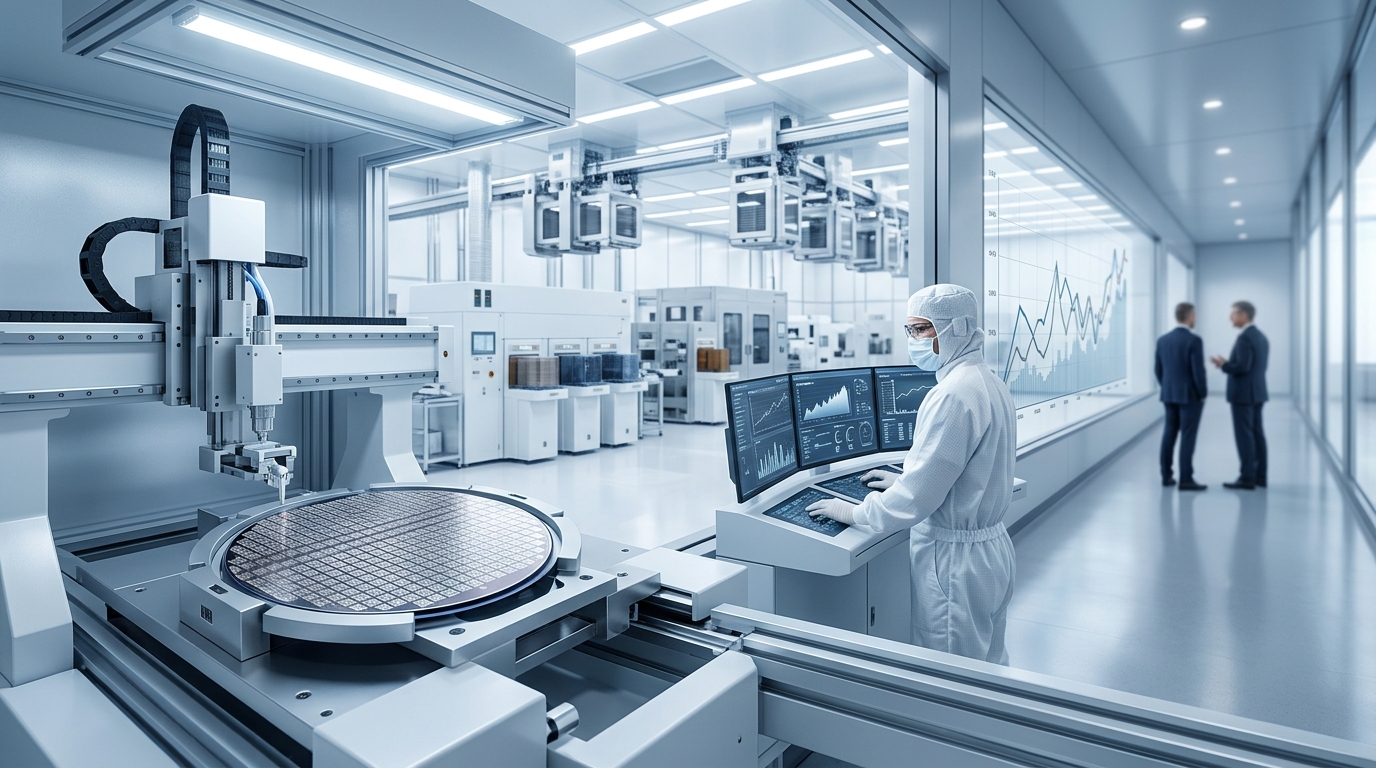
The margin compression is structural, not a crisis. TSMC disclosed in its Q2 materials that 2nm (N2) represented 3% of wafer revenue in Q2, which is now moving into a steeper ramp. CFO Wendell Huang has said the 2nm ramp is expected to weigh on second-half gross margin by roughly 3 to 4 percentage points, reflecting early-yield and engineering wafer costs plus depreciation. The question is whether the hit lands at 3 points or closer to 4.
Why the Capex Number Outweighs Everything Else
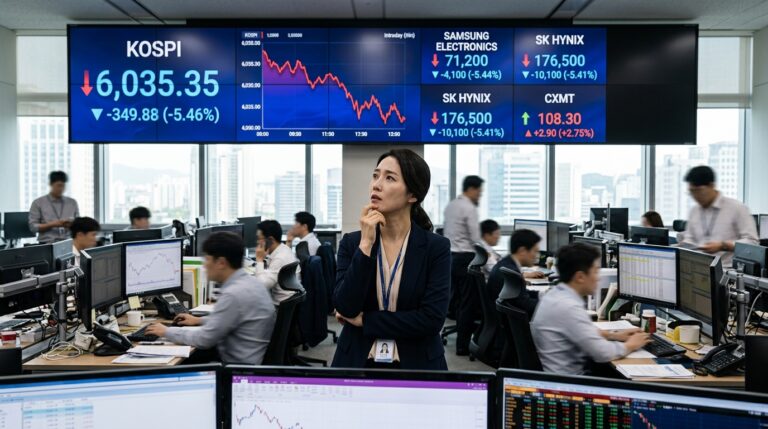
The sector came into this week bruised. Tech stocks fell after the Financial Times reported that OpenAI told investors its annualized revenue was near $50 billion at end-September, below the roughly $70 billion figure that had circulated in earlier reports. Semiconductor valuations are closely tied to AI infrastructure expectations, so that reset hit the group even as TSMC’s own sales pointed the other way.
That tension resolves Thursday. TSMC’s wafer bookings are the most direct measure of what hyperscalers and accelerator designers are actually ordering, not projecting. UBS raised its 2027 capex forecast for TSMC to $90 billion and its 2028 estimate to $105 billion, up from prior figures of $80 billion and $95 billion respectively, while holding its 2026 figure at $63 billion. Goldman Sachs is at $78 billion for 2027. The range between those two estimates spans $12 billion, and the management commentary Thursday sets where that range closes.
HPC, TSMC’s category for AI accelerators and data-center silicon, was 66% of Q2 revenue. If management reiterates that the mix is still moving higher and signals 2027 demand visibility, the capex number follows directly.
Bull, Base, and Bear
Bull: Gross margin prints at or above 67%, net margin stays above 51%, and management guides 2027 capex toward $85 billion or higher on the call. UBS’s $90 billion becomes the floor for street estimates. TSM tests its all-time high near $487, and NVDA, ASML, and AMAT follow on capacity read-through.
Base: Gross margin lands at 66.5%, profit growth near 65%, and capex language is constructive but non-committal on 2027 figures. Stock absorbs the result within options’ implied 5% range and holds above $440. Analyst revisions are modest and focused on 2028.
Bear: Gross margin comes in below 66% as 2nm dilution is steeper than guided, and management hedges on 2027 visibility citing customer inventory normalization or geopolitical caution. A repeat of the OpenAI-driven sentiment shock hits a sector already up sharply year to date.
Technical Overlay
TSM traded in the mid-$450s into this week. The 52-week range is $266.82 to $487.47. A post-earnings gap above $487 on strong capex guidance would be the clearest bull signal; a close below $440 would reopen the debate about whether the AI valuation premium requires more than record profits to sustain.
What to Watch Beyond the Headline
- Any explicit 2027 capex range from management, measured against UBS’s $90 billion and Goldman’s $78 billion
- Gross margin guidance for Q4, especially how management frames 2nm ramp costs versus offsets
- CoWoS advanced packaging commentary, which remains a binding constraint for Nvidia GB-series production
- Whether TSMC addresses the Elon Musk Terafab discussions directly, after Musk publicly confirmed talks are taking place
- Full-year 2026 revenue guidance framing, after TSMC raised its 2026 U.S.-dollar growth view to slightly above 40% earlier this year
Bottom Line
The revenue argument is over. TSMC delivered Q3 revenue of NT$1.494 trillion, above its own guidance. The stock’s next meaningful move depends on two figures that only appear Thursday: the gross margin print, which tests whether 2nm dilution is manageable or accelerating, and any forward capex signal that places the 2027 buildout closer to $78 billion or $90 billion. That gap is not academic. It is the difference between an AI capacity cycle that stays on track and one that is already being quietly repriced by the people running it.