Prediction markets are not polls. They aggregate money, and money is usually smart. Sunday night they were wrong by roughly 60 percentage points, and Brazilian assets are now settling the bill.
As of early Sunday morning, October 25, prediction markets still heavily favored Flávio Bolsonaro. That was not a fringe view. After Bolsonaro won the first round, major contracts spent much of the three weeks between rounds trading around an 80% to 85% Bolsonaro win probability. Trading volume on the biggest Polymarket contract was widely reported as approaching $200 million, enough liquidity that many investors assumed the crowd had processed the available information. It had not.
Lula won the runoff 51.79% to 48.21%, reversing a first round in which Flávio had led 47.03% to 45.16%. The margin, about 4.43 million votes, is not easily dismissed. Flávio Bolsonaro did not concede on election night, but the result was certified by Brazil’s electoral court, and a legal challenge would face a high bar.
What Actually Moved
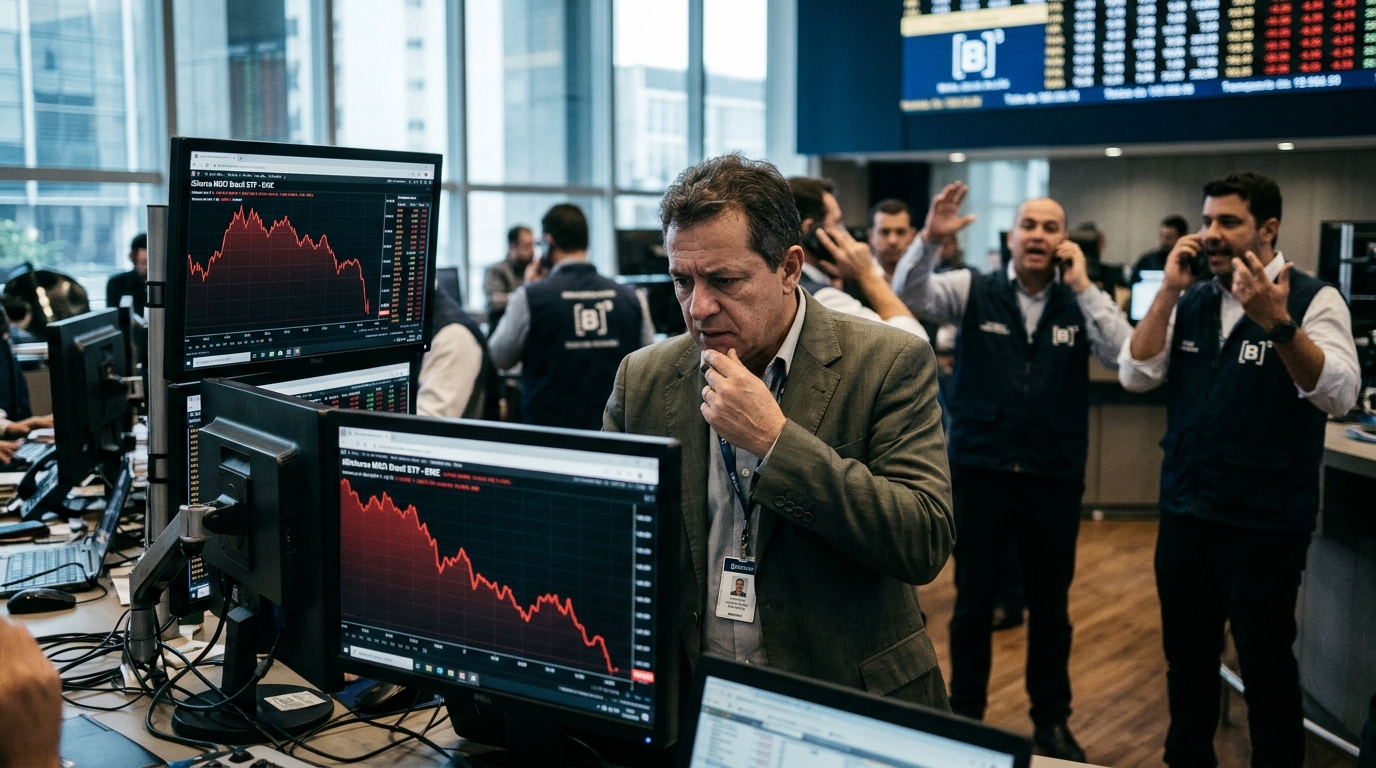
Early indications pointed to a major rout: an ETF tracking Brazilian equities tumbled as much as 16% in Japan, and a currency derivatives contract on the CME exchange showed the real at about 5.55 per dollar, implying roughly a 10% move versus Friday’s close. That is the arithmetic of a market that had priced one government and is now facing another.
Markets had already priced in a market-friendly outcome, on the expectation that a Bolsonaro government would quickly carry out a deep fiscal adjustment. By Friday’s close, Brazilian equities stood almost 7% above their pre-first-round level and the real had gained nearly 5% against the dollar. All of that gain is now in question before a single share trades in São Paulo.
In offshore trading before the Brazilian open, Petrobras and the banks took the brunt of the hit, and Brazilian market participants openly discussed whether selling pressure could be sharp enough to trigger B3’s circuit-breaker rules.
What the Market May Be Missing
The size of the reset contains a useful signal. When a market is priced at 80/20 and the 20% outcome arrives, the move is not just about who won. It is about how much of a pro-reform premium had been built into every asset class over three weeks of post-first-round trading. The Ibovespa’s 7% post-round rally was not the market going sideways; it was a direct bet on fiscal consolidation under Bolsonaro. Unwinding that is not a one-day event.
A clean break above R$5.00 in the first hour of cash trading would open the door to 5.10 and then 5.20, levels that would force a serious conversation about the November Copom decision and possibly December’s meeting too. The Banco Central do Brasil’s rate path is now back in play.
Where It Shows Up
The Ibovespa’s current portfolio holds dozens of securities, but it is still concentrated in a handful of names, led by Vale, Itaú Unibanco and Petrobras. PBR, VALE, ITUB, Banco do Brasil, and NU together make the index’s opening move almost entirely a referendum on how the market prices Lula’s return. EWZ, the most liquid US-listed vehicle for Brazilian equities, is the fastest read for offshore investors who cannot wait for B3.
Risks and Counterpoints
The bearish case is straightforward: a left-wing government with a history of state intervention takes power with no fiscal mandate and a fractious Congress. The bullish counterpoint is that this is Lula’s fourth term, not his first. Several sell-side desks expected a sharp sell-off in Brazilian bonds and the real, but argued the move would have limits if fiscal signals stabilized quickly.
Brazil’s institutions held. The TSE certified the result. Political uncertainty from any post-election legal push is real, but it looks legally thin.
What to Watch Next
The first number that matters is where the real opens against R$5.00, and whether the Ibovespa’s 200,000 level holds in the first hour. Beyond today, watch Copom’s November meeting for any signal that the central bank is moving to defend the currency, and track whether Petrobras and state bank boards see early personnel changes, the fastest indicator of how activist this Lula government intends to be.