October 26, 2026
Bonus Content: UPS Cut 78,000 Jobs on Land. The Sea Could Be Next.

Patriots’ Most Trusted Gold Company
The Dollar You Saved in 2000 Buys About 51 Cents Today.
For U.S. savers age 55+ with $50,000 or more in an IRA, 401(k) or savings. Free of charge, no obligation to buy anything.
| SEND ME THE FREE GUIDE → |
Pull out a statement from 2000 and the number on it looks healthy. It is the wrong number to look at. The question is not how many dollars you have – it is what those dollars still buy.
The same dollar, twenty-six years later
It now takes about $1.95 to buy what one dollar bought in 2000.1 Run that backwards and the dollar you set aside in 2000 has the purchasing power of roughly 51 cents today. Prices across the economy have risen about 95% over the period.1
That is not a conspiracy and nobody took anything out of your account. It is arithmetic. Dollars were added to the system faster than goods were, and every saver holding dollars paid the difference. A retirement account invested entirely in dollar-denominated assets carries that cost whether or not the balance goes up.
Over the same twenty-six years the national debt crossed $40 trillion.2 Washington has three ways to deal with a debt that size: tax more, cut spending, or let inflation shrink what it owes in real terms. Many economists consider the third the path of least political resistance. That is an opinion about the future, not a forecast – but it is the reason a lot of savers want part of their retirement in something that cannot be issued by decree.
Gold is not an income asset and it does not pay a dividend. What it does is sit outside the printing press. There is no central bank that can create more of it, no issuer that can default on it, and no board that can dilute it. Over that same stretch it went from about $290 an ounce to where it trades today.3
The free 2026 Gold IRA Guide walks through exactly how a rollover from an IRA, 401(k) or TSP works, which metals the IRS allows, how insured depository storage works, and the mistakes that cost retirees the most. It is free and it takes about thirty seconds to request.
Claim Your Free 2026 Gold IRA Guide →

| SEND ME THE FREE GUIDE → |

Rock legend Ted Nugent and former White House Press Secretary Sean Spicer are official endorsers and clients of Bishop Gold Group. 10 years in business – 5-star rated on Trustpilot and Google – Mint Authorized Dealer
Prefer to speak to someone? U.S. – based specialists, no pressure, no jargon.
Mon-Fri – 7am-5pm PT
Sources
1 U.S. Bureau of Labor Statistics Consumer Price Index (CPI-U), 2000 to 2026. $1.00 in 2000 equates to approximately $1.95 in 2026 – cumulative inflation of roughly 95%; the inverse gives purchasing power of about 51 cents.
2 U.S. Treasury total public debt outstanding, which passed $40 trillion in August 2026 as widely reported.
3 LBMA gold price, 31 December 1999 ($290.25/oz) to September 2026. Past performance is not a guarantee of future results.
Past performance is not a guarantee of future results. Precious metals are volatile and can decline in value. Figures here are historical and are not a prediction or a recommendation to buy or sell any asset.
UPS Cut 78,000 Jobs on Land. The Sea Could Be Next.
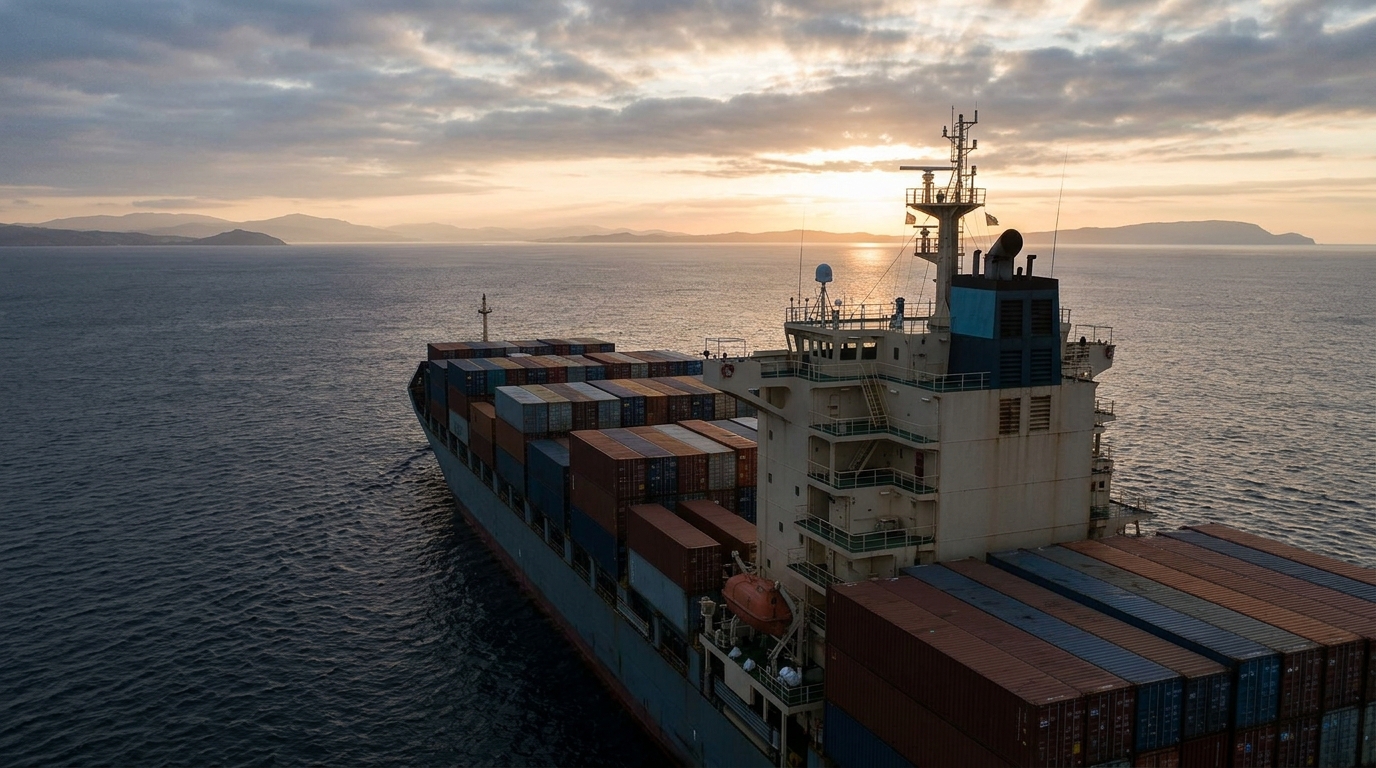
UPS has spent two years executing one of the most aggressive cost programs in American logistics history. It eliminated roughly 78,000 operational positions, closed daily operations at 93 facilities in 2025 and has said it expects to close nearly 150 buildings as the Amazon volume glide-down and network reconfiguration run their course. The entire exercise follows a single logic: shed low-margin labor and redirect capital toward higher-value freight. That logic does not stop at the loading dock.
The next overhead line UPS will face, as it repositions around B2B, healthcare, and complex global supply chains, is crew cost on short-haul coastal moves. The technology to attack that line just crossed from demonstration into commercial service.
What Became Real in 2026
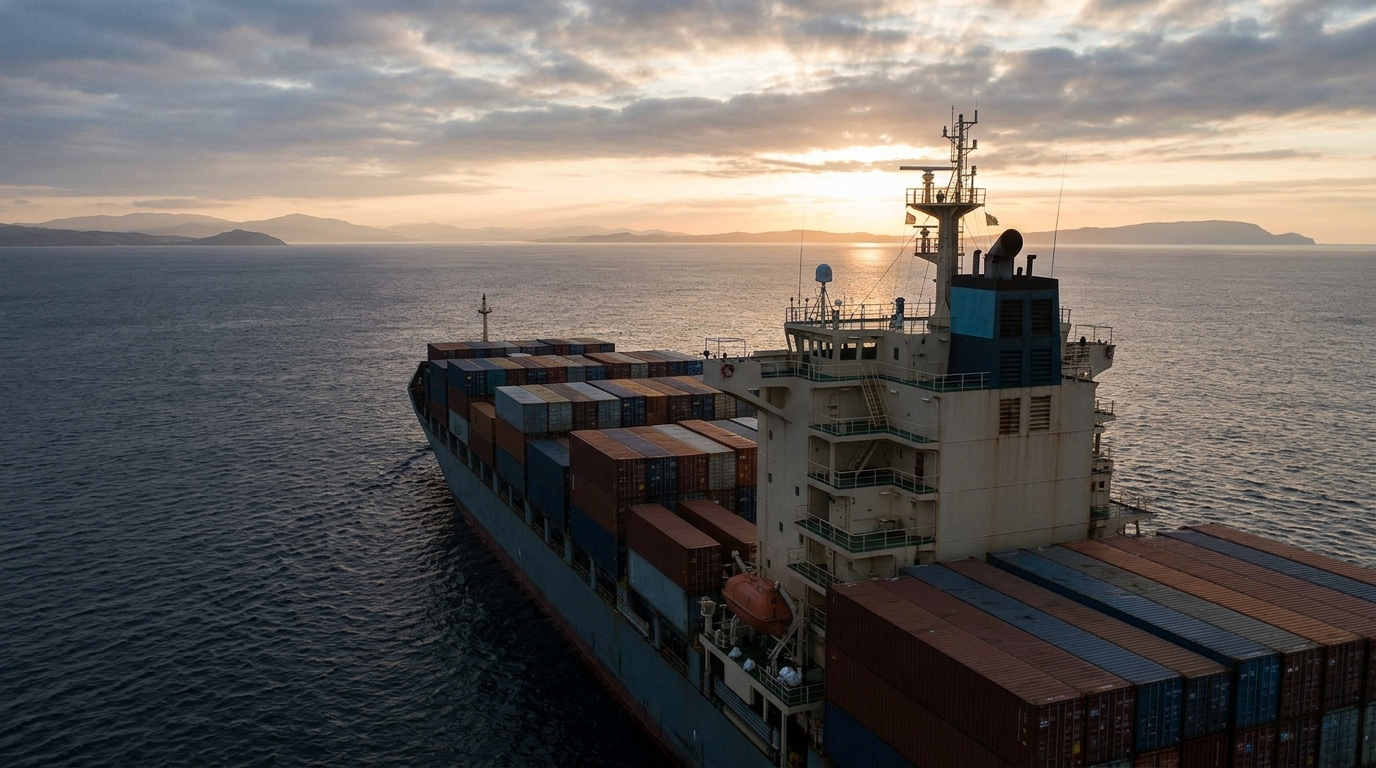
In late January, Japan’s GENBU became the first container vessel to begin regular commercial operations carrying revenue cargo under Level 4-equivalent autonomous navigation. The roughly 134-meter, 700 TEU coastal ship runs a fixed liner service between Kobe and Tokyo via intermediate ports, certified by classification society ClassNK and cleared by Japan’s Ministry of Land, Infrastructure, Transport and Tourism. By the end of March, four vessels under the MEGURI2040 Stage 2 effort, including GENBU, had passed MLIT inspections as autonomous ships. The IMO adopted its MASS Code at the Maritime Safety Committee meeting held May 13-22, 2026, establishing a global safety framework that also addresses security and cybersecurity, and it entered into force as a non-mandatory code on July 1, 2026.
The regulatory scaffolding that logistics operators needed before committing capital is now in place. Autonomous coastal shipping is no longer a press-day trial.
The UPS Cost Structure Problem
UPS reported approximately $1.2 billion in program benefits in the first half of 2026, targeting $3 billion in savings for the full year. Labor remains elevated. The company is compressing its network around freight with stronger pricing power: B2B commercial deliveries, healthcare cold chain, industrial customers. It has committed more than $2 billion in international, healthcare and supply chain investment through 2028, including projects at Clark Airport in the Philippines, Barrie, Ontario, and Hong Kong.
What all those freight categories share is coastal or inter-hub movement of heavy cargo between gateway ports and distribution centers. That is precisely where autonomous electric short-sea hulls are most economically viable. Research on short-sea liner networks finds autonomous vessels can reduce total operational costs by roughly 11%, with most savings coming from reduced crewing costs on smaller vessels where crew wages represent a disproportionate share of voyage economics.
Bull / Base / Bear
- Bull: UPS formalizes a joint venture or long-term charter with an autonomous maritime operator by 2028, deploying electric coastal hulls between U.S. Gulf and East Coast hubs. Crew overhead on those lanes compresses toward zero.
- Base: UPS monitors early-mover deployments in Asia and Europe for two to three years, then integrates crewless capacity through its forwarding arm, consistent with its asset-light model.
- Bear: Jones Act restrictions on U.S. domestic coastal trade and regulatory lag on the MASS Code’s mandatory phase delay meaningful domestic deployment past 2030, limiting upside to international lanes only.
The Number to Watch
UPS Supply Chain Solutions revenue is the segment that matters. The company is repositioning international and healthcare logistics as growth engines while its domestic parcel business shrinks on purpose. Any coastal automation that compresses cost-to-serve on inter-hub moves expands margins without requiring volume growth.
The GENBU is carrying cargo on a Japanese coastal route under Level 4-equivalent autonomous navigation right now. For UPS, the question is when a similar hull is running pharmaceutical cold chain cargo between Rotterdam and Felixstowe, or industrial freight between Houston and Savannah. The regulatory path cleared in 2026. The cost incentive has never been stronger.