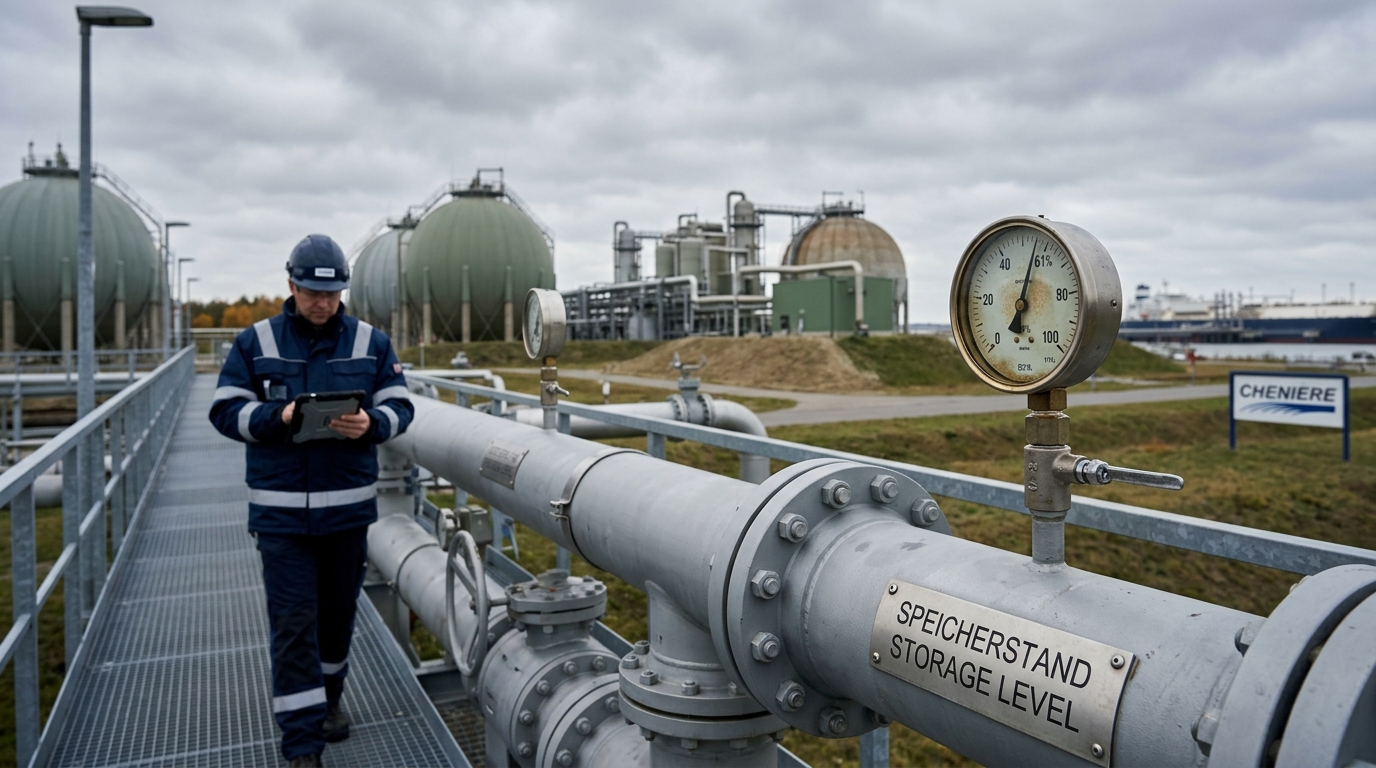
The deadline passed Sunday. As of October 31, German gas storage stood at about 61% on the AGSI+ benchmark, well below the statutory average target of about 70% for November 1. That is not a rounding error. It is roughly a 9-point shortfall entering the withdrawal season, and the market is not waiting for a policy response to price it in.
The front-month price at Dutch TTF rose as high as 95.765 euros per megawatt-hour in late October, and TTF later pushed through €100/MWh for the first time since 2022. In late October, TTF reached €100.20/MWh, extending an intraday rally on ICE Endex amid continued LNG supply disruption via the Strait of Hormuz, colder temperatures, and unplanned outages in Norway.
Where the Weather Risk Sits
Germany is the system’s weak point. European gas prices have surged this year as the war-linked disruption around the Strait of Hormuz squeezes LNG availability, and Germany, Europe’s largest economy with an energy-intensive manufacturing sector, is particularly exposed if winter demand spikes while storage buffers lag. Seasonal outlooks heading into early winter have leaned warmer in the aggregate, but the near-term path still matters: a short cold run in November can do outsized damage when inventories start this low.
ENTSOG has warned that if LNG availability remains limited, storage levels could fall well below 30% by the end of winter, increasing the impact in the event of cold spells later in the season and constraining the ability to refill during the following summer. Under tight LNG supply conditions, ENTSOG estimates storage could fall to 13% by the end of March 2027 under Reference Winter demand. That scenario implies prices well above current levels by February.
Industrial Sectors Already Absorbing the Hit
The demand destruction is not theoretical. The first sectors to take the blow are electro-intensive and gas-intensive industries: chemical complexes in Germany’s Rhine basin, northern Italian steelworks, and Spanish ceramic and chemical hubs are paying materially more for energy than competitors in the United States, eroding export margins and accelerating temporary furnace shutdowns.
That spread is itself a trading signal. The IEA has noted that EU electricity prices for energy-intensive industries stayed elevated in 2025, averaging over twice US levels and nearly 50% above those in China, keeping competitive pressure high. European utilities with gas-fired generation exposure, including Uniper, RWE, Engie, and TotalEnergies, sit on opposite sides of that equation depending on their hedging posture and contracted supply mix. Uniper and RWE, both carrying significant German market exposure, face the most direct volume and margin risk from a colder-than-average November.
The Cleaner Trade: US LNG Exporters
The asymmetry is cleaner on the US side of the Atlantic. US LNG flows remain heavily Europe-directed, and persistent disruption around Hormuz has made it harder for the region to rebuild inventories.
Cheniere sits at the center of that dynamic. The company reported Q3 2026 revenue of about $6.2 billion, and said LNG export volumes totaled 188 cargoes representing 684 TBtu. Cheniere raised its full-year 2026 guidance, projecting Consolidated Adjusted EBITDA of $8.75 billion to $9.25 billion. When European gas trades at elevated premiums relative to domestic US supply, Cheniere can capture additional margin on any volumes exposed to spot market spreads.
The Trading Plan
The bull case on TTF does not require a historic cold snap. It only requires an average winter against a storage deficit that is already severe. ENTSOG’s downside sensitivity work makes the point plainly: under tight LNG availability, end-of-winter storage can finish at levels that leave almost no buffer for late-season cold.
For traders, three positions align with this: long TTF futures or energy ETFs with European gas exposure for the weather risk itself; long Cheniere as the direct beneficiary of the transatlantic price spread; and cautious on European industrial equities with unhedged energy cost exposure heading into Q4 earnings. The key risk to all three is a rapid normalization of Hormuz shipping lanes or an unexpectedly mild November across northern Europe. Neither looks imminent today.